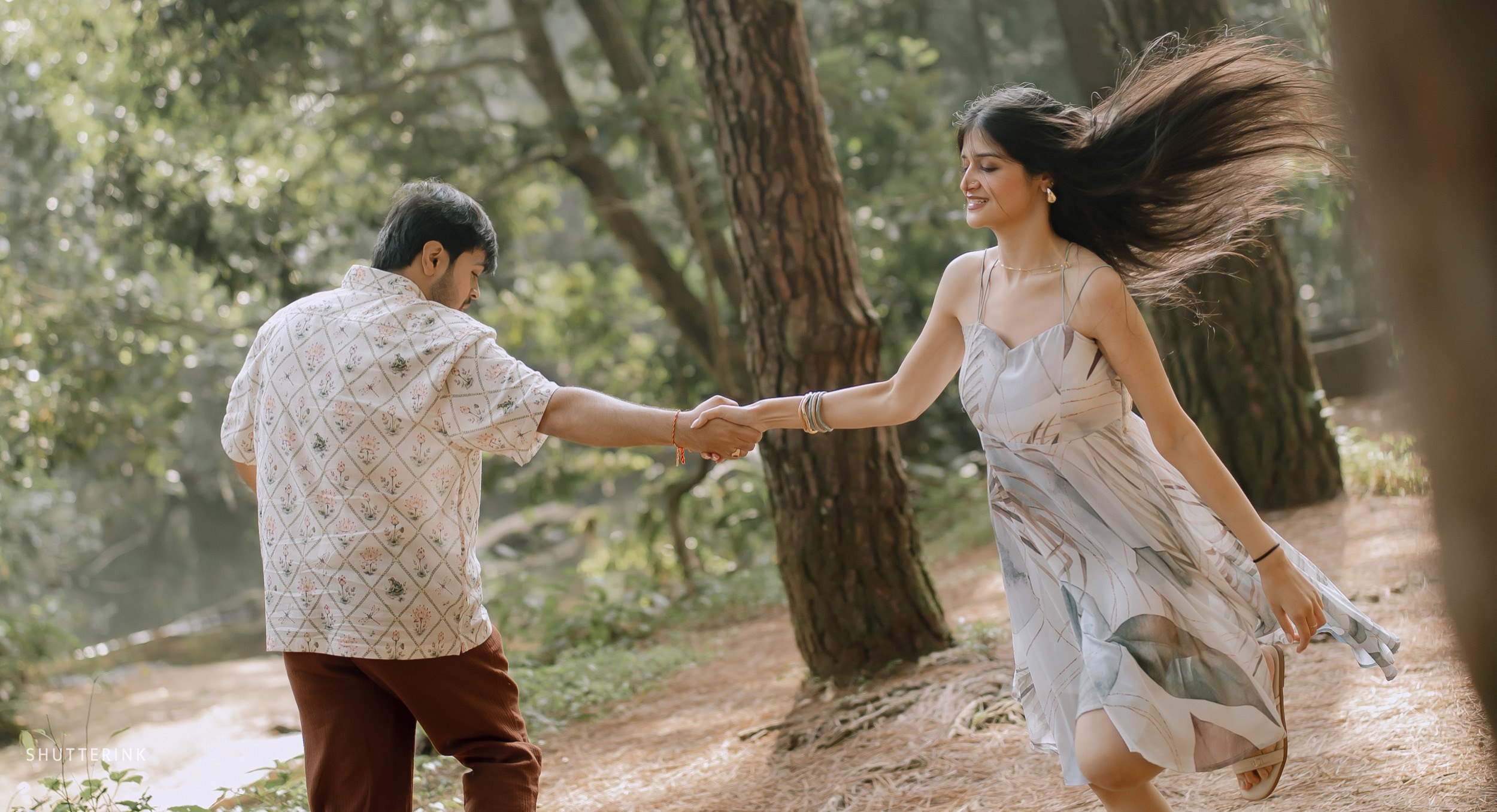
The best pre-wedding photos rarely come from holding a pose. They come from giving yourselves something to do: walk, run, twirl, cook, cycle, whisper. A good “pose” is really a prompt, and your expressions do the rest.
Below is a pose library of 14 couple poses we use on pre-wedding shoots, arranged from easy and candid to close and quiet. Each one has a short how-to, and every photo is from a recent Shutterink pre-wedding shoot. Start at the top, warm up, and work your way down.
Level 1: Warm-up poses (easy, candid)
Use these in the first 15–20 minutes, while you get used to the camera. They need no posing skill at all.
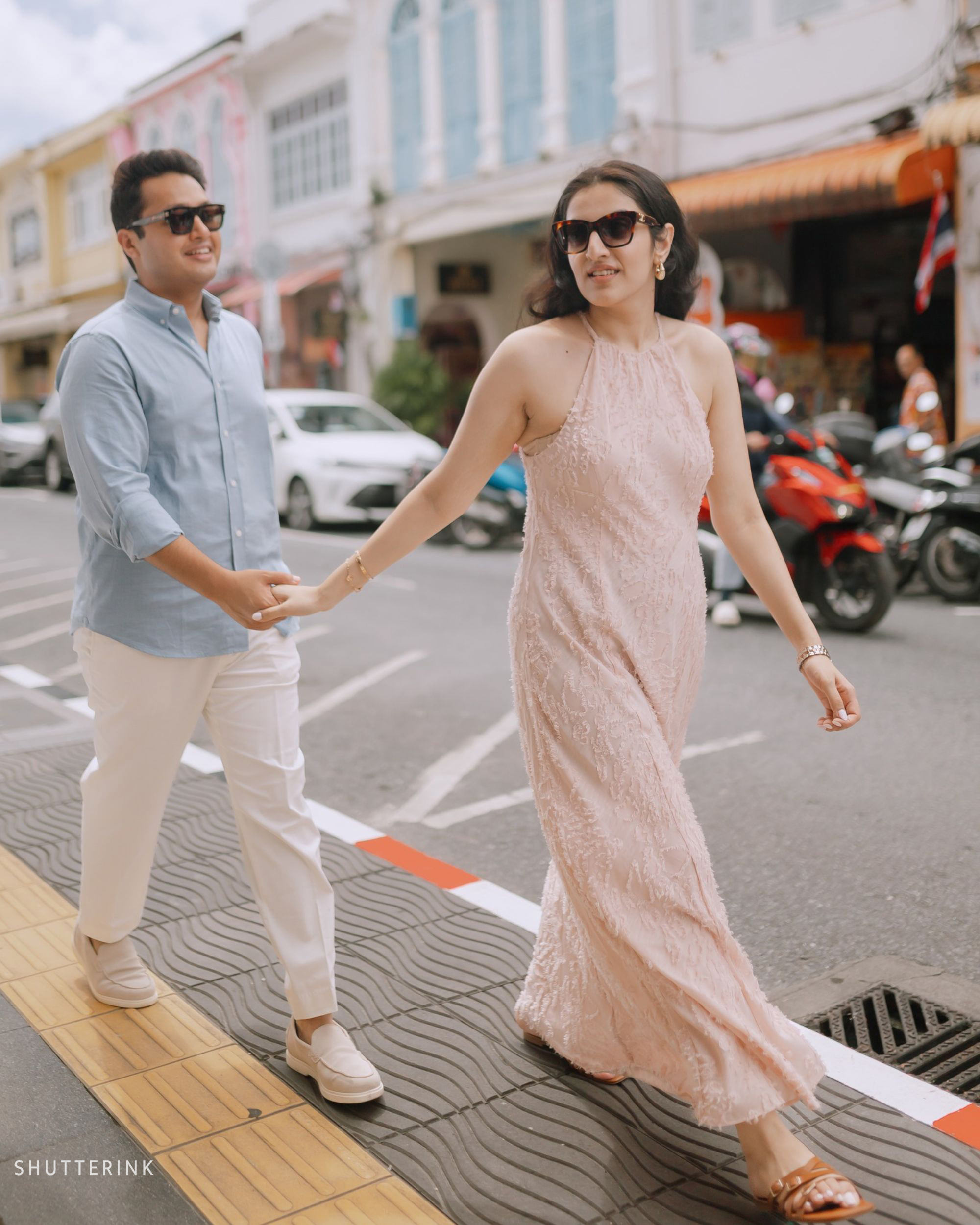
1. The walk and talk
How: Hold hands and walk slowly towards the camera, talking about anything: your first date, what you’ll eat after the shoot. Ignore the photographer completely.
Why it works: Movement relaxes your body, and conversation gives you real expressions.
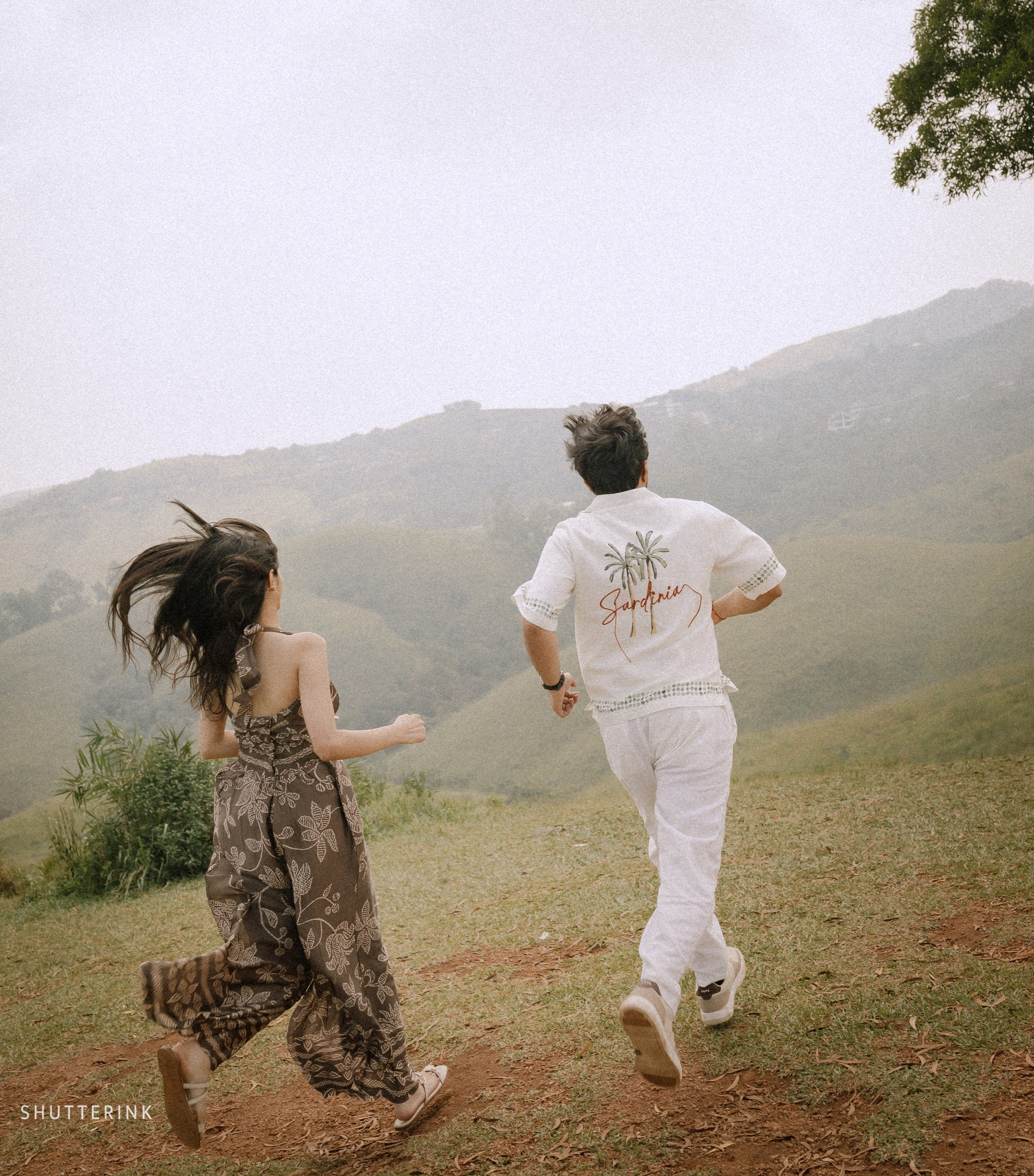
2. The chase
How: One of you runs a few steps ahead, the other chases. Keep it playful, not a sprint, and repeat it two or three times.
Why it works: Nobody can hold a stiff face while running and laughing.
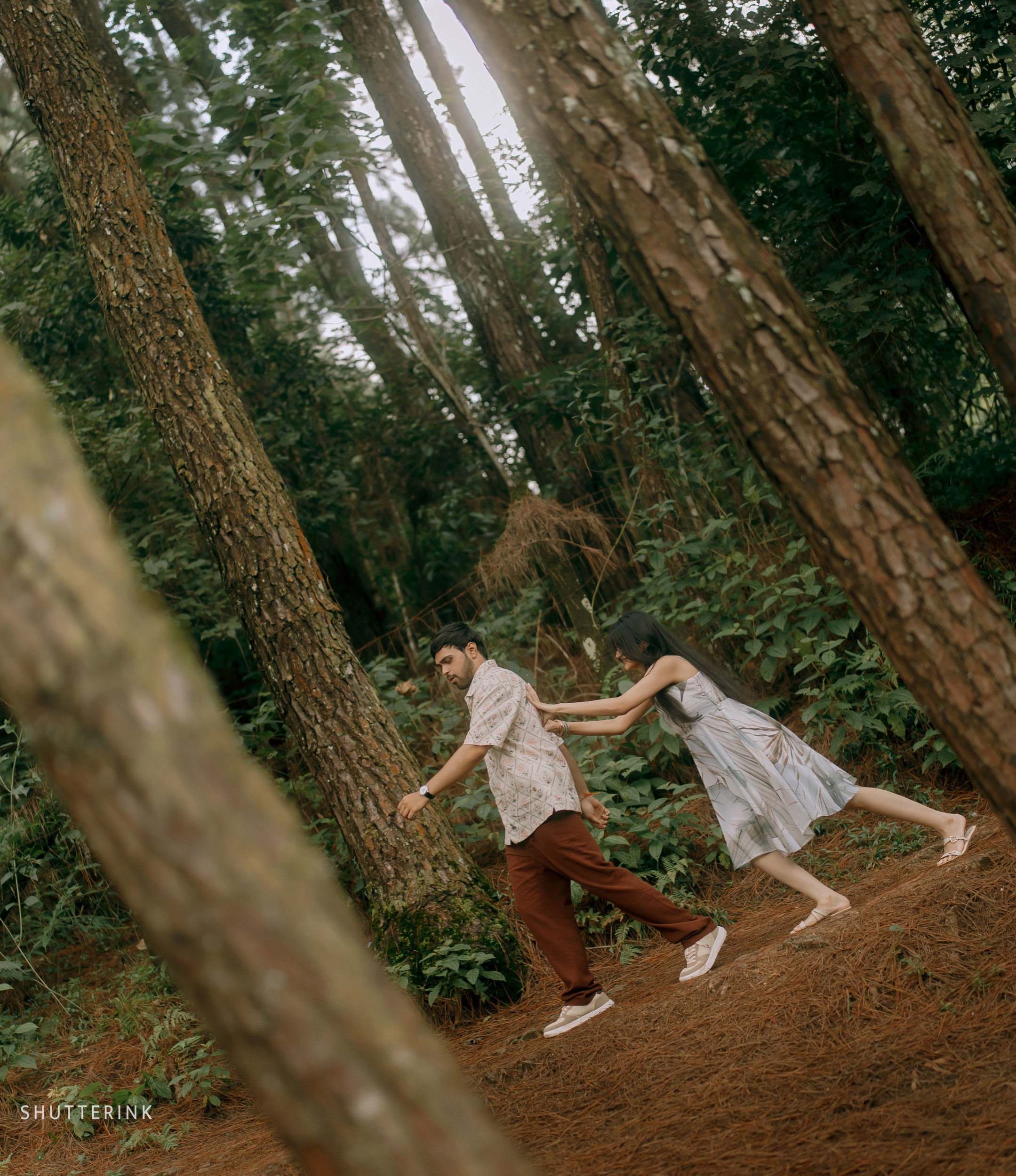
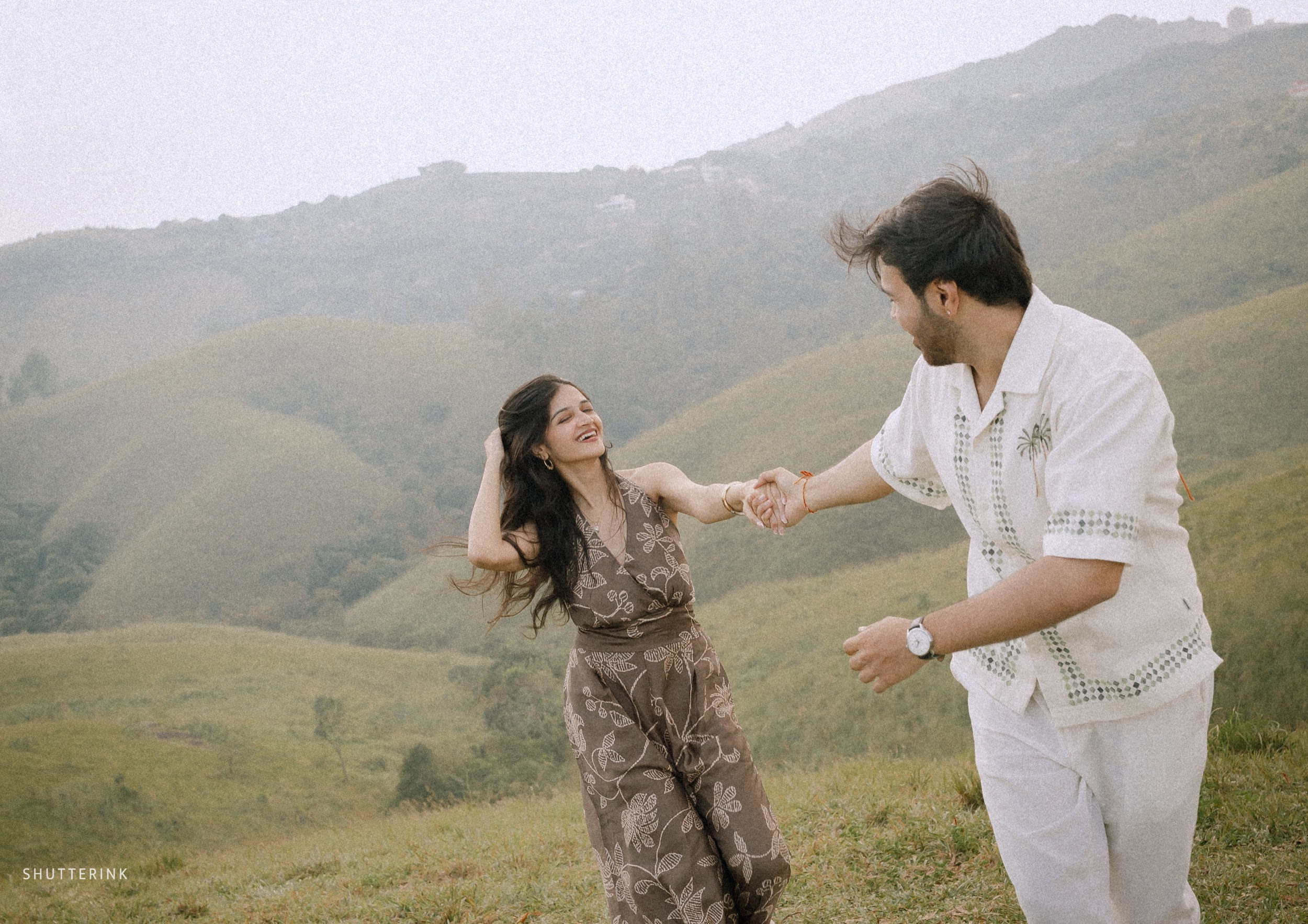
3. Follow me
How: One partner leads the other by the hand, a step ahead, glancing back. Swap roles for a second take.
Why it works: It creates movement and a natural look over the shoulder, which is one of the most flattering angles there is.
Level 2: Playful poses
Once you’re laughing, add a bit more energy.
4. The twirl
How: One partner holds the other’s hand and spins them slowly, once or twice. Flowing dresses, lehengas and dupattas work best.
Why it works: The outfit moves, and the laugh after the spin is usually the best frame.
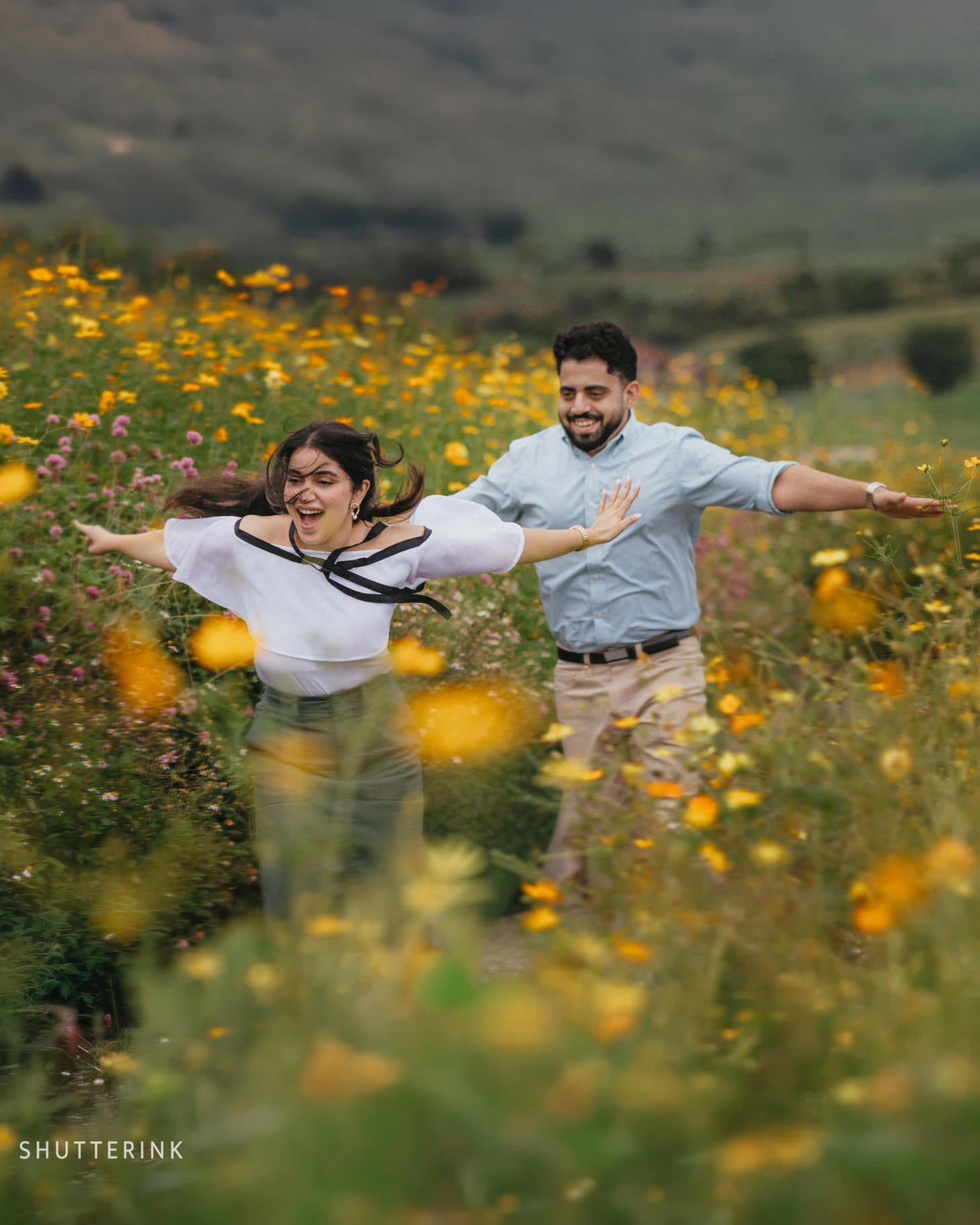
5. Arms wide
How: Stand side by side in an open space, like a field, a hilltop or a beach, and throw your arms out. Close your eyes, laugh, feel silly.
Why it works: Big, open body language reads as pure joy.
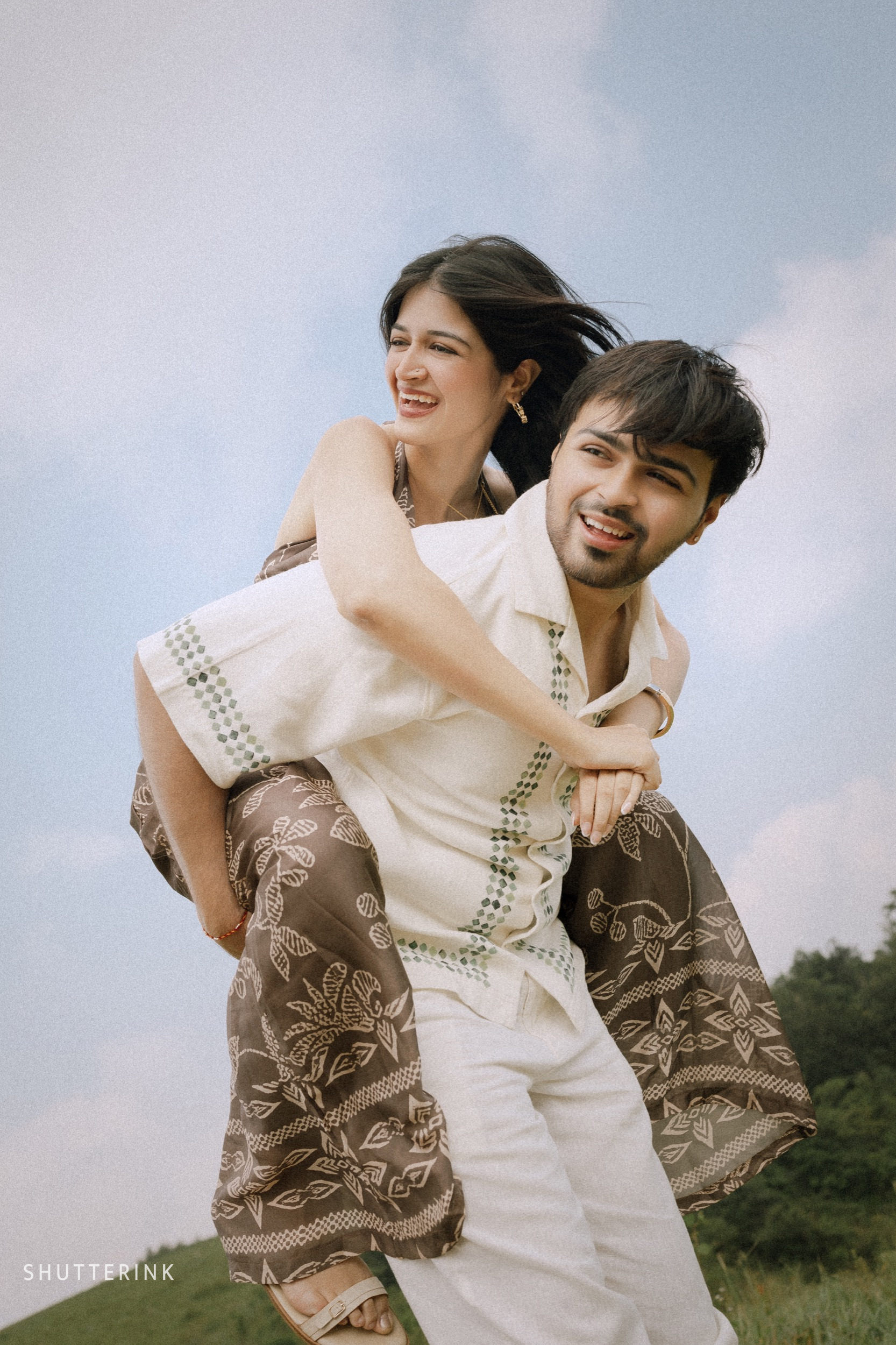
6. The piggyback
How: One partner jumps on the other’s back. Walk a few steps, wobble, laugh.
Why it works: It’s impossible to look posed while giving or getting a piggyback ride.
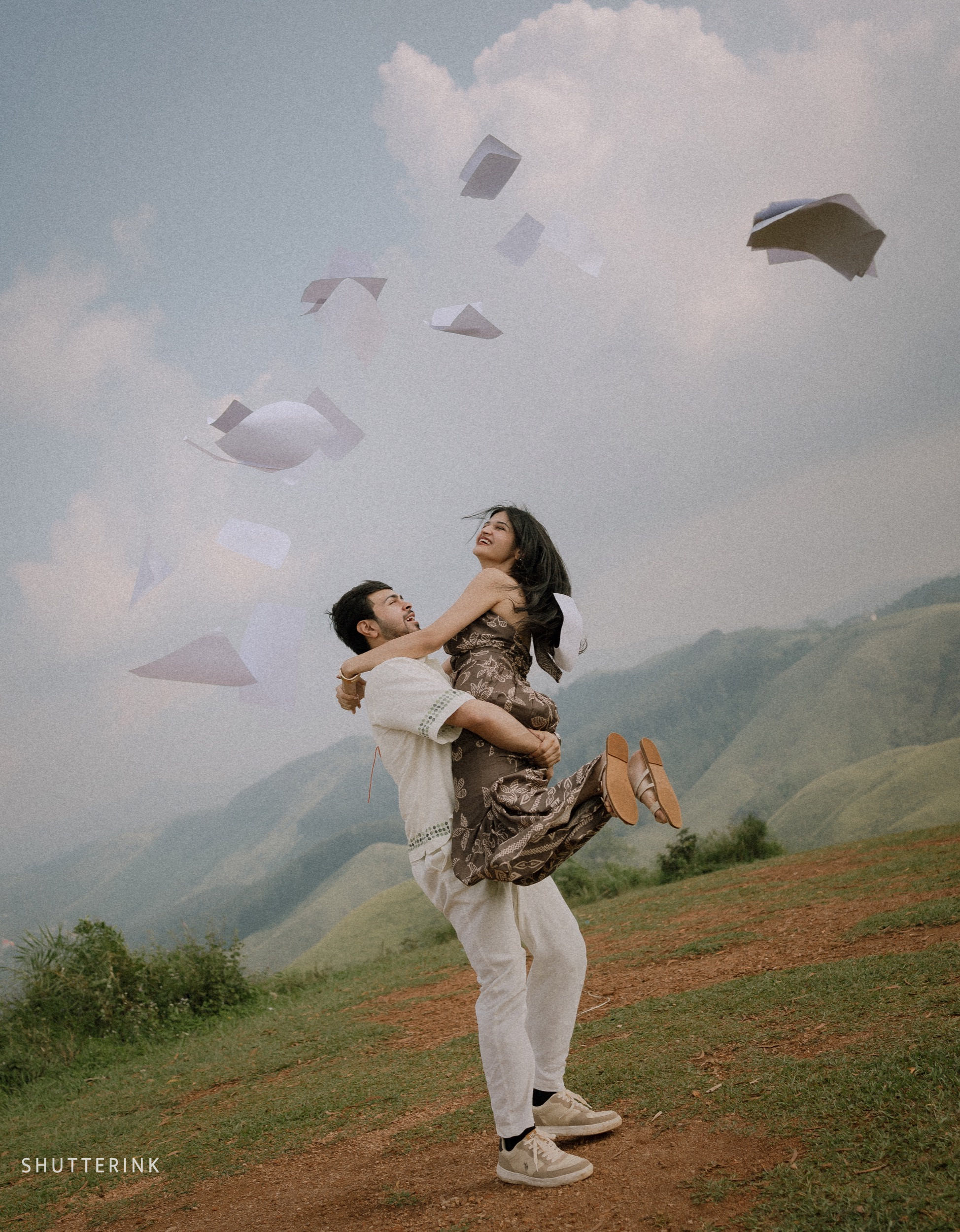
7. The lift
How: One partner lifts the other off the ground and spins slowly. Add something to throw, like petals, confetti or paper, if you want extra movement.
Why it works: It’s joyful, dramatic and still completely natural.
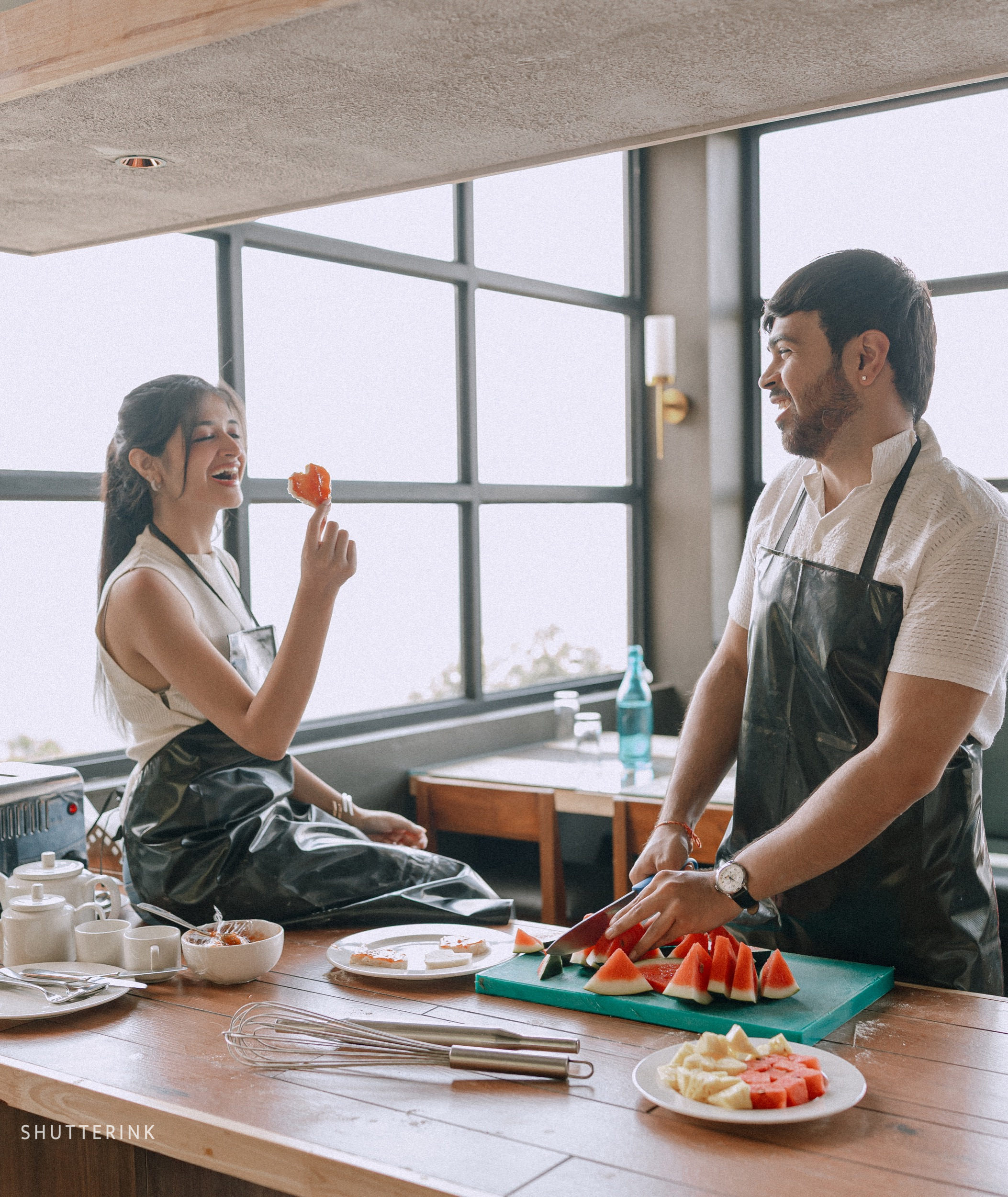
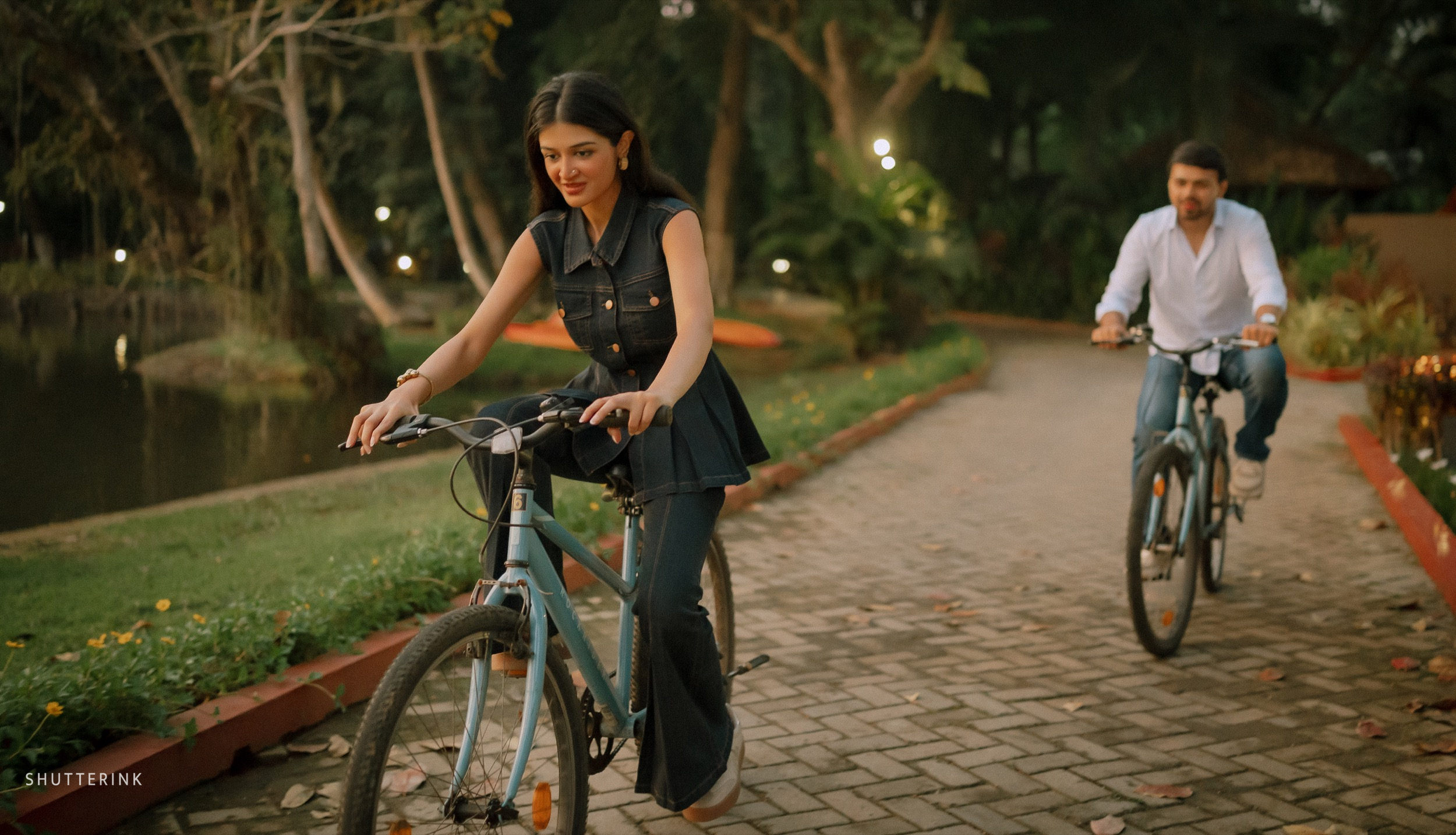
8. Do something together
How: Pick an activity you actually enjoy as a couple, like cooking, cycling, making chai or playing a game, and simply do it.
Why it works: Your hands have a job, your attention is on each other, and the photos tell a story about your real life.
Level 3: Romantic poses
Slow things down. These work best once you’ve stopped noticing the camera.
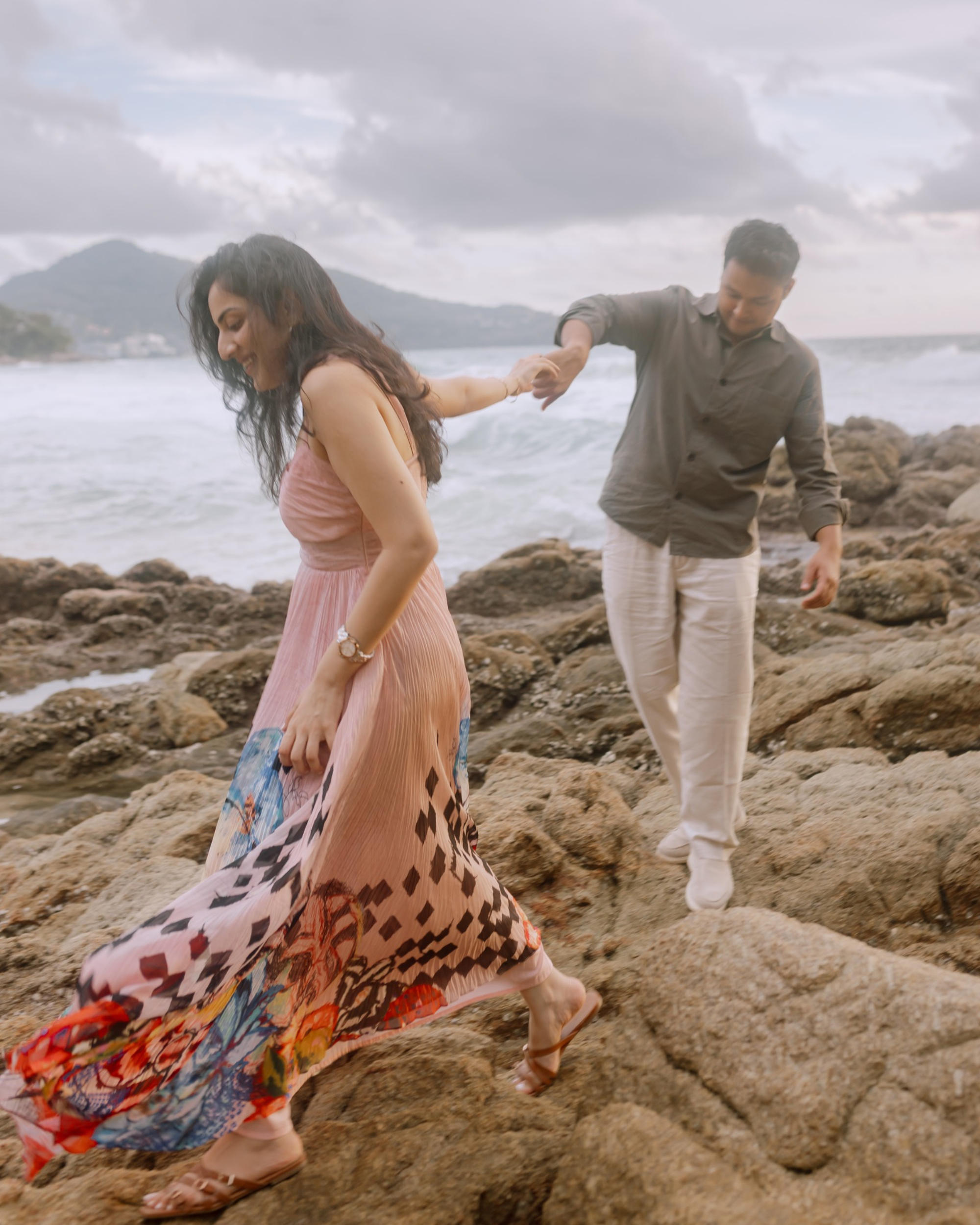
9. The helping hand
How: Use the location: one partner helps the other over rocks, down steps or across a stream.
Why it works: It’s a small, real gesture of care, and it gives you both something to concentrate on.
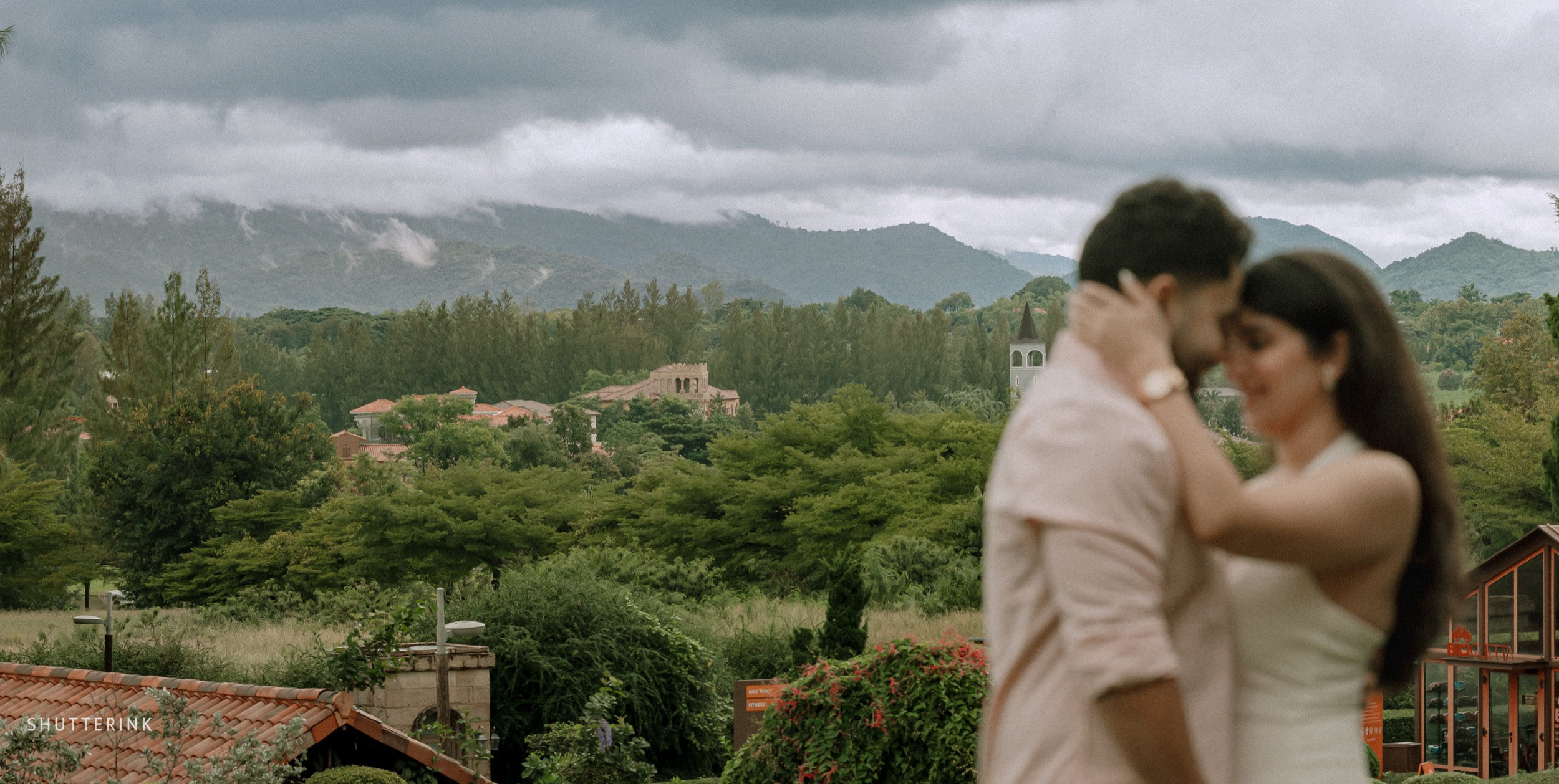
10. The forehead touch
How: Stand close, rest your foreheads together and close your eyes. Breathe out. Hold it for a few seconds.
Why it works: It’s tender without being too private, so it suits most families’ albums.
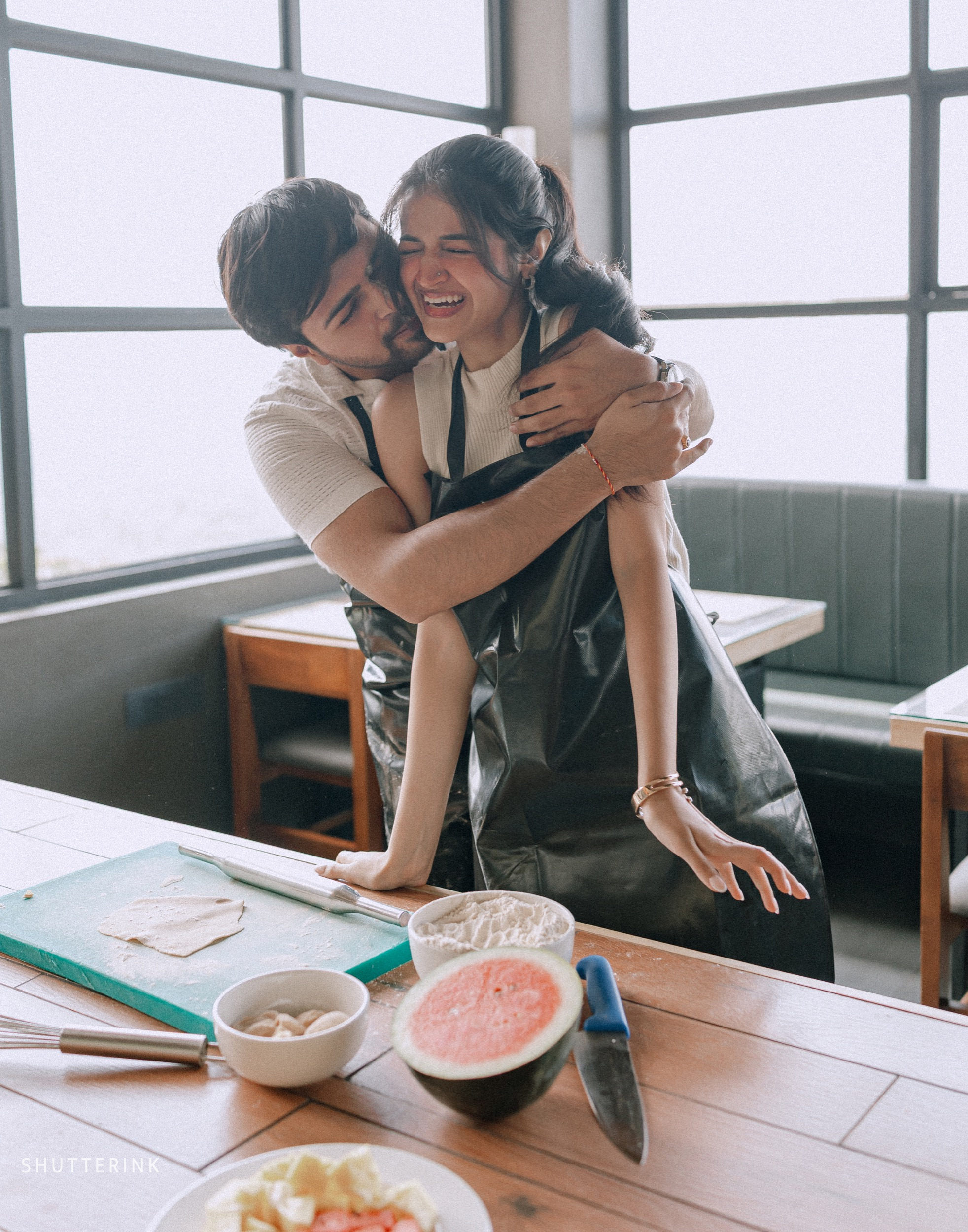
11. The back hug
How: One partner hugs the other from behind, chin on the shoulder, while you keep chatting or doing something.
Why it works: Both faces stay visible, and it feels warm rather than staged.
Level 4: Close and quiet
Save these for the end of the shoot, when you’re relaxed. Do only what feels comfortable; there’s no need to be more intimate than you are in real life.
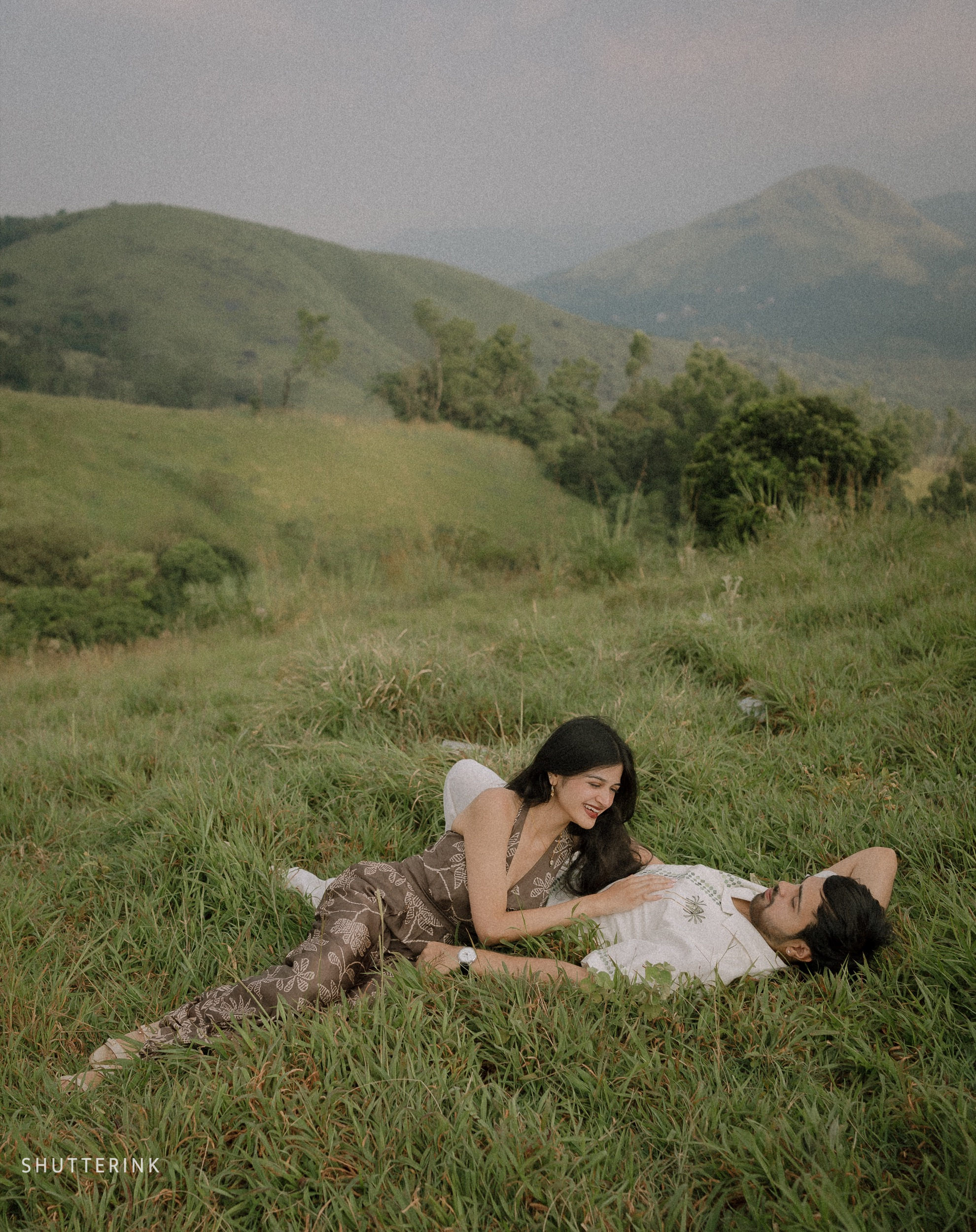
12. Lie back
How: Lie down in the grass, on a picnic blanket or on the sand, facing each other. Talk, tease, laugh.
Why it works: Lying down relaxes everyone instantly, and the angle from above or at ground level feels fresh.
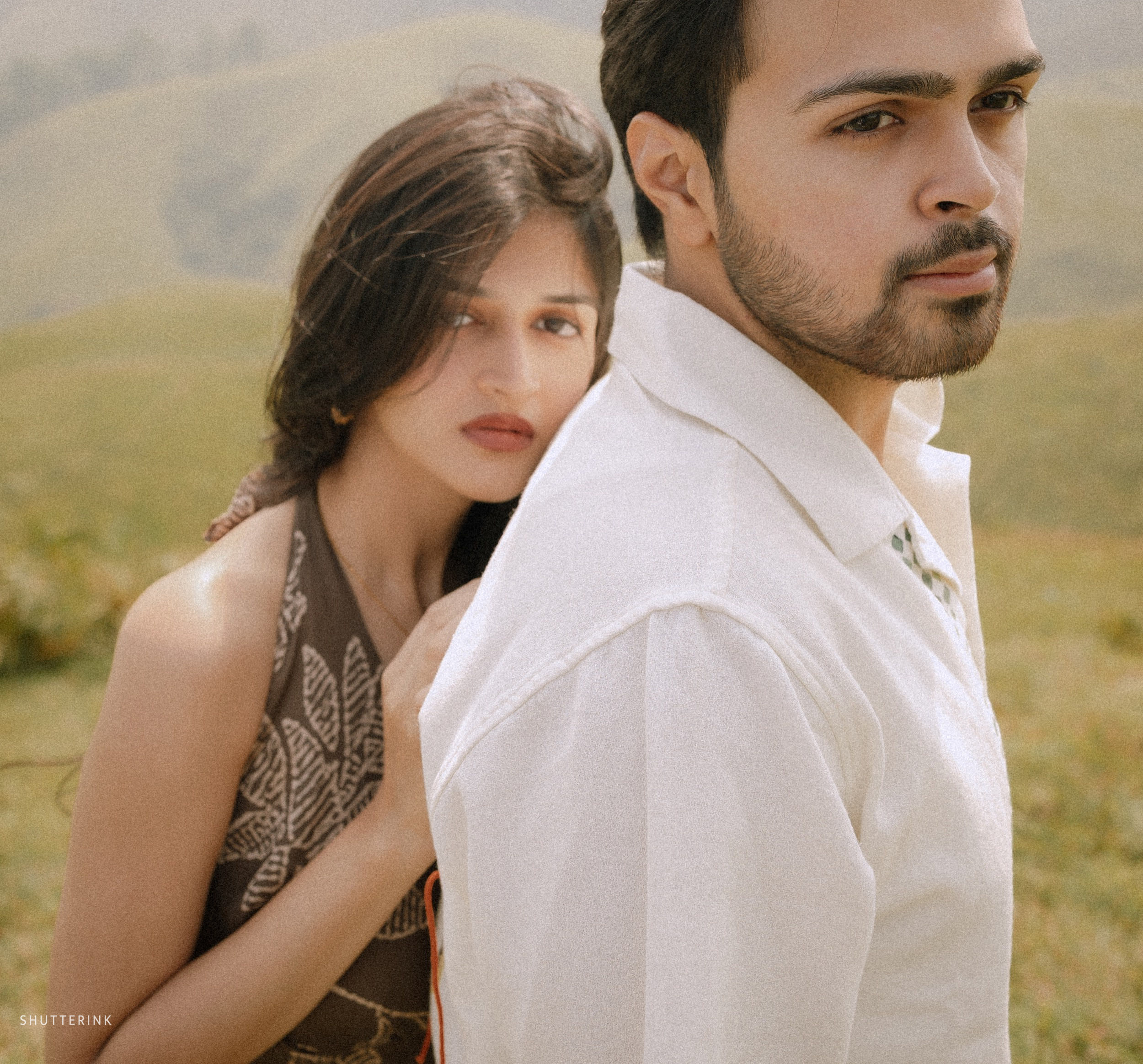
13. The lean
How: One partner leans into the other’s shoulder or back. Both look calmly towards the camera, or slightly past it.
Why it works: It’s close and connected, with a more editorial, magazine feel.
Bonus: Editorial frames
These are less about touching and more about composition. Add one or two for variety.
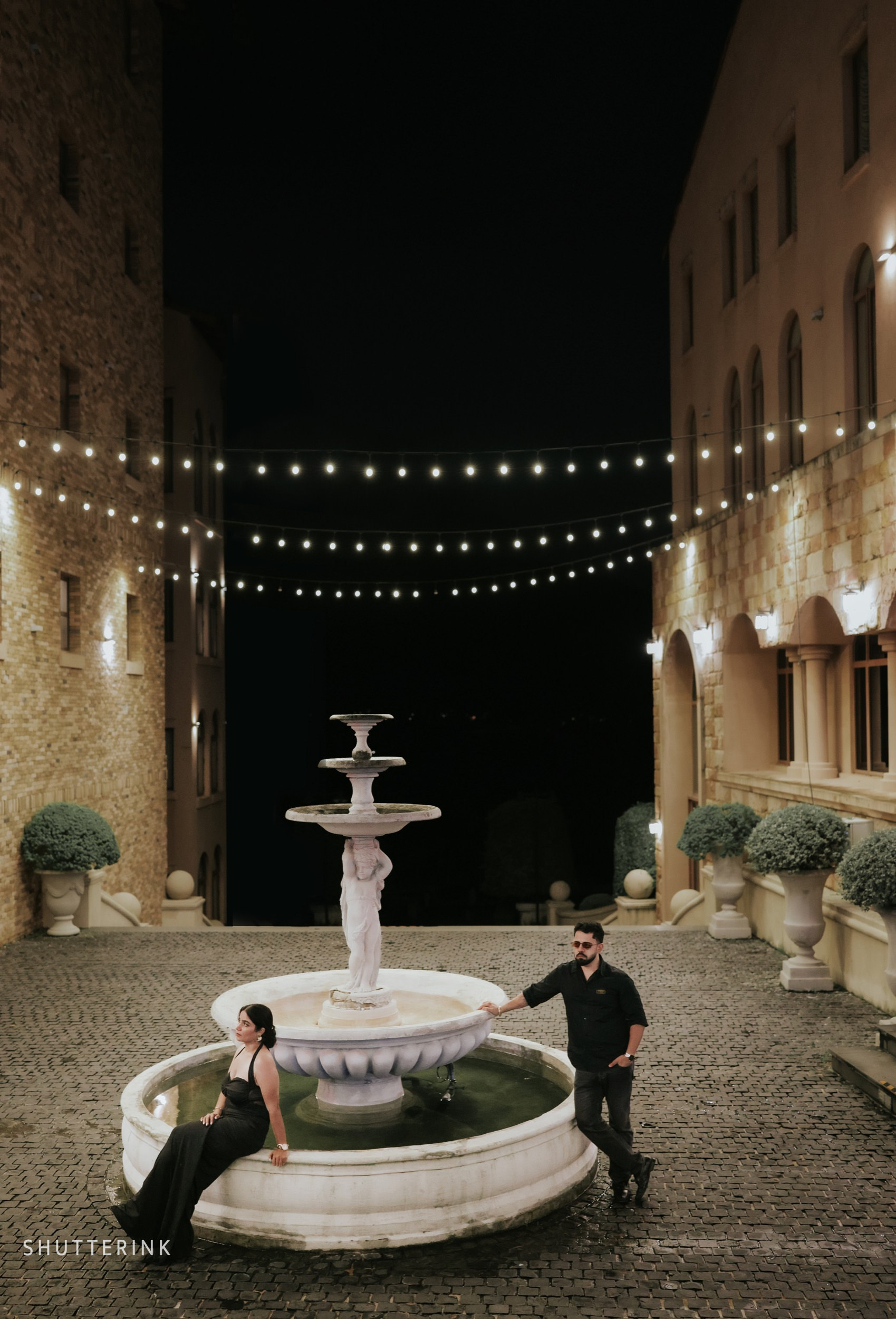
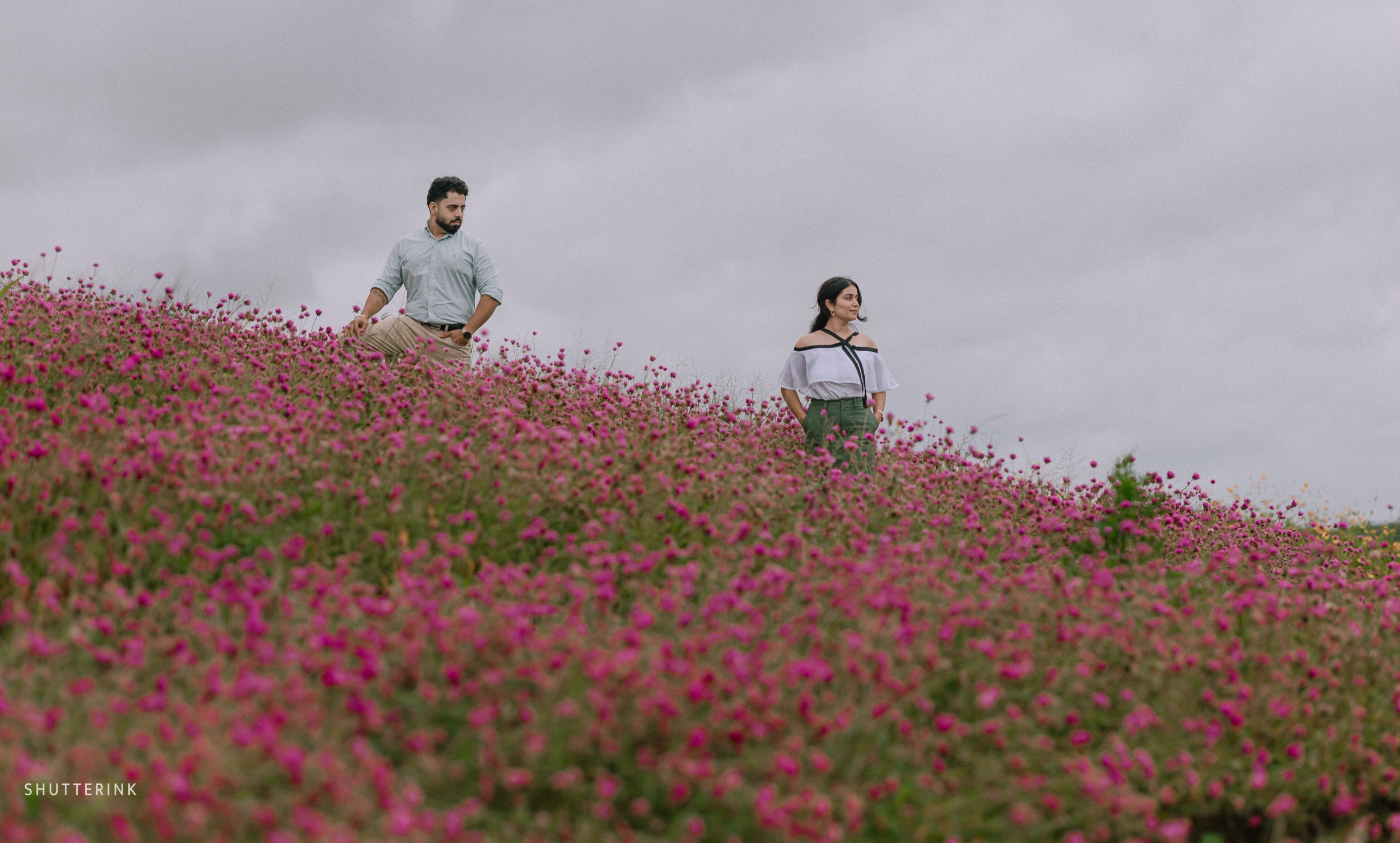
14. Apart, but together
How: Stand or sit a few metres apart, on different levels or on either side of something, like a fountain, a staircase or a field. Keep expressions calm, or look at each other across the gap.
Why it works: The space between you becomes part of the story, and the location shines.
How to order the poses on the day
- Start moving: walk, chase or lead each other for the first few minutes.
- Add play: twirls, piggybacks, lifts and an activity once you’re laughing.
- Slow down for romance as the light gets softer.
- Finish with the close and quiet poses at golden hour, when you’re most relaxed and the light is best.
- Change outfits between levels, not in the middle of one, so you don’t lose momentum.
Tips for camera-shy couples
- Look at each other, not the lens. It instantly relaxes your face.
- Keep talking. Silence makes people stiff; conversation makes them natural.
- Pick an activity you love. Cooking, cycling or a walk you’d take anyway gives you something real to do.
- Say no to poses that feel wrong. A good photographer will offer another prompt.
- Don’t over-plan. Pick three or four poses you like from this list and let the rest happen.
For more help, read our guide to natural wedding photos without posing.
Planning the rest of your shoot
- Locations and themes: see our pre-wedding shoot ideas and photo concepts for lakes, heritage homes and cafés.
- Outfits: read what to wear for your Indian pre-wedding shoot. Flowing fabrics make twirls and walks look far better.
- Heritage sites and public places: many have their own rules, timings or fees for professional shoots, so check before you plan around one.
- Light: plan the shoot so the romantic and close poses fall in the hour before sunset.
Planning a pre-wedding shoot? See more of our pre-wedding photography or tell us about your plans. You can also call +91 85588 58017.
Frequently asked questions
What are the best couple poses for a pre-wedding shoot?
Start with movement-based poses like the walk and talk, the chase and follow-me, add playful ones such as the twirl, the piggyback and the lift, and finish with quieter poses like the forehead touch, the back hug and lying back in the grass. Poses that give you something to do always look more natural than standing still.
How do we look natural if we’re camera-shy?
Look at each other instead of the camera, keep talking, and start with walking or playful poses before anything romantic. Doing an activity you enjoy together, like cooking or cycling, also helps most couples relax quickly.
How many poses should we plan?
Pick three or four favourites and leave the rest to your photographer. One good prompt usually produces several different frames as you move and react.
What are good pre-wedding poses for couples who aren’t very affectionate in public?
Try the walk and talk, the twirl, arms wide, doing something together and the “apart, but together” frames. They show your connection without much physical closeness.
When is the best time of day for a pre-wedding shoot?
Early morning or the last two hours before sunset. Soft, low light is the most flattering, and overcast days in the hills give beautifully even light too.
What should we wear for pre-wedding poses?
Choose one flowing outfit for twirls and walks, and one simpler outfit for close-ups and activities. Coordinate colours with each other and the location rather than matching exactly.