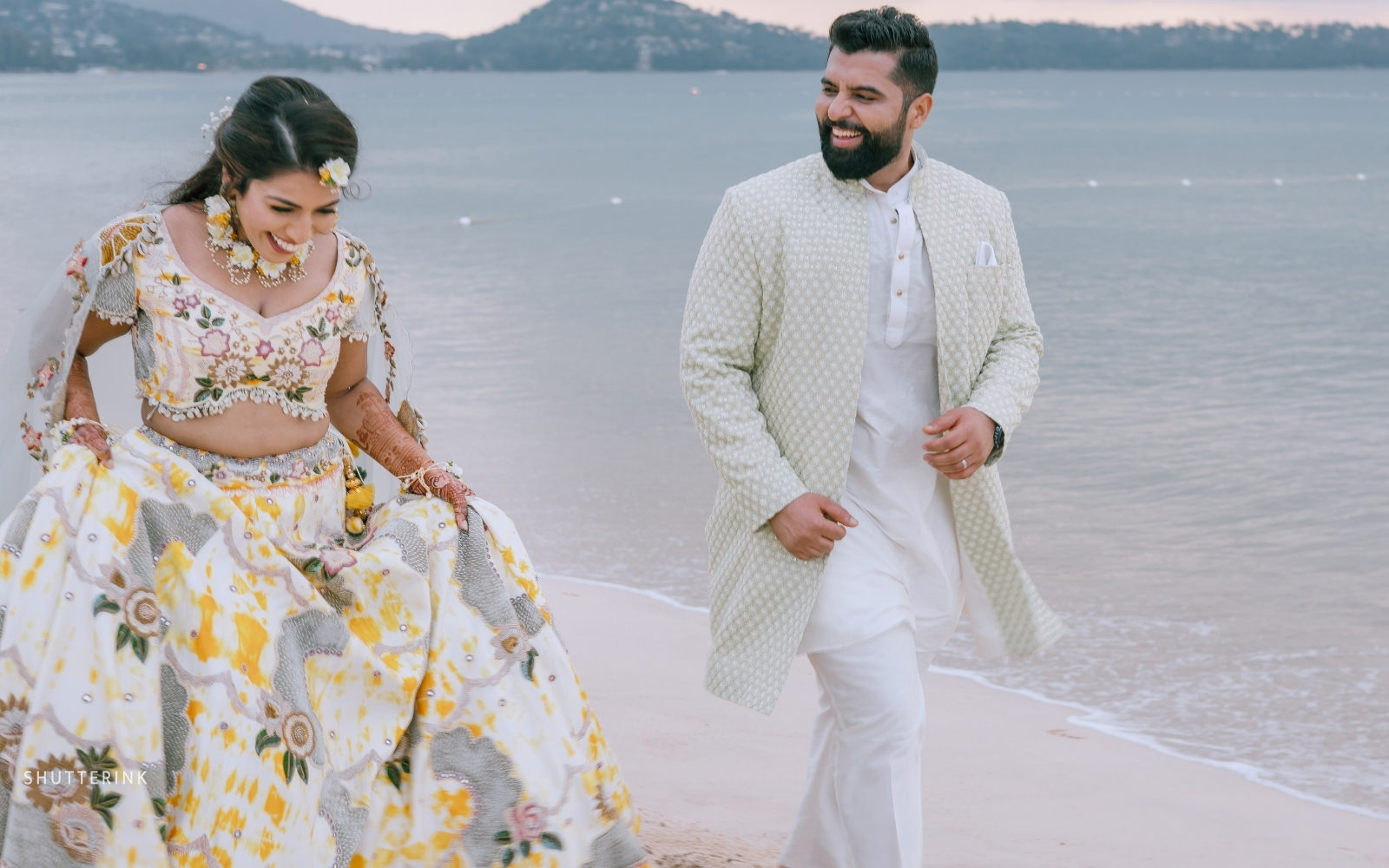
Quick answer: To look natural in wedding photos, stop performing for the camera and focus on your partner instead. Walk, talk, hold hands or share a joke, and let the photographer capture what happens. Plan a short 20–30 minute couple portrait break away from guests, keep family portraits to a written list, and choose a candid or documentary photographer who directs gently instead of posing you. If you’re camera-shy, a pre-wedding shoot is the best rehearsal.
Most couples who contact us say some version of the same thing: “We’re really awkward in front of the camera.” That’s normal. Very few people know how to pose, and an Indian wedding — with hundreds of guests, back-to-back rituals and relatives watching — is not the easiest place to relax.
The good news is that you don’t need to pose to get beautiful wedding photos. Since 2013 we’ve photographed more than 250 weddings, many of them for couples who told us they hate being photographed. This guide shares what actually works: how to look natural, how to plan your day so real moments can happen, and how to choose a photographer who makes you comfortable.
“I am incredibly awkward, and hate having to pose for pictures, but they put me and my husband at ease and made it so much fun.”
— Shreya Sawhney, bride, Chandigarh
How to look natural in wedding photos: 7 tips
- Look at your partner, not the lens. Your face relaxes when you’re paying attention to someone you love. Most of the best candid photos have no eye contact with the camera at all.
- Give yourselves something to do. Walk slowly, fix each other’s dupatta or safa, hold hands, or sway to the music. Movement gives your hands and eyes somewhere natural to go.
- Talk to each other. Ask your partner what they’re most looking forward to tonight, or remind them of something funny from the sangeet. Real conversation creates real expressions.
- Laugh, don’t “smile”. A forced smile looks forced. A shared joke or a private comment almost always produces a better photograph.
- Breathe and drop your shoulders. When you feel stiff, take one slow breath out. Tension shows most in the shoulders and jaw.
- Forget about your “good side”. A skilled photographer will choose the light and angle. Your job is just to be present.
- Say what feels awkward. If a prompt feels uncomfortable, say so. A good photographer will change the direction immediately, for example from standing still to walking together.
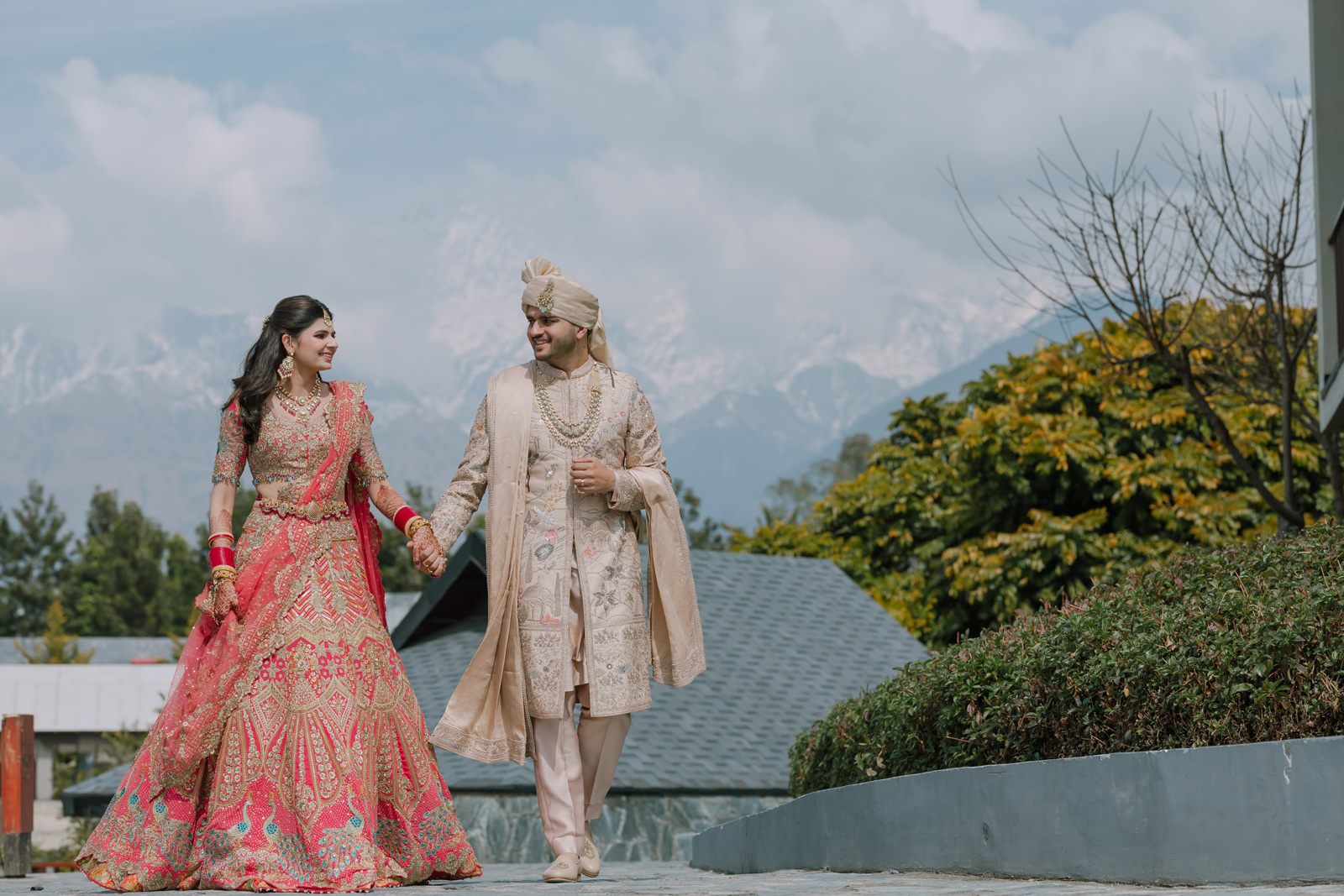
Plan a short couple portrait break
Natural couple photos need a little time without an audience. Instead of trying to fit portraits between rituals, set aside one 20–30 minute break just for the two of you. A few tips for making it work:
- Choose the right time. The hour before sunset gives the softest light. For a day wedding, right after the pheras or before the reception often works well.
- Step away from the crowd. A quiet terrace, courtyard or garden corner helps you forget you’re being watched.
- Expect gentle direction, not posing. Your photographer may suggest where to stand or which way to walk, then step back and let you be yourselves.
- Write it into the schedule. If it isn’t on the wedding timeline, it usually gets squeezed out. Share the timing with your planner and family.

Candid vs posed vs documentary wedding photography
These three terms get mixed up a lot. Here’s what each one means in practice:
| Style | How it works | Best for |
|---|---|---|
| Posed / traditional | The photographer arranges people and asks them to hold a position, often looking at the camera. | Formal family groups and stage photos with relatives. |
| Candid | The photographer captures unplanned moments as they happen: laughter, tears, glances, reactions. | Couples who want emotion and real expressions. |
| Documentary | The whole day is told as a story, with minimal interruption, from getting ready to the vidaai. | Couples who want to remember how the day felt, not just how it looked. |
Most modern Indian weddings use a mix: documentary and candid coverage for the day, a short gently directed couple session, and a well-organised set of family portraits. “Unposed” doesn’t have to mean “no direction at all”. It means direction is used to help a moment happen, not to stage it.

Don’t let candid mean missing family portraits
The main risk of a completely unposed approach is missing the photos your family will ask for later, such as you with your grandparents or every cousin together. Avoid that with a little planning:
- Write a family portrait list before the wedding, grouped by side of the family.
- Assign one cousin or friend to gather each group so the photographer doesn’t have to hunt for people.
- Do family portraits in one block, usually right after the ceremony or on stage at the reception, so the rest of the day stays relaxed.
- Name the people who matter most, such as an elderly grandparent or a relative travelling from abroad, so the photographer watches for their moments all day.

Camera-shy? A pre-wedding shoot is the best rehearsal
If the thought of being photographed makes you nervous, a pre-wedding or engagement shoot is the easiest fix. You get used to your photographer, learn which prompts feel comfortable, and discover how you look when you’re relaxed. By the wedding day, the camera feels familiar.
“We’re not the best bride and groom to deal with — pretty uncooperative. But, Nitin and Sandeep got us very comfortable and were able to take the natural photos we were going for — no poses.”
— Varinder Garewal, on their pre-wedding shoot in Kasauli
For ideas, see our guides to pre-wedding shoot ideas and what to wear for your pre-wedding shoot, or look at our pre-wedding photography.

How to choose a candid wedding photographer
A photographer’s personality matters as much as their portfolio, especially if you’re camera-shy. When you’re comparing photographers:
- Ask for two or three complete wedding galleries, not just highlights. Check whether guests and family look relaxed, not just the couple.
- Look for real emotion across the day: parents during the pheras, friends at the haldi, the couple between rituals.
- Notice how they talk to you on the first call. Do they listen and ask about you, or just talk about packages?
- Ask how they handle nervous couples. A good answer describes specific prompts, like walking together or talking, rather than promising you’ll “just feel comfortable”.
Questions to ask a candid wedding photographer:
- How much do you direct during couple portraits?
- What do you do if we feel awkward?
- How do you fit family portraits around candid coverage?
- How do you work during rituals without getting in the way?
- Can we share a list of must-have moments and people?
For a full checklist, read how to choose a wedding photographer.

What to tell your photographer before the wedding
The more your photographer knows about you, the less they need to direct you. Share these details before the day:
- Which situations make you self-conscious (for example, looking into the lens or being photographed in front of guests).
- The people who matter most, and any family dynamics to be aware of.
- Small personal moments planned for the day: a letter from your partner, a gift from a parent, a pet joining the celebrations.
- Any rituals specific to your community, and when they happen.
- Your schedule, including the couple portrait break and family portrait block.

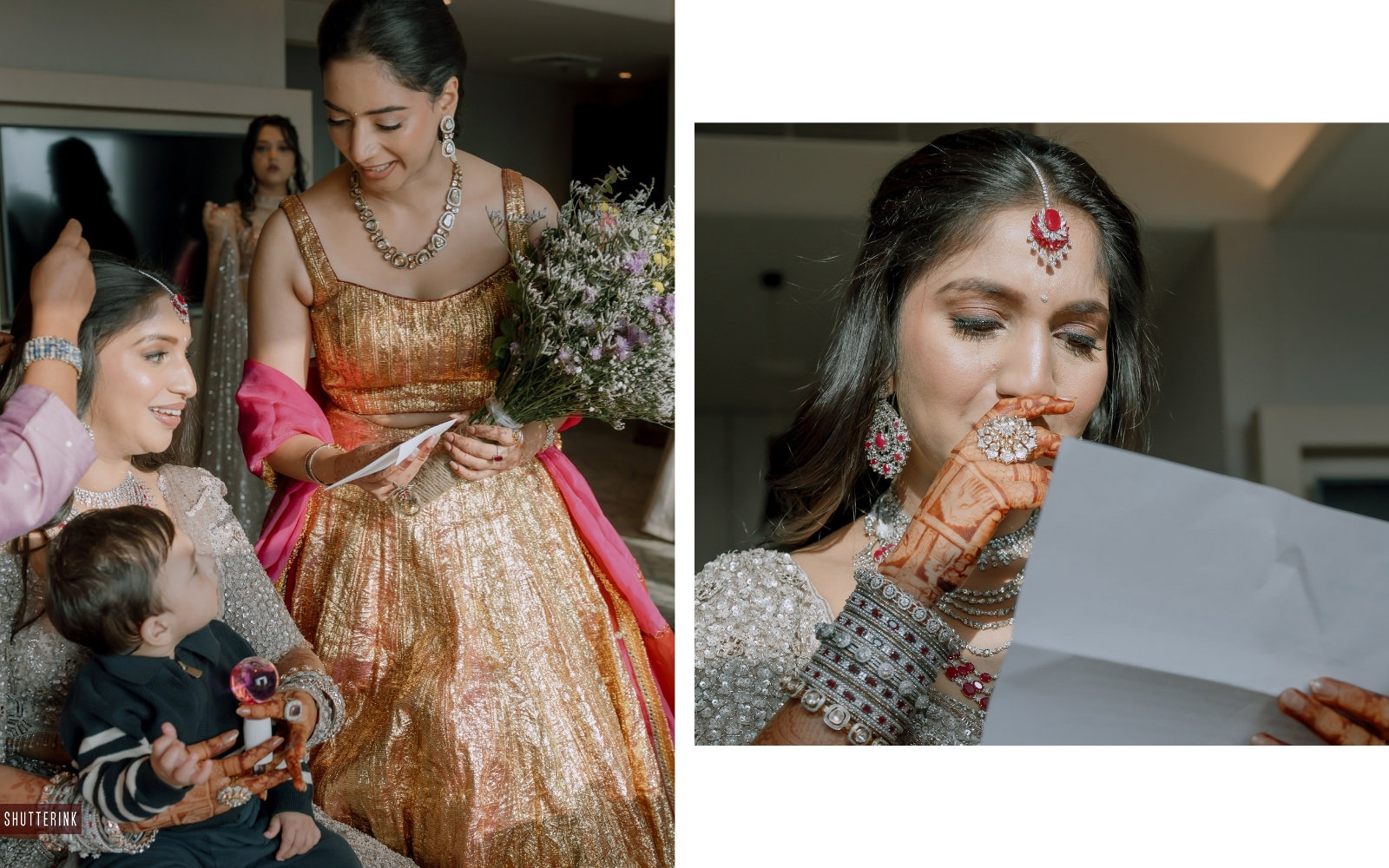
How Shutterink photographs camera-shy couples
Shutterink is a Delhi-based wedding photography and film team founded in 2013 by Nitin Dangwal and Sandeep Mohan. Our work is candid and documentary at heart. We spend time getting to know you and your family before the wedding, then stay out of the way so people forget we’re there. When we do direct, it’s to give you something to do together, never to make you hold a pose.
We have photographed more than 250 weddings in over 50 cities across five countries, and our work has been recognised by Fearless Photographers (10 best wedding photographers in the world, 2018), ISPWP and Wezoree. You can see complete weddings in our wedding stories and our guide to capturing real moments.
Nervous about being photographed? Tell us about your wedding and what makes you uncomfortable, and we’ll set up a call to talk it through. Contact Shutterink or call +91 85588 58017.
Frequently asked questions
How do I look natural in wedding photos?
Focus on your partner instead of the camera. Walk, talk, hold hands or share a joke, and let the photographer capture the moment. Natural expressions come from real interaction, not from holding a pose.
What if I hate having my photo taken?
Tell your photographer early. Choose a candid or documentary photographer who directs gently, plan a short couple portrait break away from guests, and consider a pre-wedding shoot so you get used to the camera before the wedding day.
Does candid wedding photography mean no posing at all?
No. Candid photographers capture most of the day without interrupting, but still give light direction for couple portraits and organise family group photos so nothing important is missed.
How long should couple portraits take on the wedding day?
Plan 20–30 minutes for couple portraits, ideally in the hour before sunset or at a quiet point between events. Keep it in the written schedule so it doesn’t get squeezed out.
What if one of us is more camera-shy than the other?
Let the photographer know. They can start with side-by-side or walking shots and moments where you’re doing something together, so the shyer partner never feels put on the spot.
What is the difference between candid and documentary wedding photography?
Candid photography captures unplanned moments and emotions. Documentary photography goes further and tells the story of the whole day in order, with minimal interruption. Most candid photographers in India use a documentary approach for much of the wedding.
Should we do a pre-wedding shoot if we’re camera-shy?
Yes. A pre-wedding shoot lets you get comfortable with your photographer, find out which prompts feel natural and see how you look when relaxed, so the wedding day feels much easier.