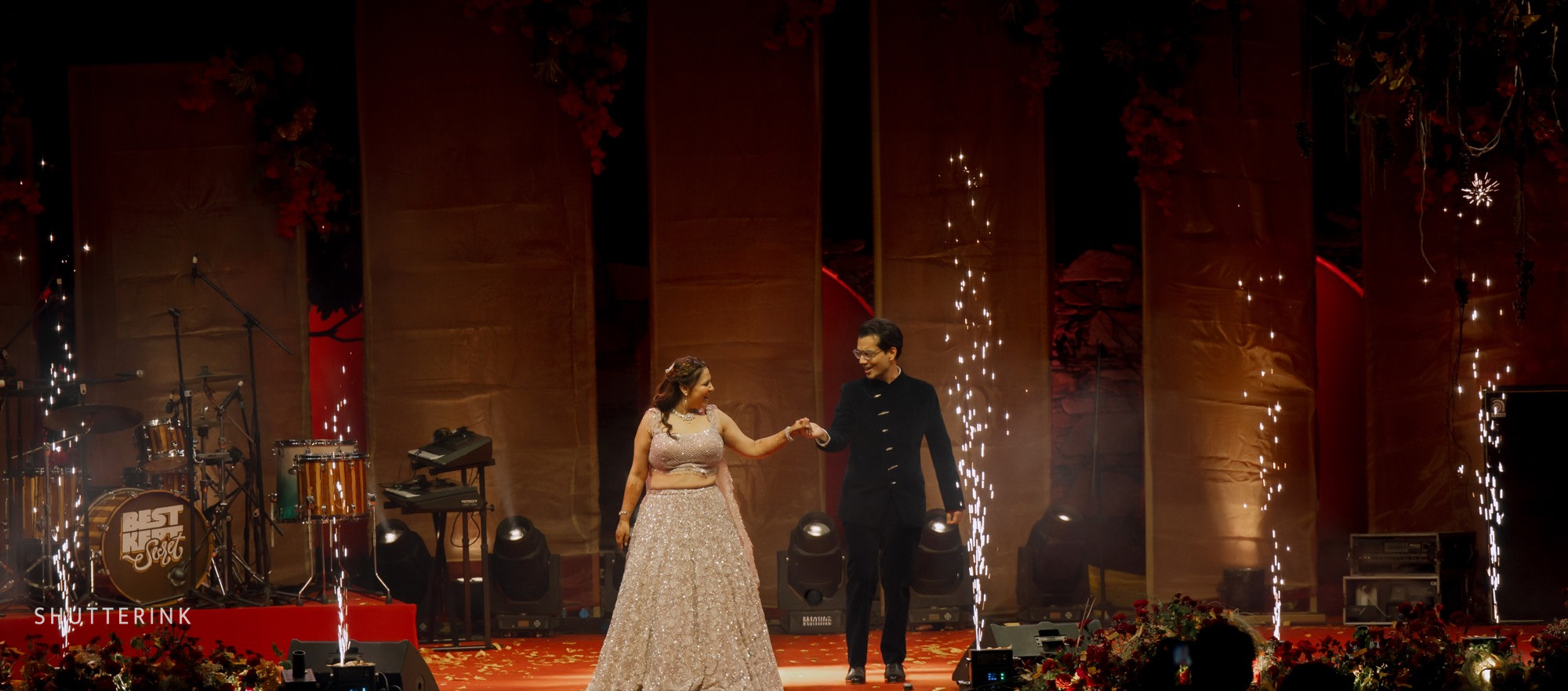
The best sangeet photos are rarely posed. They’re the bride throwing her head back laughing at her cousins’ performance, the groom being pulled onto the dance floor, a parent dancing for the first time in years. A sangeet moves fast, so the real skill is knowing which moments are coming and being in the right place, with the right light, when they happen.
This post is a practical sangeet shot list, organised by how the evening usually unfolds, with a few easy “poses” for the bride and couple that never feel like poses. Every photo here is from a real sangeet or garba night we’ve photographed.
Before the sangeet: getting ready
The hour before the sangeet is relaxed, and that’s exactly why it photographs so well. Friends are in the room, the music has already started, and nobody is performing yet.
- Final touches. Earrings going on, a friend fixing the dupatta, the last look in the mirror.
- A solo portrait in soft light. Stand near a window or a warm lamp rather than under ceiling lights.
- The outfit in motion. One slow twirl in a corridor or open room shows a lehenga’s flare far better than a still pose.
- Friends and family in their outfits before the evening gets busy.


During the performances
Performances are planned, so they’re the easiest part of the evening to photograph well, as long as your photographer knows what’s coming.
- The couple’s reactions. Some of the best sangeet photos are taken facing the audience, not the stage. Seat the couple in the front row with clear light on their faces.
- Each performance at its peak. Lifts, spins, the final pose and the moment the crowd cheers.
- Parents and grandparents performing. These are often the most treasured photos from the whole wedding.
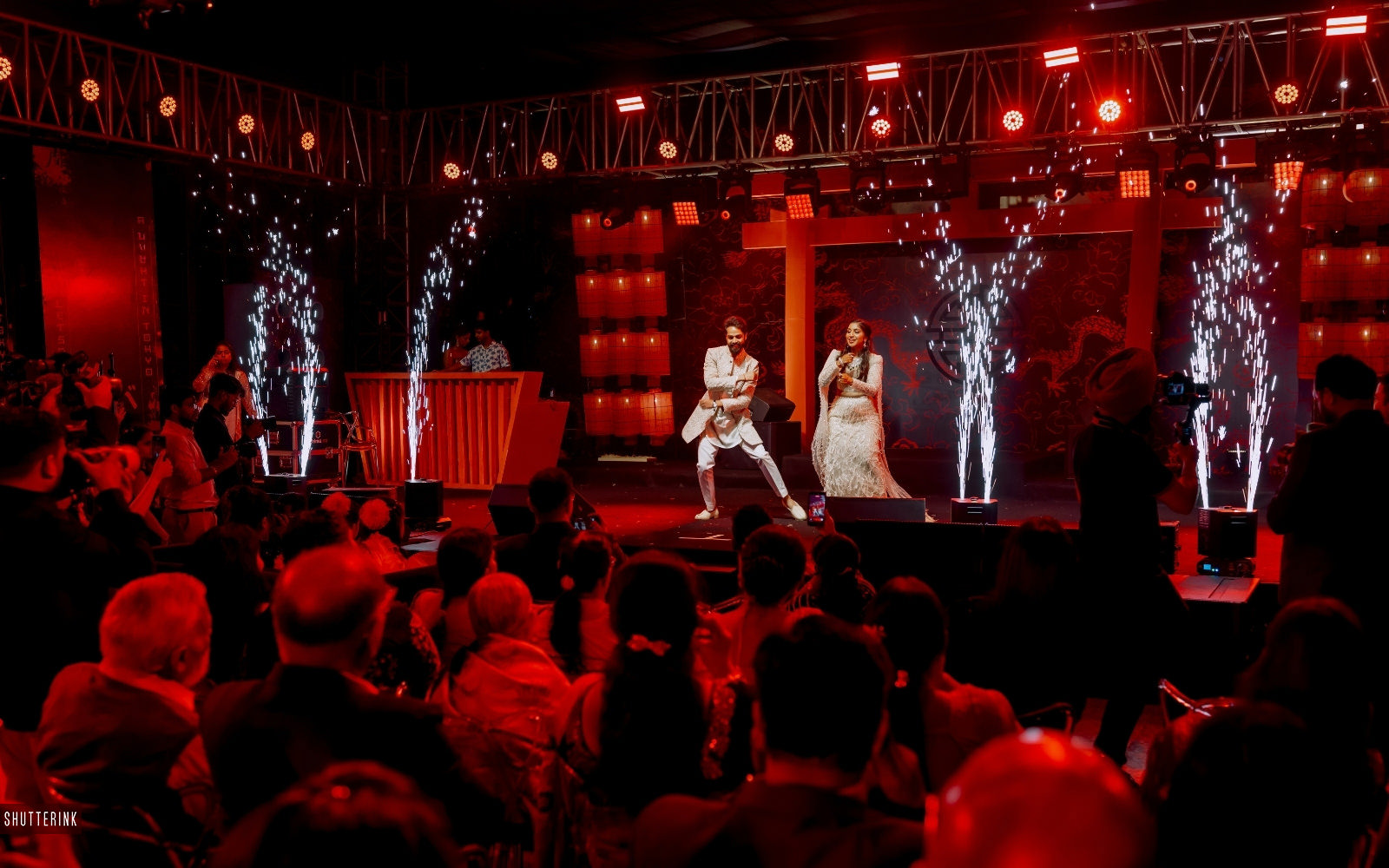
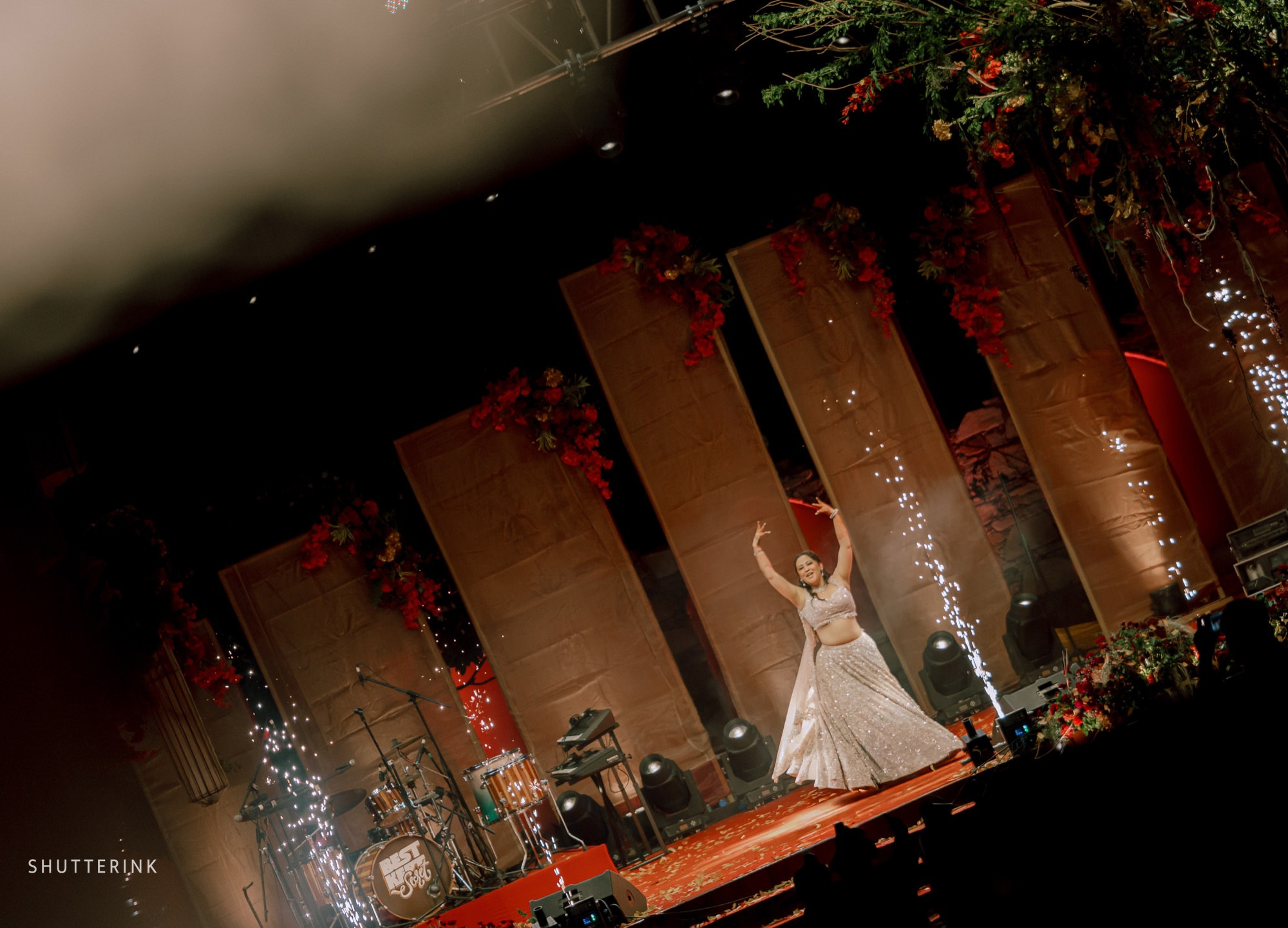
- The couple’s own dance, especially any planned moments like a dip, a lift, confetti or cold pyros.
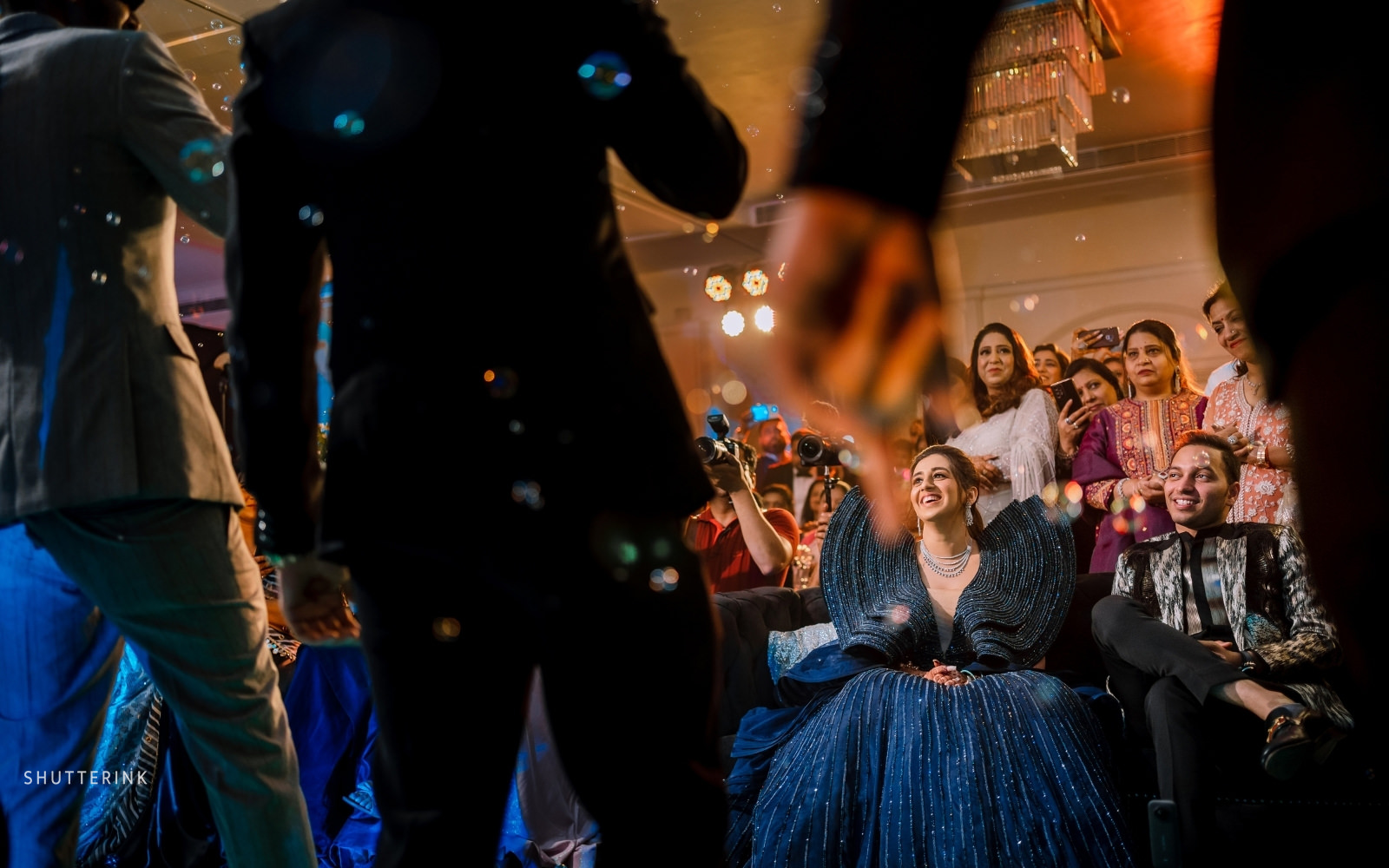
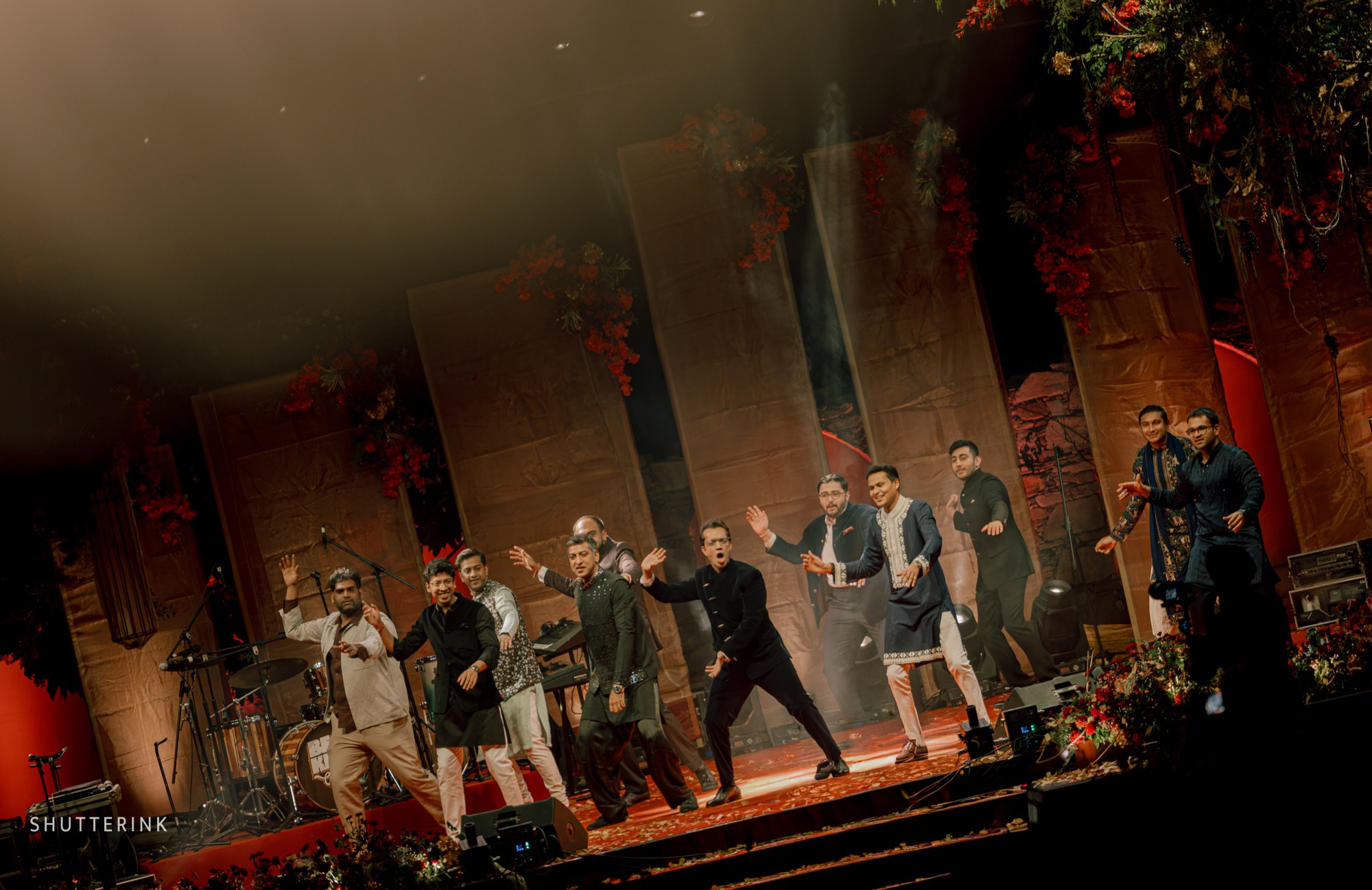

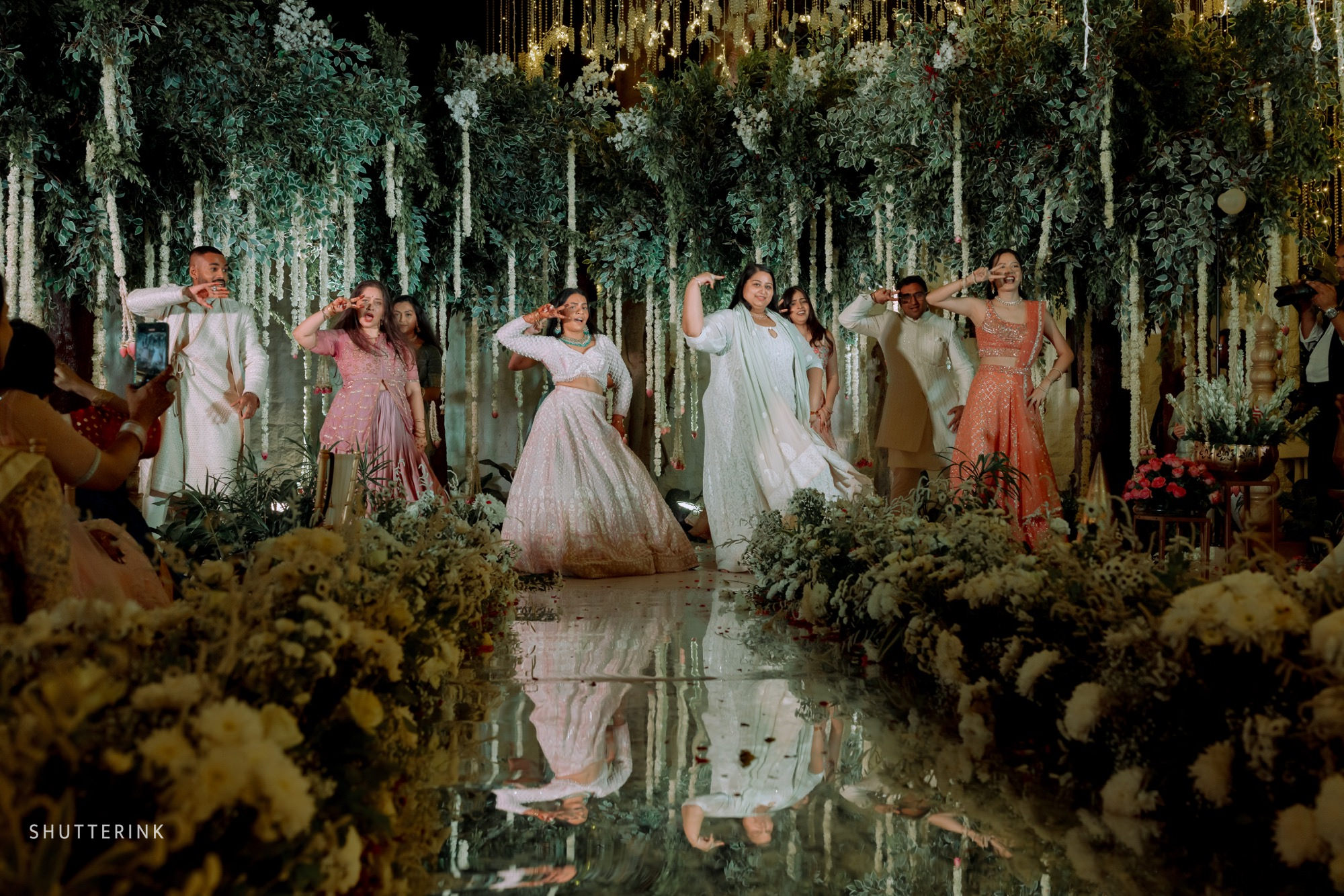


On the dance floor
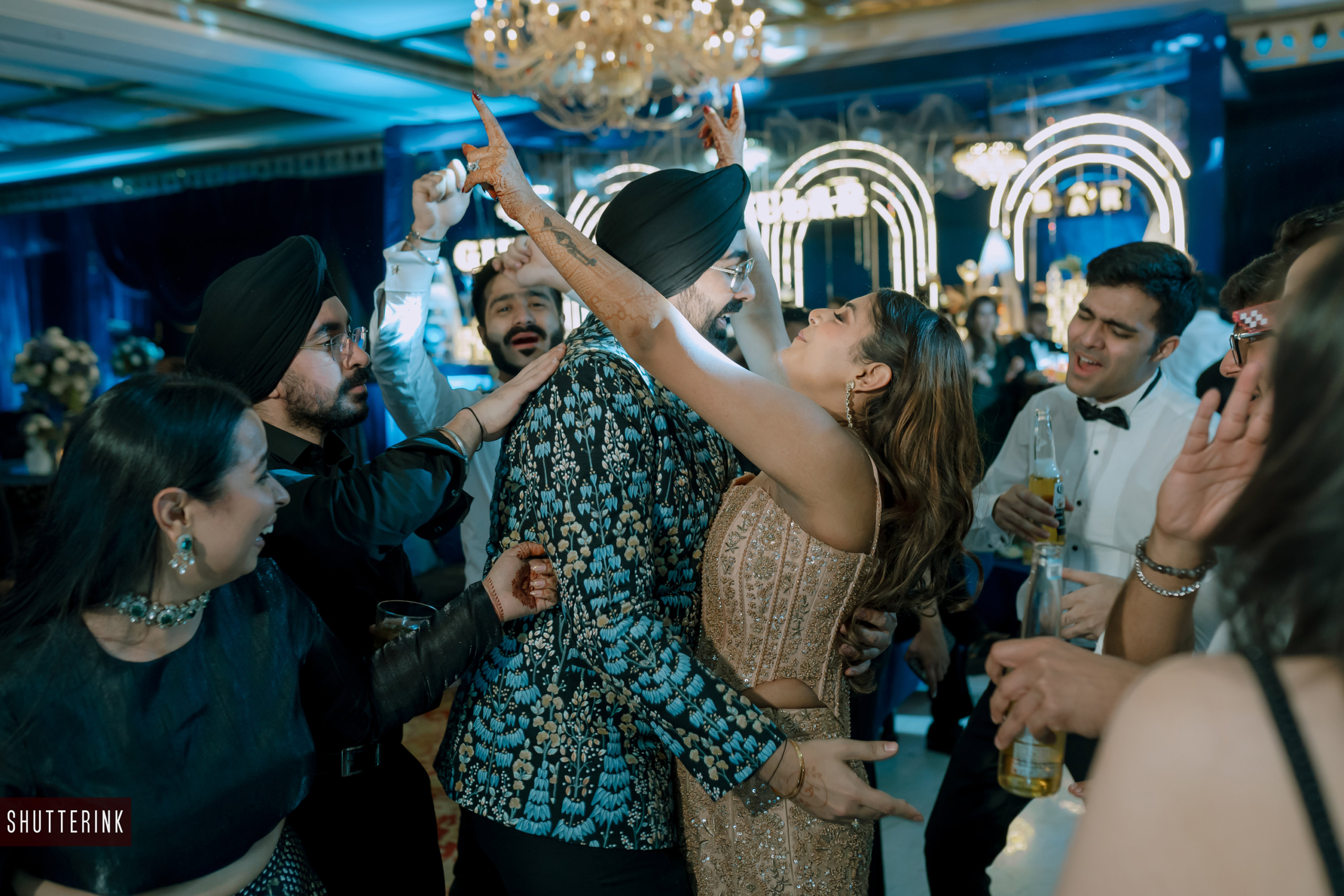
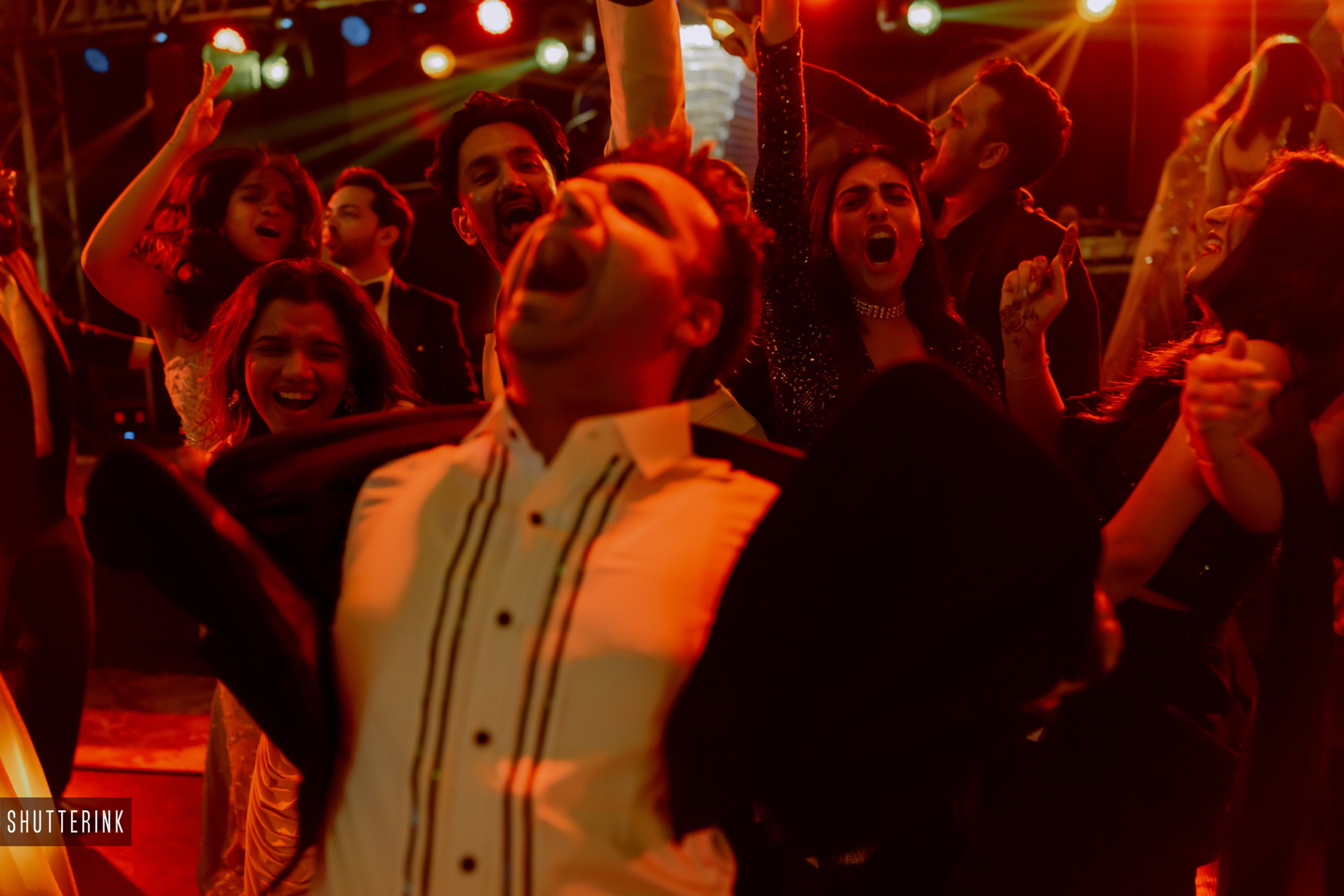
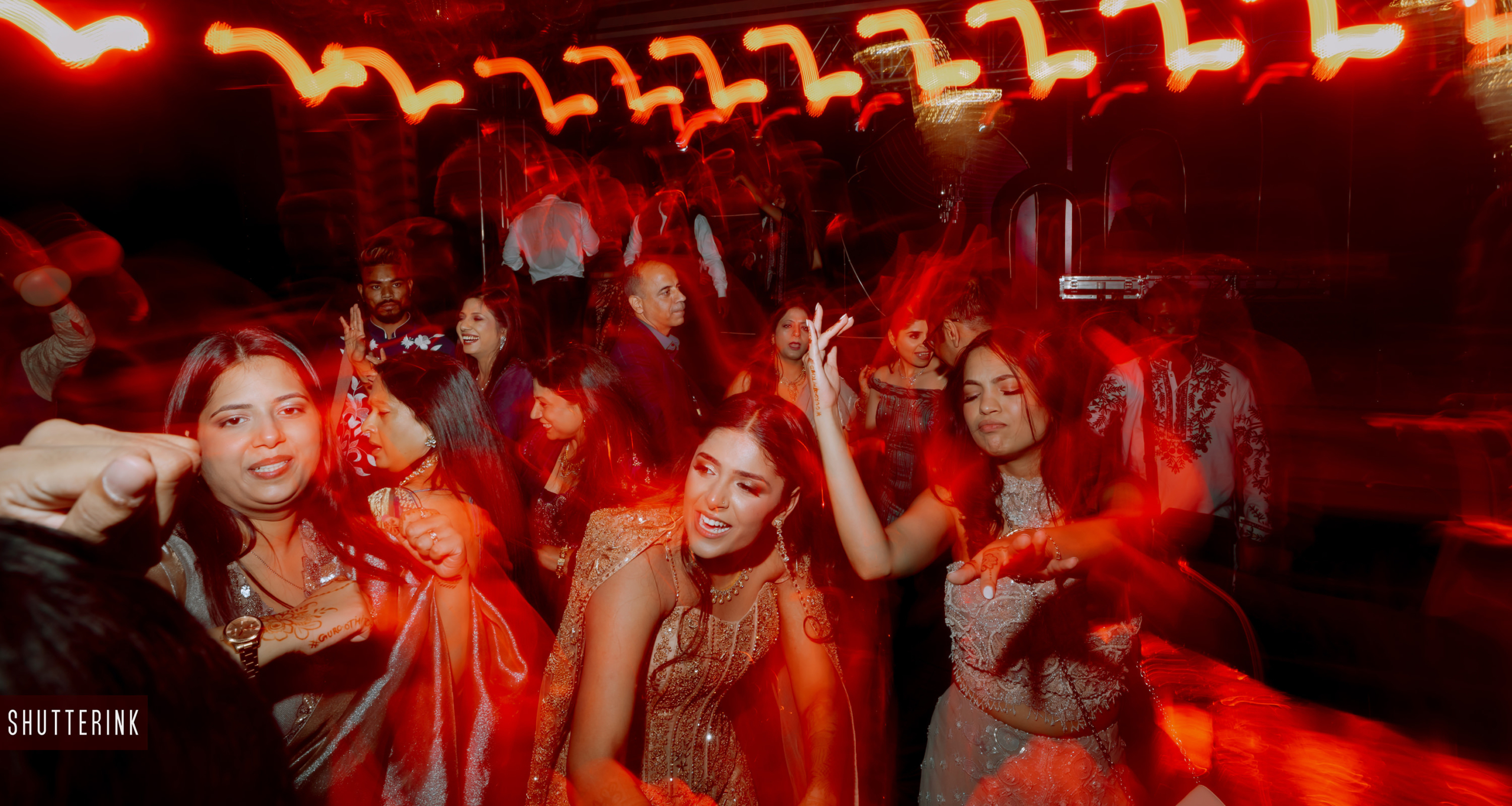
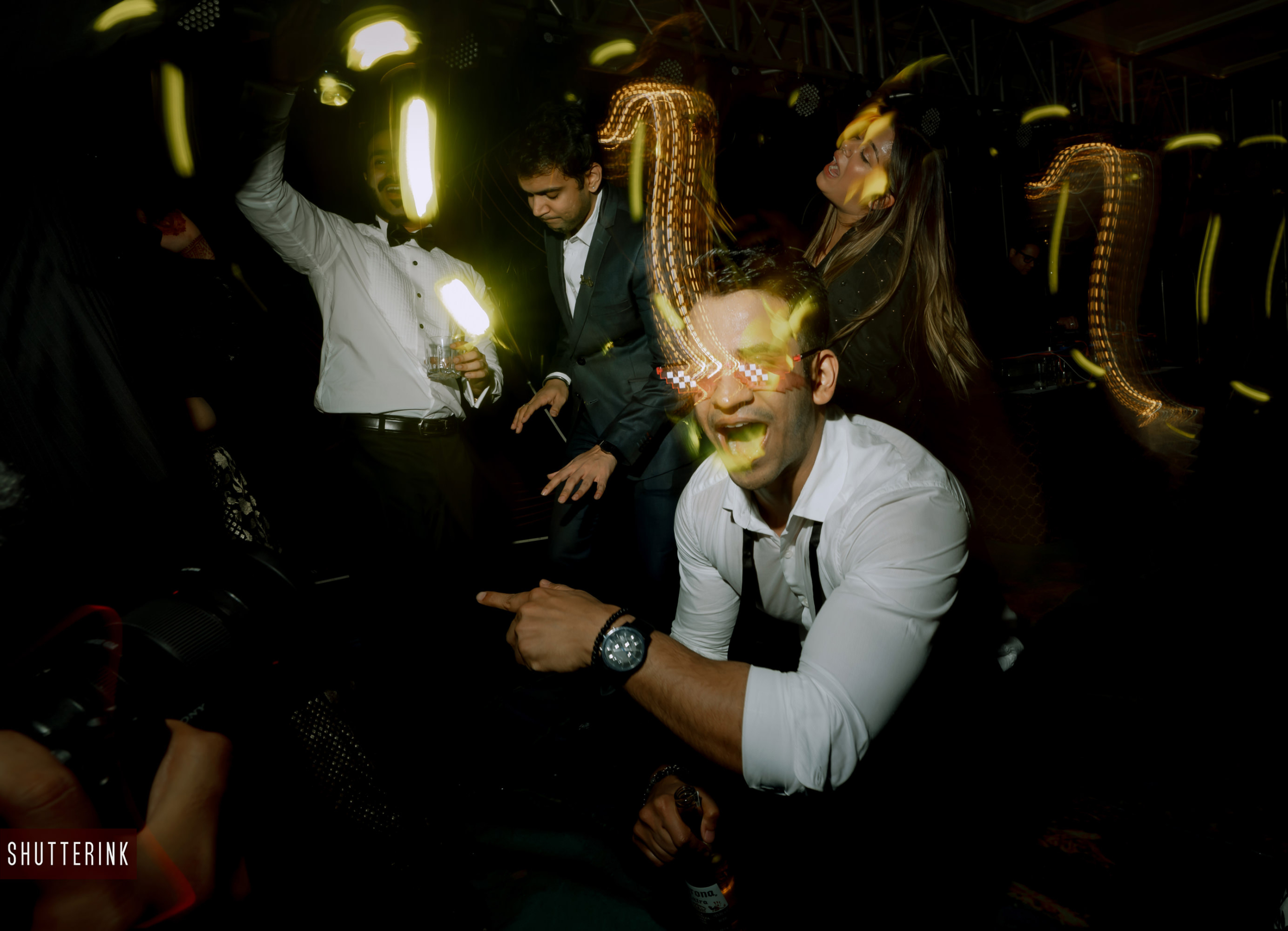
Once the floor opens, the photos get loud, blurry and joyful. This is documentary photography at its best: no direction, just anticipation.
- The groom or bride being pulled onto the floor.
- Friends lifting the couple onto their shoulders.
- The bride dancing with her parents and closest friends.
- Wide frames of the whole floor, so you remember how full it was.
- Small reactions: a grandmother clapping from her chair, kids copying the steps.



Garba and dandiya nights
For Gujarati weddings, the garba is often the most energetic event of the wedding. Daytime or early-evening garba gives beautiful natural light, and the circular dance creates constant movement. At Riddhi and Fenil’s wedding in Mussoorie, the garba was danced to Falguni Pathak songs in the mountain air.
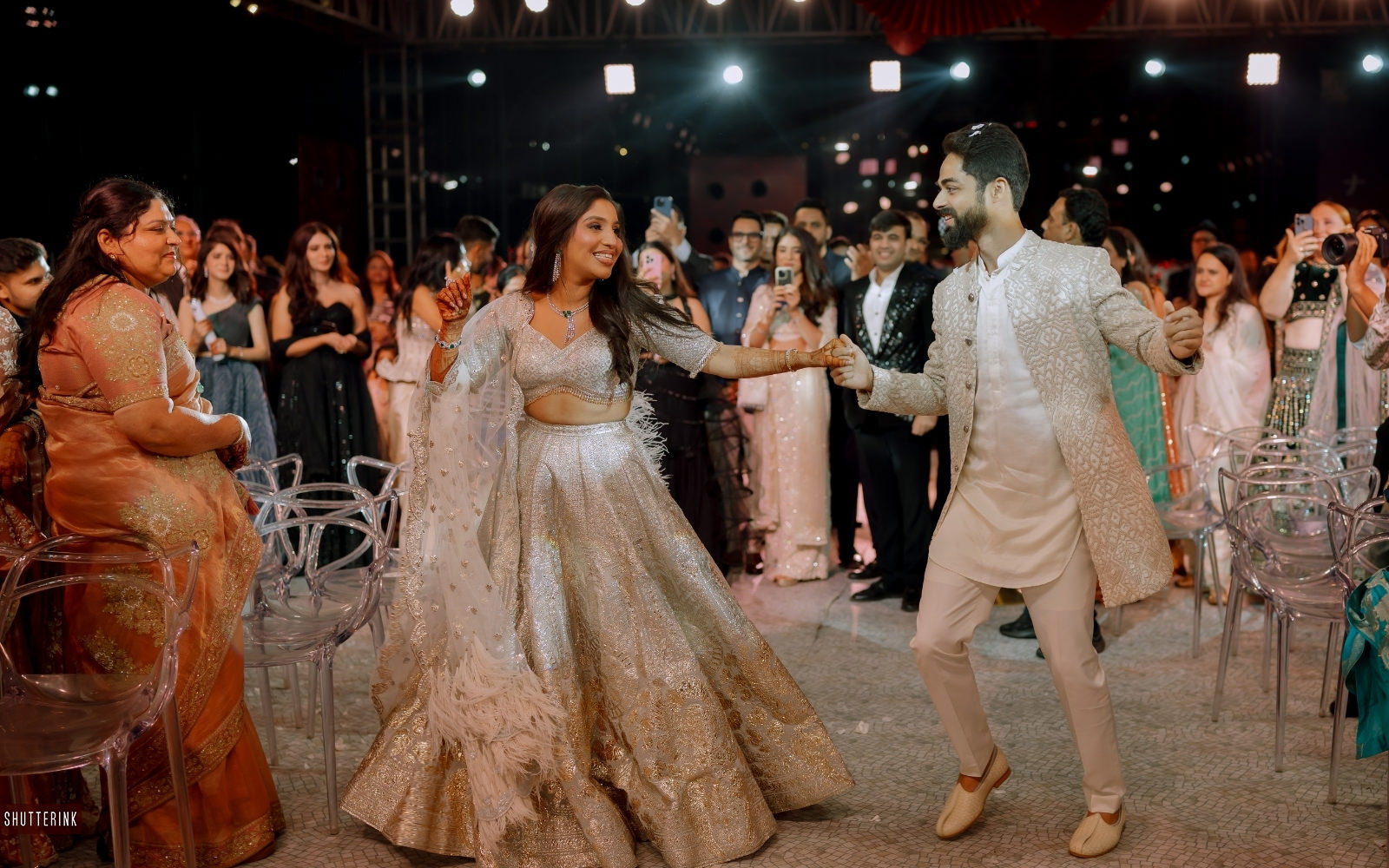
- Twirls in the circle. A lehenga opens fully on the turn, so a few seconds of patience gives the best frame.
- The bride dancing with family, especially parents.
- Dandiya sticks mid-strike and the circle from above if there’s a balcony.


Easy sangeet “poses” for the bride and couple
If you’d like a few portraits, keep them short and give yourselves something to do. These work in almost any sangeet setting:
- The slow twirl: the bride turns once, slowly, while looking at her partner or a friend instead of the camera.
- The walk-in: walk towards the camera holding hands, chatting, just before your entrance.
- The practice step: run one move from your couple dance in a quiet corner. It always ends in laughter.
- The front-row lean: lean into each other during a performance, and let the photographer catch you reacting.
- The step-out: two minutes away from the party, under fairy lights or near the stage glow, just the two of you.


Wearing a lehenga or a saree to your sangeet
- Lehenga: twirls and walking shots show the flare and embroidery best. Ask your photographer to shoot a short burst on the turn.
- Saree: secure the pleats and pin the pallu before you dance. For portraits, a side profile or a glance back over the shoulder shows the drape and border. Holding the pallu lightly gives your hands something natural to do.
- Jewellery and mehndi: a few close details in soft light, ideally before the stage lights take over.
Lighting tips for better sangeet photos
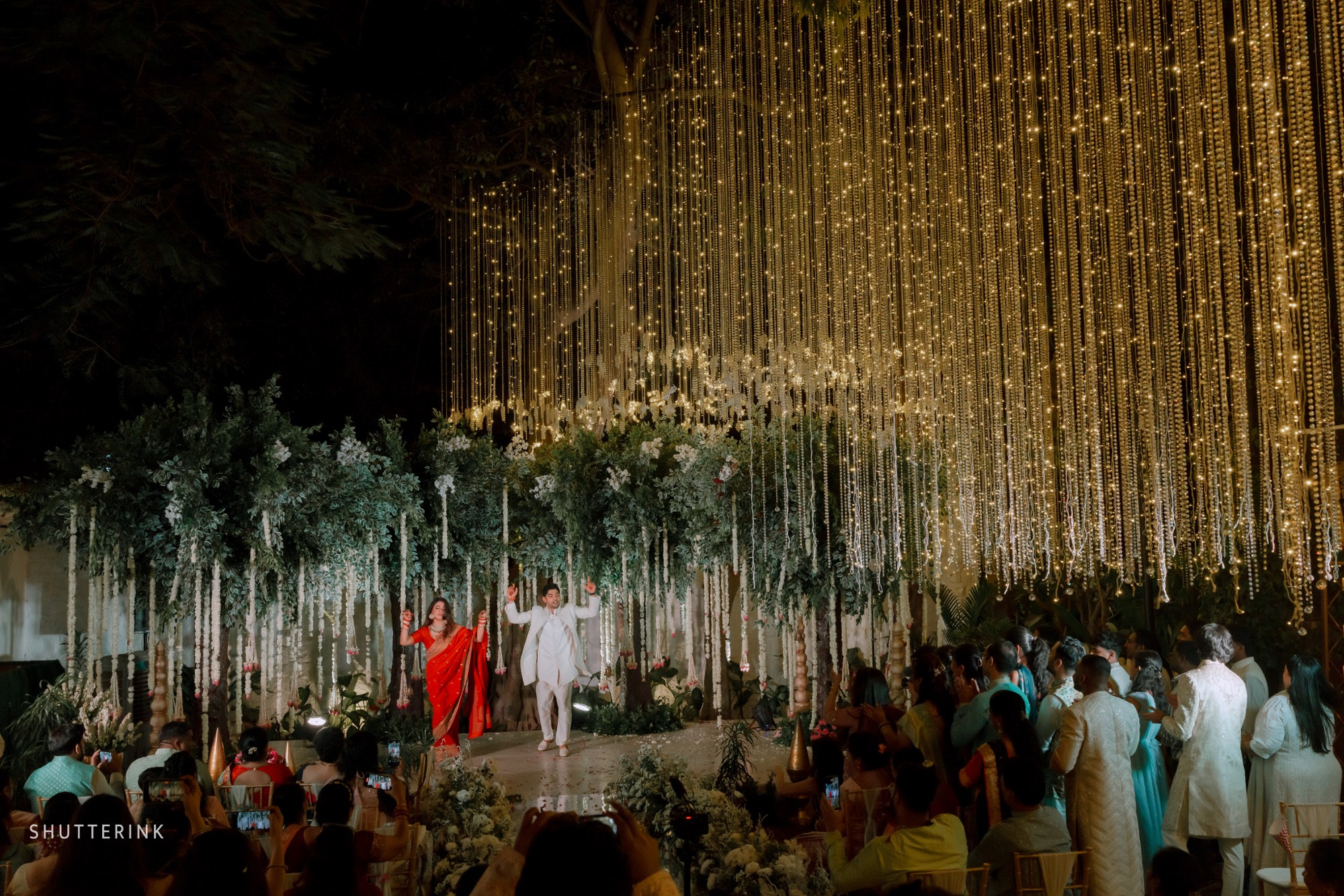
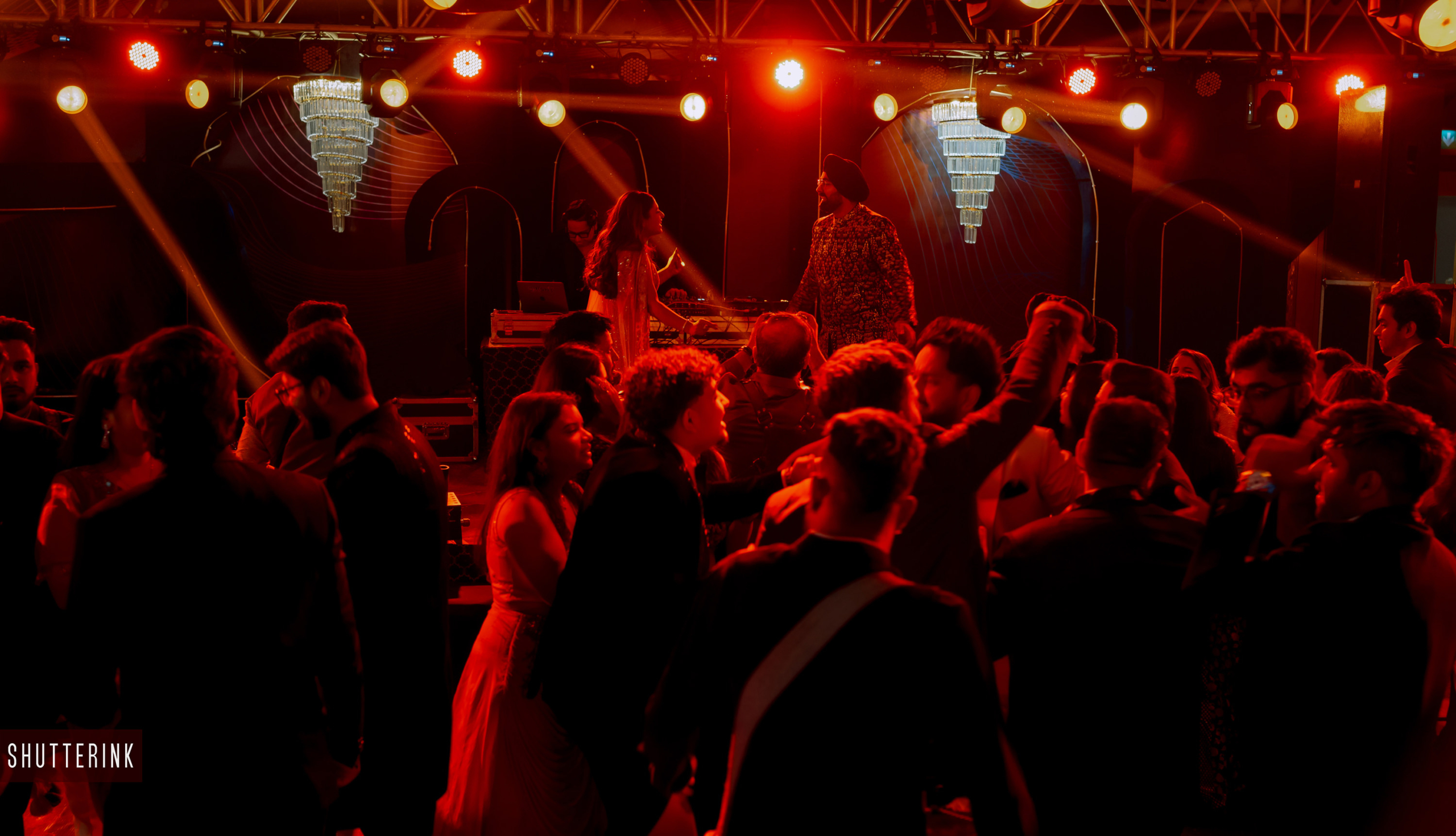
- Ask for warm, even light on the couple’s seats and the front of the stage. Coloured lights and lasers look great in the background but make skin tones strange.
- Plan effects with your photographer. Cold pyros, confetti and low fog are beautiful, but only if the photographer knows the cue.
- Avoid a dark dance floor. A few warm string lights or uplighters around the edges help keep faces visible.
- Leave the LED wall dimmed during speeches, so it doesn’t overpower faces.
Send your photographer a sangeet brief a week before the wedding:
- Running order of performances, with who is performing
- The couple’s dance: song, timing and any lifts, dips or effects
- Must-have people: grandparents, siblings, close friends
- Planned surprises, speeches or toasts
- Outfit details you’d like photographed
How we photograph a sangeet
At Shutterink, we photograph the sangeet the way it feels: mostly candid and documentary, with a few quick portraits only when the couple wants them. With photography and films covering the same evening, we split our attention between the stage, the audience and the dance floor so the big moments and the small reactions are both covered. Our films include separate edits of the performances, so the sangeet can be relived in full.
Shutterink was founded in 2013 by Nitin Dangwal and Sandeep Mohan and has photographed more than 250 weddings in over 50 cities across five countries. For more, see our guides to natural wedding photos without posing and wedding films in India, or tell us about your wedding.
Frequently asked questions
What are the best sangeet photography poses for a bride?
The best ones barely feel like poses: a slow twirl, a walk with friends, a laugh during a performance, or dancing with her parents. A short solo portrait in soft light before the sangeet adds a polished frame without taking time away from the evening.
What are good couple poses for a sangeet?
Walking in together before your entrance, practising a step from your couple dance, leaning into each other in the front row, and a quick moment together away from the crowd. Give yourselves something to do rather than holding a pose.
How do you photograph a saree at a sangeet?
Pin the pleats and pallu securely before dancing. For portraits, a side profile or a glance over the shoulder shows the drape and border, and holding the pallu lightly keeps the hands natural.
How can we get better sangeet photos in low light?
Ask your decorator for warm, even light on the couple’s seating and the front of the stage, avoid lighting faces only with coloured lights or lasers, and share the timing of any effects such as cold pyros, confetti or fog with your photographer.
Which sangeet moments should we make sure are photographed?
The couple’s reactions to performances, parents and grandparents performing, the couple’s own dance, the moment the dance floor opens, and the bride dancing with her family. Share a running order and a list of must-have people with your photographer.
Should we have a film of the sangeet as well as photos?
If your sangeet has performances, songs or speeches, a film is worth it. Photos capture the peak moments, while a film keeps the music, voices and full performances.