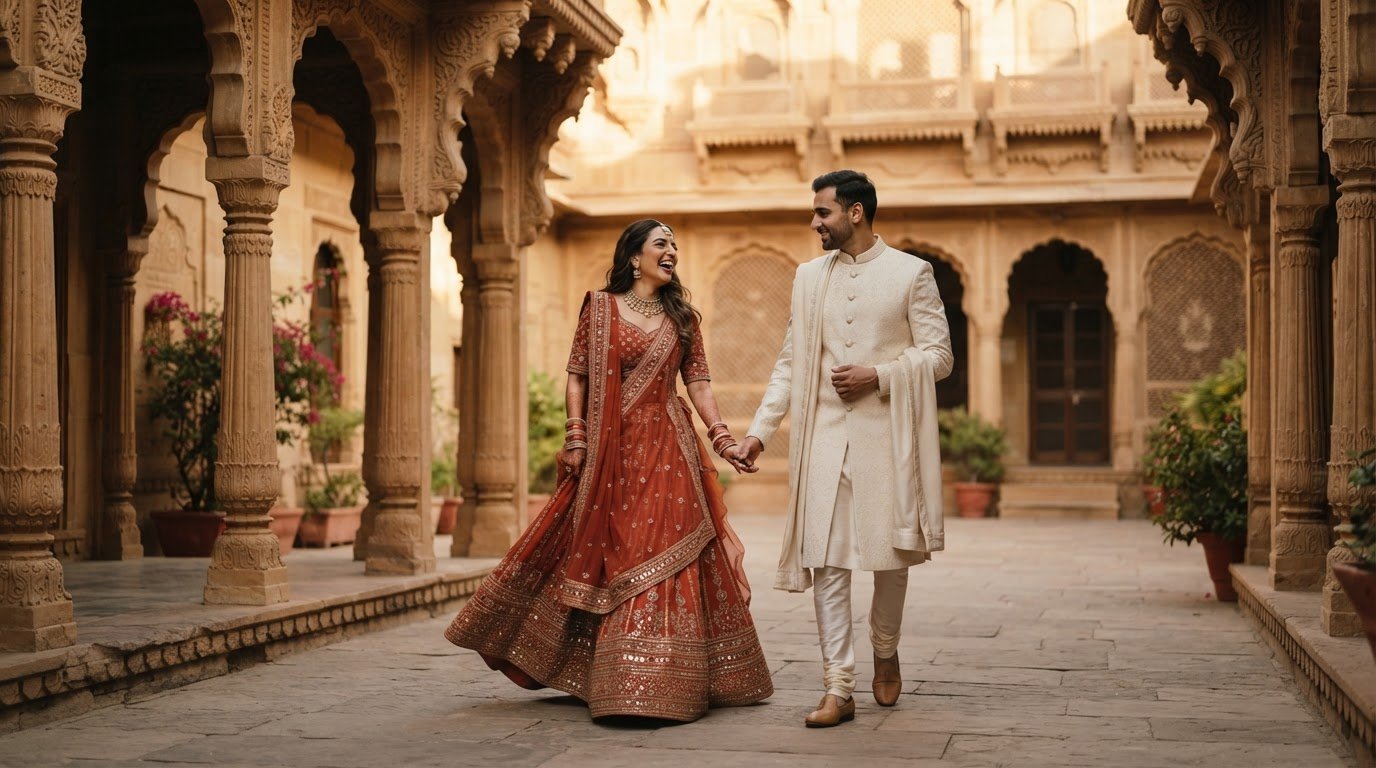
The most memorable pre-wedding outfits aren’t always the most elaborate. They’re the ones that feel right for the setting, the theme and the two of you. When deciding what to wear for a pre-wedding shoot in India, choose looks that suit the backdrop, from relaxed beachwear to traditional attire for a heritage setting. Comfort matters too, so you can move naturally and enjoy the moments you’re creating together.
It’s easy to get caught between a dramatic statement outfit and something simple enough to feel like you. This guide explores both, with ideas for women’s casual and western wear, coordinated couple looks and traditional Indian outfits. You’ll also find ways to shape your choices around different settings and moods, whether you’re drawn to a scenic retro-inspired shoot, a palace-like backdrop or an easy vacation feel. The aim is a look that feels considered, photographs beautifully and lets your connection take centre stage.
Key Takeaways
- Match each outfit to the shoot’s setting and mood, so the look feels at home in the frame.
- Choose western or casual pieces that let you move comfortably and still feel like yourself.
- Coordinate colours or one shared detail for a polished couple look without dressing identically.
- Explore Maharashtrian and Peshwai elements for a culturally rooted look with distinctive character.
- Balance men’s traditional attire with the overall theme, choosing details that complement rather than compete.
1. Choosing outfits to suit a pre-wedding photoshoot theme
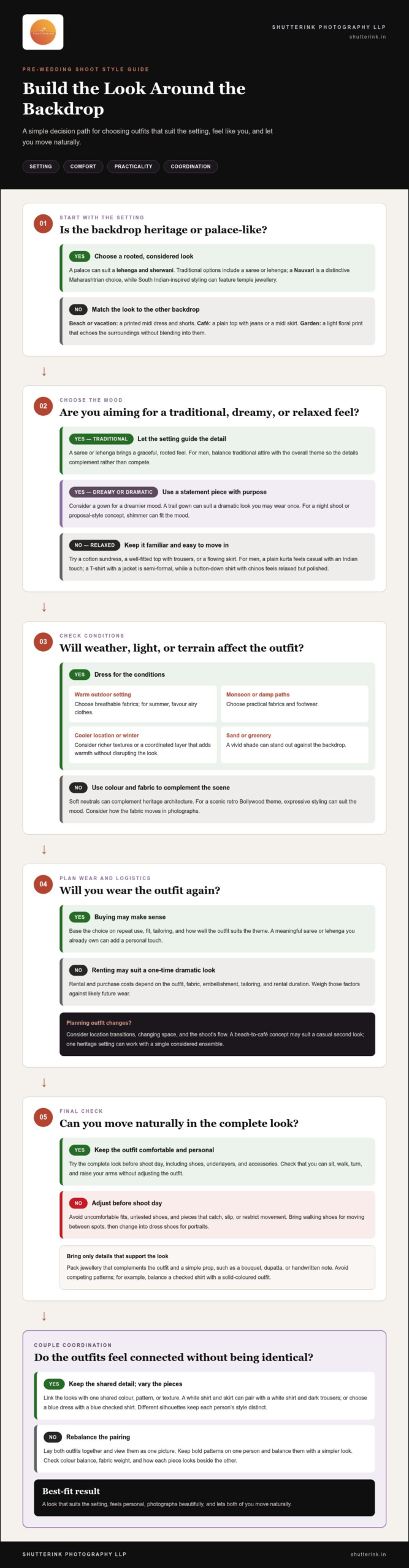
The best outfits suit your theme, setting and comfort. If you’re deciding what to wear for a pre-wedding shoot in India, start with the backdrop. A palace setting can suit a lehenga and sherwani, while a beach or vacation-style shoot may call for a printed midi dress and shorts. Choose clothes that let you move naturally.
For traditional styling, a saree or lehenga can create a graceful, rooted look. In Maharashtra, the Nauvari is a distinctive choice for a traditional pre-wedding outfit. South Indian-inspired looks can feature temple jewellery. For a dreamier mood, consider a gown; men can pair a suit with Indian or western attire. A jacket over a T-shirt offers a semi-formal option.
Rent, buy or choose a traditional outfit you already own. Renting a trail gown can suit a dramatic look you may wear once; buying may make sense if you’ll wear it again. A meaningful saree or lehenga adds a personal touch. Base your choice on repeat use, fit, tailoring and how well the outfit suits your theme.
Rental and purchase costs depend on the outfit, fabric, embellishment, tailoring and rental duration. Weigh those factors against likely future wear, then choose a look that fits your priorities. If you’re planning outfit changes, consider location transitions, changing space and the shoot’s flow. A beach-to-café concept may suit a casual second look; one heritage setting can work with a single considered ensemble.
Choose colours and fabrics to suit the backdrop and weather. A vivid shade can stand out against sand or greenery, while soft neutrals can complement heritage architecture. In warm outdoor settings, breathable fabrics help you stay comfortable. For cooler locations, consider richer textures and how the fabric moves in photographs.
For summer, favour airy clothes; for monsoon, choose practical fabrics and footwear for damp paths. In winter, a coordinated layer can add warmth without disrupting the look. A night shoot or proposal-style concept can suit shimmer, while a scenic retro Bollywood theme invites expressive styling. Consider how each choice fits the setting and mood.
Bring walking shoes for moving between spots, then change into dress shoes for portraits. Pack jewellery that complements your outfit and a simple prop, such as a bouquet, dupatta or handwritten note. Before shoot day, try the complete look, including shoes and accessories. Check that nothing catches, slips or restricts your movement.
As you decide what to wear for a pre-wedding shoot in India, avoid uncomfortable fits, untested shoes and competing patterns. Try both outfits together and view them in natural light. For example, pair a checked shirt with a solid-coloured outfit so one pattern doesn’t dominate. Choose clothes that feel personal and suit the setting.
2. Women’s western and casual outfit options
For a relaxed shoot, choose simple clothes that feel comfortable from the first frame to the last. A cotton sundress, a well-fitted top with trousers or a flowing skirt can create an easy western look. Pick a silhouette you already enjoy wearing, then check that you can sit, walk and turn without constantly adjusting it. Familiarity helps the outfit feel like yours, not a costume.
A printed midi dress can work well for a beach or vacation-style concept. Since a midi hem falls to the calf, consider how it will move across sand or uneven paths. For a café setting, pair a plain top with jeans or a midi skirt. In a garden, a light floral print can echo the surroundings without blending into them. Keep the pattern scale and backdrop in mind.
Comfort comes down to small choices too. Try the complete outfit before shoot day, including underlayers, shoes and accessories. Check that straps stay in place and fabric doesn’t pull when you raise your arms. If you’ll move between a car, a walkway and a lawn, choose shoes suited to all three. A second pair of flats can make transitions easier.
Casual couple outfits feel connected when one detail links them. You could wear a white shirt and skirt while your partner wears a white shirt with dark trousers. Or choose a shared colour in different pieces, such as a blue dress with a blue checked shirt. The aim is harmony, not identical outfits. Keep bold patterns on one person and balance them with a simpler look.
For men, a plain kurta adds an Indian touch to casual styling. A T-shirt with a jacket creates a semi-formal look, while a button-down shirt and chinos feel relaxed but polished. In a leafy park, a checked shirt can add texture; beside a simple wall, solid colours keep attention on your expressions. Choose clothes that fit comfortably at the shoulders and waist.
Build each look around the setting’s practical details. A beach outfit should move easily in a breeze; a city walk calls for shoes that feel comfortable on pavement. Avoid fabrics that crease sharply when you sit, and keep accessories light enough for easy movement. If you’re choosing a jacket, try it over the intended top. Remove it if the setting or temperature changes.
Before settling on your final combination, lay both outfits together and view them as one picture. Check the colour balance, fabric weight and how each piece looks beside the other. A white outfit can feel crisp against greenery, while earth tones can complement a stone or brick backdrop. Choose a pairing that lets both of you move naturally and enjoy the shoot.
3. Couple twinning and colour coordination
Coordinated outfits can feel connected without looking identical. Start with one shared element: colour, pattern or texture. For example, one partner might wear a checked shirt while the other chooses a plain outfit in a related shade. The shared colour links the looks, while different silhouettes keep each person’s style distinct. This approach suits couples who want visual harmony without matching head to toe.
Matching colours offer another simple option. Pick a colour you both enjoy, then vary its shade or use. One person can wear a deeper tone while the other chooses a softer version. For a clean, relaxed frame, you can both wear white, with different cuts and accessories adding personality. Check the colours together in daylight, since indoor lighting can change how fabrics appear.
Message sweatshirts can bring a personal touch to playful, casual portraits. Choose wording that feels natural to both of you rather than forcing a joke that doesn’t suit your personalities. Keep the rest of each outfit simple so the message remains easy to read. A leather jacket can create a different shared accent, especially when each person wears it over a separate base outfit.
Think about the setting before settling on a palette. In a green garden, colours that contrast with the foliage can help both outfits stand out. Against a pale wall, deeper tones can add definition. For a lively city setting, a checked pattern can bring texture, while a solid colour on the other person keeps the frame balanced. Avoid pairing competing patterns, such as checks and bold stripes.
Lay both outfits side by side before the shoot. Look at colour, pattern size, fabric weight and how each piece moves. A heavy jacket beside a very light outfit can feel visually unbalanced, so adjust the layers or simplify one look. Check the accessories too: matching shoes or a shared accent can connect the outfits without adding another dominant colour.
Comfort matters in coordinated styling. Try sitting, walking and turning in the full outfits, including jackets and shoes. Message sweatshirts should fit comfortably, and leather jackets shouldn’t restrict arm movement. If one person prefers a relaxed look and the other a polished one, connect them through colour instead of matching every garment. The strongest pairing leaves room for both personalities.
Before choosing your final looks, take a quick phone photo of both outfits together. It makes colour clashes and overly similar patterns easier to spot. Keep coordination to one clear idea, such as matching tones or a shared jacket detail. That restraint creates a cohesive couple look while keeping the focus on your expressions and connection.
4. Maharashtrian and Peshwai looks
A Maharashtrian look can bring regional character to your portraits. The Nauvari is a distinctive choice for a traditional pre-wedding outfit in Maharashtra. Its drape creates a strong silhouette, so balance the blouse and jewellery. Choose colours that suit the setting, such as a rich jewel tone against a pale heritage wall. Against a softer backdrop, a deeper shade can help define the outfit.
Build the look around the saree’s drape and your comfort. A Nauvari should feel secure at the waist and let you walk, sit and turn naturally. Try the full outfit before shoot day, including the blouse, footwear and accessories. Practise a few poses, especially if you plan to sit on steps or move across uneven ground. Comfortable movement helps the styling feel graceful rather than rigid.
For a Peshwai-inspired pairing, one partner can wear a Nauvari or traditional saree while the other chooses a kurta with a dhoti-style bottom. A sherwani offers a more formal alternative. Keep the fabrics and colours connected without making both outfits identical. For example, pair a green saree with a cream kurta, then echo the green in a stole or turban accent.
Accessories shape the mood. A nath, traditional earrings, bangles or a hair ornament can complement a Maharashtrian saree. Choose a few pieces that work together rather than layering every detail. For a Peshwai-inspired portrait, a pheta can add a regional note to the groom’s look. Make sure it sits securely and won’t need constant adjustment as you move.
The setting also guides the finish. At a heritage property, traditional jewellery and richer fabrics can suit carved stone and timber details. In an open garden, simplify the accessories and let the saree’s colour lead. If the shoot includes close portraits and full-length frames, check how the drape falls from every angle. Well-set pleats can matter as much as the main colour.
Plan small practical details before getting dressed. Keep safety pins, a spare blouse hook and a clean cloth nearby for quick touch-ups. Choose footwear that works with the saree’s length, then test walking on the surface. Avoid accessories that snag the drape or catch on your partner’s clothes. With a secure Nauvari, considered jewellery and a coordinated kurta or sherwani, your styling can feel rooted and personal.
5. Men’s traditional attire
A kurta or sherwani can anchor a traditional pre-wedding look. Choose a silhouette to suit your partner’s outfit and the setting. A plain kurta pairs easily with a lehenga or saree, while a sherwani creates a more formal finish. The best choice is one you can wear comfortably, without repeatedly adjusting the collar, sleeves or hem.
For a heritage setting, consider a sherwani with clean lines and restrained detailing. Its structured shape can complement your partner’s lehenga without competing for attention. Coordinate through colour rather than matching every detail. A cream sherwani beside a jewel-toned lehenga, for example, lets both outfits stand out while keeping the overall palette connected.
A kurta offers a more relaxed traditional option. Pair a plain kurta with your partner’s saree or lehenga, then use a stole or subtle accessory to echo one colour. Against a simple backdrop, a solid kurta can keep the frame uncluttered. Choose a length and fit that let you sit, walk and reach comfortably during the shoot.
Fabric affects both the look and ease of movement. For a warm outdoor setting, choose a lighter-feeling kurta that won’t feel cumbersome as you move. A heavier sherwani can suit a cooler evening or an indoor heritage scene. Try the complete outfit before shoot day, including its layers, so the neckline and sleeves sit comfortably.
Details make traditional styling feel considered. A stole can add colour beside a plain kurta, while a neat pocket square can define a sherwani. Keep embellishment in proportion to your partner’s outfit and the setting. If their look includes ornate jewellery or embroidery, simpler details on your outfit can create balance and keep the overall image composed.
Check the full silhouette before choosing footwear. A long kurta should fall neatly over its bottom layer, and a sherwani should allow easy steps. Walk, sit and turn in the outfit, then check that the hems don’t catch underfoot. Match footwear to the surface, especially if portraits include stone paths, grass or uneven ground.
Lay your outfit beside your partner’s before the shoot. Notice whether colours, fabric weight, and detailing feel balanced together. A plain kurta can soften an elaborate lehenga, while a sherwani can give a traditional pairing greater formality. For a thoughtful visual story, explore how to shape your shoot story around the attire you’ve chosen.
A lehenga and sherwani make a classic pairing for couples seeking a traditional pre-wedding photoshoot look. Use that combination as a starting point, then coordinate colour and detailing with the setting. A balanced approach keeps the traditional style clear without making both outfits feel overly matched.
Shutterink Photography: Wedding films
Shutterink creates wedding films and photographs for couples who want their pre-wedding shoot to feel personal, not posed. Once you’ve settled on outfits and a setting, our documentary-inspired storytelling can capture small details alongside the overall mood: a Nauvari’s graceful movement, a sherwani’s considered finish or a shared laugh between frames. When you’re ready to shape those looks into photographs or a film that reflects your connection, get in touch with Shutterink. Your clothing choices can set the tone, while natural moments give the story its heart. To talk about your shoot, contact Shutterink or visit shutterink.in.
Let Your Story Take Shape
Choosing what to wear for a pre-wedding shoot in India is one part of creating a memory that feels unmistakably yours. Next, think about how you want that memory to live beyond the day: as a quiet portrait, a lively sequence or a story that brings the in-between moments together. Let your choices reflect how you move through the day, not just a picture-perfect idea.
Shutterink Photography creates wedding photography and wedding films for couples who want their story captured with feeling and care. If you’re ready to explore how your shoot could unfold, contact Shutterink Photography. Bring your ideas, your outfits, and the feeling you want to remember. The rest can begin with a conversation, and a vision that feels like the two of you.
Frequently Asked Questions
What outfits work best for beach, palace, garden, mountain, and urban pre-wedding shoots in India?
Choose outfits that suit the setting and allow easy movement. At a beach, airy pieces work well in the breeze; for a palace, structured traditional or formal looks complement grand architecture. Gardens pair nicely with softer colours, while mountain settings call for warm layers that still look coordinated. In an urban setting, polished separates can feel natural beside streets, cafés and modern buildings. Match footwear to the terrain.
How can Indian couples coordinate outfits without matching exactly?
Choose a small shared palette, then let each person wear a different shade or garment. For example, one partner could wear muted green while the other adds green through a shirt, stole or accessory. You can also link your looks through similar fabric textures instead of identical colours. Keep one outfit simpler if the other has a bold pattern, so the pair feels balanced in close portraits and full-length frames.
Are there dress codes or clothing restrictions at popular pre-wedding shoot locations in India?
Requirements can vary by setting, so there isn’t one dress code for every shoot. Religious sites, heritage properties and private venues may have their own visitor or photography conditions. Choose respectful clothing for sacred spaces, follow posted instructions and keep outfits or props clear of restricted areas. Before finalising a location, review its visitor guidance and photography permissions so your choices suit the setting.
How many outfit changes should you plan for an Indian pre-wedding shoot?
Plan outfit changes around location transitions, changing space and the shoot’s flow. A beach-to-café concept may suit a casual second look, while one heritage setting can work with a single considered ensemble.
How much do pre-wedding shoot outfits cost to rent or buy in India?
Costs depend on the outfit, fabric, embellishment, tailoring and rental duration. When deciding whether to rent or buy, weigh these factors against how often you expect to wear the outfit again.