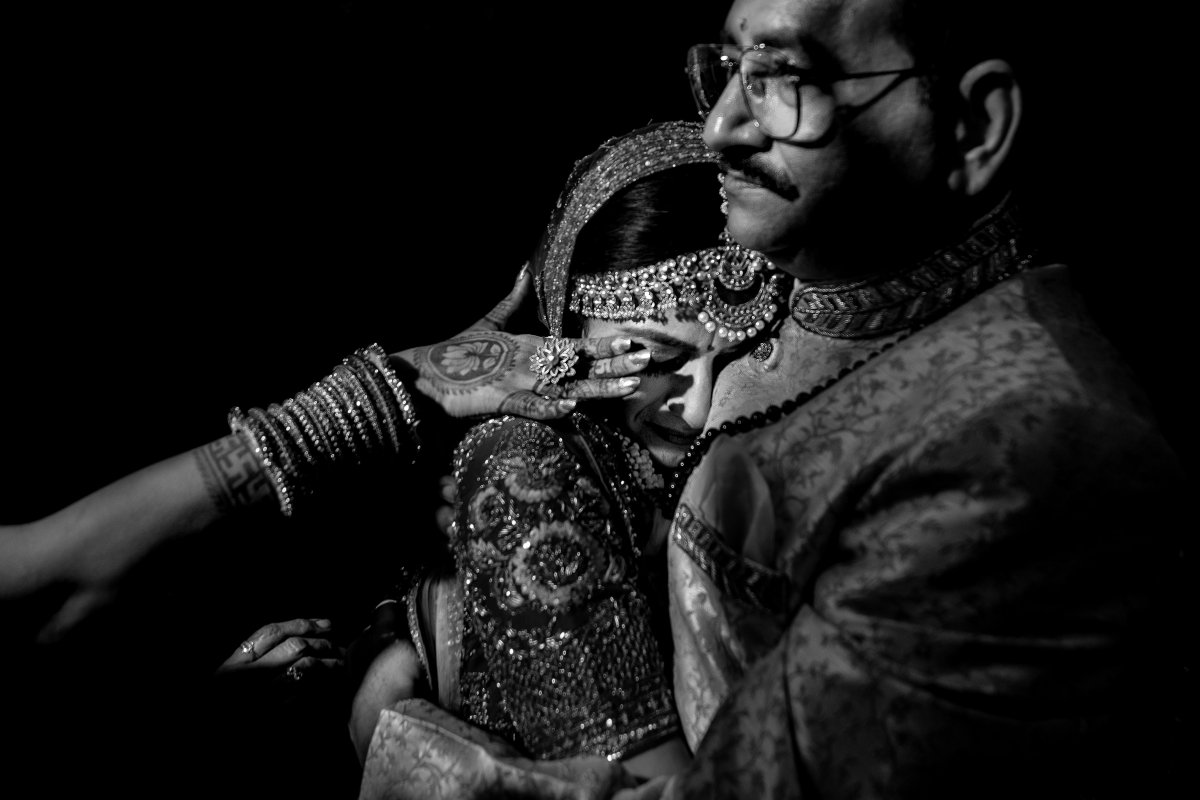
What if the wedding photos you treasure most aren’t the ones you planned? Wedding photos that capture real moments often begin in the spaces between formal portraits: a parent’s steadying touch, a shared glance during a ritual, or laughter spilling across the room when everyone relaxes.
It’s natural to want these photographs without feeling as though the whole day is being directed around a camera. Candid doesn’t have to mean random. The most meaningful images reveal the small gestures and family connections that give a celebration its character, making room for both joyful commotion and quieter emotion.
In this article, you’ll discover what makes an unplanned moment worth remembering and how these interactions come together as a fuller wedding story. From important rituals to fleeting reactions, each image can hold a piece of the day’s feeling. With an observant, unobtrusive approach, Shutterink’s documentary-inspired wedding photography brings genuine connection and refined storytelling together, so you can stay present in the celebration and recognise its meaning when you look back.
Key Takeaways
- Learn to recognise wedding photos that capture real moments by looking for the relationships and context that give an image meaning.
- Follow a ritual from the moments leading up to it through its reactions and quieter aftermath, while making room for how each family celebrates.
- See how photographs can hold different emotional registers, from intimate exchanges to the lively energy of a group.
- Use a simple storytelling lens of setting, anticipation, interaction, reaction and aftermath without treating it as a fixed shot list.
- Discover how an unobtrusive, documentary-inspired approach can bring meaningful rituals and spontaneous celebration together in an elegant visual story.
What makes wedding photos feel like real moments?
A photograph can be unposed and still feel as though it could belong to anyone. Wedding photos that capture real moments hold something more specific: a relationship, an emotion, or an exchange that reveals how the day felt to the people living it. A caught smile means more when you can see who prompted it. A hand reaching out carries meaning when you recognise the care behind the gesture.
Authentic wedding photography makes the connection in the frame as memorable as the moment itself. That connection often comes from timing and context, not grand gestures. A glance exchanged just before a ceremony, a sibling quietly offering reassurance, or laughter interrupting a formal gathering can each tell its own story.
The difference between a candid frame and a meaningful moment
An unposed image records what happened; a meaningful image gives you a reason to remember it. A photograph of guests talking may show a lively room, but expression, gesture and relationship can make a particular frame feel intimate: one person leans closer to hear, another answers with a familiar grin. The distinction isn’t whether anyone was asked to pose. It’s whether the photograph conveys a human connection.
For example, imagine a couple waiting together before an important part of the celebration. One presses their palms together, trying to settle their nerves; the other notices and reaches for their hand. A nearby friend catches their eye and smiles. The sequence of small cues, tension, recognition and comfort, gives the scene its meaning. A photograph that shows only someone looking down may be candid, but the shared gesture reveals the relationship.
Why real moments matter in a wedding story
Milestones mark a wedding day, while the moments around them give those milestones atmosphere. The quiet pause before a gathering begins, a relative’s tender expression, a joke that breaks the tension and a room erupting into joyful chaos all belong to the same story. Together, they help you remember not just what happened, but the shifting feelings around it.
Spontaneity isn’t the same as randomness. A photographer’s attention to who is connected, what is unfolding and when an emotion surfaces helps a frame feel rooted in the day rather than like a passing snapshot. Wedding photography styles include documentary approaches that favour observed moments, but the label alone doesn’t make an image personal. Context does.
Shutterink’s documentary-inspired, editorial approach brings attentive observation together with refined, emotionally resonant imagery. The photographer doesn’t need to become the centre of the celebration for its character to come through. Look for the expression that softens, the gesture that reassures and the laughter that gathers people together. Those details can turn a fleeting instant into a memory that feels unmistakably yours.
How small moments around Indian wedding rituals reveal the story
At an Indian wedding, a ritual can be visually striking, but its personal meaning often appears at the edges: a parent watching closely, a cousin helping someone settle into place, or a friend offering a reassuring smile before the ceremony continues. Customs, family traditions and schedules differ, so a thoughtful photographic story pays attention to what matters to the couple and the people gathered around them.
Imagine a couple pausing during a family ceremony while a relative helps with a small ritual detail. Before it begins, one partner glances towards a parent in the gathering, and the parent returns the look. As the ritual reaches its key moment, nearby family members lean in. Afterwards, the couple share a quiet breath before the celebration carries on. Nothing needs to be staged. The sequence gives the ritual emotional context through anticipation, connection and release.
Anticipation and reactions during meaningful rituals
The moments surrounding a ceremony can reveal as much as its central action. Before a ritual at a mandap, when that setting is part of the family’s celebration, relatives may gather or the couple may exchange a look. During the ritual, a response from a parent or sibling can add another perspective. Afterwards, a soft laugh or a moment of stillness lets the feeling settle.
These moments don’t follow a prescribed order. Their value lies in noticing how the people present respond to what matters in their own celebration. A ritual shows what is being honoured; the reactions around it show who is sharing that meaning.
Family connections woven through the celebration
A relative’s presence doesn’t have to look like a dramatic embrace to matter. An aunt might straighten a detail of someone’s attire; a brother may wait nearby, watching; a grandparent could share a smile, while a friend quietly makes space for someone to sit. Each gesture says something different, and none should be treated as proof of how everyone feels.
For wedding photos that capture real moments, these relationships help distinguish a family’s celebration from a sequence of ceremony details. A parent’s glance might carry recognition; a friend’s quick gesture may show easy familiarity. The photographer’s role is to observe without interrupting, letting each expression remain its own rather than asking people to repeat it for the camera.
Before the wedding, share which rituals and relationships feel especially meaningful to you, while leaving room for the unexpected. This gives the photographer useful context without turning the day into a rigid checklist. Shutterink’s documentary-inspired approach brings quiet attention to real interactions, shaping them into refined, emotionally resonant imagery. Explore documentary-inspired wedding photography to see how attentive storytelling can honour both ritual and relationship.
From quiet gestures to joyful chaos: examples of real wedding photos
A wedding story needs more than one mood. The smallest exchange can feel as vivid as a roomful of relatives laughing together, because each image holds a different part of the celebration. The examples below show how a gesture’s meaning depends on the people involved. A sign of closeness in one family may simply be a familiar habit in another.
Quiet details that carry emotion
A parent and newly married child might share a look across the room; a partner may pause for a deep breath before joining a ceremony; a friend could offer a hand in reassurance. These details don’t have to signal the same emotion to everyone. Their value comes from the relationship and timing: a quiet frame before a milestone can hold anticipation, while a pause afterwards lets the moment settle.
Small gestures can also give a larger celebration an intimate centre. A hand resting briefly on a shoulder, or two people exchanging a private smile amid the movement around them, draws attention to a connection without asking it to perform. Such wedding photos that capture real moments make room for tenderness and reflection alongside the day’s more visible events.
| Illustrative scene | Visible detail | What it may communicate |
|---|---|---|
| A couple waiting together | One takes a breath; the other turns towards them | Anticipation, care or a familiar way of offering support |
| A relative watching a ceremony | A smile, attentive expression or still posture | A personal response to a meaningful moment |
| Friends reacting during a gathering | Several people laugh and turn towards one another | Shared humour and the ease of being together |
| A lively dance-floor exchange | Movement, raised hands and spontaneous laughter | Celebration’s energy and a sense of collective joy |
Lively interactions that hold the celebration’s energy
Not every honest image is quiet. Relatives might break into laughter after a playful exchange, friends might dance in a loose circle, or a group might respond together to a toast. The movement and overlapping expressions carry the room’s energy without arranging anyone into a pose. A single frame may feel wonderfully unruly; the people reacting to one another give that bustle its shape.
Balance matters. A gallery made only of high-energy scenes can leave little room for tenderness; one made entirely of still, intimate images may not convey the scale of a joyful gathering. Together, a quiet exchange and a lively group response create contrast and let the story breathe. The first draws you close; the second places you among the people and sounds of the celebration.
As you look through a set of photographs, notice how mood and relationship work together: who is sharing a moment, what drew their attention, and how the scene feels beside the images around it. An observant, documentary-inspired approach can preserve both gentle details and delightful chaos, with an editorial eye that gives each a considered place in the story.

How a sequence of wedding photos turns separate moments into a story
A single photograph can hold a powerful instant. A sequence helps you feel how that instant belonged to the day: what came before, who shared it and how the room changed afterwards. Wedding photos that capture real moments often gain meaning through these quiet transitions, linking formal milestones with everything unfolding around them.
A simple narrative arc for a wedding gallery
Think of this as a storytelling lens, not a fixed shot list or a promise that every wedding will unfold in the same order. One celebration might move through five connected beats:
- Setting: The gathering takes shape, with family arriving and the ceremony space beginning to feel alive.
- Anticipation: The couple and their loved ones settle into the moment, each carrying their own thoughts.
- Interaction: A meaningful exchange unfolds within the ceremony or celebration.
- Reaction: Those nearby respond in their own ways, from a smile to a shared burst of laughter.
- Aftermath: The energy softens, and the couple or family finds a moment to take it all in.
Imagine seeing the space before guests gather, then the same setting filled with familiar faces. A close exchange between the couple might lead into a relative’s response, followed by a more relaxed moment as everyone moves on together. Wider context helps you remember the atmosphere; human details bring you closer to the people inside it. A recurring face, gesture or relationship can thread those perspectives together without making the photographs feel repetitive.
The order doesn’t need to be neat. A celebration may pause, shift unexpectedly or gather energy in a different direction. This sequence is useful because it helps you notice transitions, not because every story needs the same beginning and ending.
Making room for real moments without staging them
An observant photography team pays attention to the natural flow of a celebration, anticipating meaningful transitions while remaining unobtrusive. That might mean noticing people drawing closer before a milestone or staying attentive as a formal moment gives way to conversation. For experienced professionals such as Steven & Elaine Etheridge Photography, the aim is to preserve genuine connections rather than interrupt them to recreate an expression or repeat a gesture.
Attentive documentation follows the feeling of a scene; directing asks the scene to follow the camera. You don’t need to perform for photographs or manufacture candid moments. Before the day, share which relationships, traditions and parts of the celebration matter most to you, then leave space for unplanned exchanges to emerge. Your story can hold both the moments you’ve anticipated and the ones you couldn’t have scripted.
Shutterink’s documentary-inspired, editorial approach brings genuine interactions into an emotionally resonant visual narrative. Explore Shutterink wedding photography to see how an observant approach can connect the milestones and transitions in your celebration.
Wedding photos that capture real moments: a thoughtful approach to your story
A wedding story isn’t made from rituals alone or from a collection of beautiful portraits. It takes shape through the relationships around those milestones: a family member’s attentive presence, a private exchange between the couple and the sudden laughter that fills a gathering. The story feels complete when these moments belong together, reflecting both the celebration and the people who make it personal.
A documentary-inspired, editorial eye for genuine connection
Shutterink brings a documentary-inspired perspective to wedding photography, pairing genuine interactions with refined, emotionally resonant imagery. The approach is attentive rather than intrusive. Instead of turning the day into a photoshoot, the team observes its natural rhythms, noticing how one moment leads into another and how people respond to the celebration around them.
That balance matters. An image can feel honest without feeling unfinished. Thoughtful composition and an editorial sensibility can give an unplanned expression, a meaningful ritual or a joyful family gathering lasting visual presence. Shutterink’s work has received national and international accolades, while remaining grounded in personal connection.
Let your wedding story feel like your own
No two celebrations move in quite the same way. Families bring their own customs, relationships and rhythms; a quiet moment that matters deeply to one couple may look entirely different for another. Share which people, traditions or parts of the day hold particular meaning for you. That context gives the photographer a thoughtful starting point without asking you to plan every photograph or recreate an interaction.
If you’re considering how photography and film might complement each other, a wedding film checklist can help you reflect on the moments and details you’d like your visual story to hold. Still photographs can preserve a look or gesture; a film can carry movement and sound. Each offers a distinct way to remember the celebration, and both can reflect its character without making you perform for the camera.
With wedding photos that capture real moments, the aim isn’t to make every frame dramatic. It’s to honour the rituals, intimacy and celebration in a way that feels true to you. Shutterink brings documentary-inspired storytelling and considered imagery together for modern Indian weddings.
Choose the feeling you want to remember
As you imagine looking back on your wedding, think beyond how the day will appear. Consider what you hope to feel again: the warmth of familiar faces, the anticipation before a meaningful moment, or the unrestrained joy of everyone celebrating together. Those priorities can help shape a visual story that feels personal without asking you to plan every frame.
Shutterink’s wedding photography brings documentary-inspired storytelling together with elegant, emotional imagery for celebrations across India. The team’s work has received national and international accolades, reflecting a considered approach to telling each couple’s story. For wedding photos that capture real moments, choose an approach that lets you be present while your connections and celebration unfold naturally.
Explore Shutterink’s wedding photography and films to begin shaping a visual story around the people, traditions and feelings that matter most to you.
Frequently Asked Questions
Can candid wedding photos include formal family portraits?
Yes. Candid wedding coverage can sit naturally alongside formal family portraits. Set aside a short part of the day for the groupings that matter to you, then leave room for the photographer to notice conversations and reunions around them. Write down the family combinations you consider essential and share them beforehand, especially if some relatives have limited time or need support moving between locations.
Are real-moment wedding photos always unposed?
No. A wedding gallery can include gently guided portraits as well as spontaneous photographs. A photographer might help you find a comfortable place to stand for a portrait, then give you room to talk or walk together rather than hold a stiff pose. Wedding photos that capture real moments are about preserving a genuine feeling, not following a strict rule that nobody can be directed.
Can candid photography capture traditional Indian wedding ceremonies?
Yes. Candid photography can document traditional ceremonies while respecting their pace and significance. Since customs and schedules vary between families, share the moments that are especially meaningful and explain how you’d like photography to fit around them. The photographer can pay attention to key transitions and the people involved while avoiding unnecessary interruption or assumptions that every family follows the same customs.
What if we feel awkward when someone takes our wedding photos?
Feeling self-conscious is common, and you don’t need to know how to pose to have photographs that feel like you. Tell your photographer what tends to make you comfortable, such as focusing on each other, walking together or taking a quiet pause between events. Keep portraits simple and brief. Familiar conversation and shared attention often feel easier than trying to perform for the camera.
Do real-moment wedding photos work for a small celebration?
Absolutely. A smaller gathering can offer its own rich mix of relationships and moments: a close relative welcoming guests, friends sharing a private joke, or everyone listening closely during a toast. With fewer people in the room, interactions may feel especially visible, but they don’t have to be dramatic to matter. Consider which connections you most want to remember, then leave space for the day to unfold naturally.
How can wedding photos show the atmosphere of a celebration?
Atmosphere comes through in more than décor. A set of photographs can show how a room changes as guests arrive, where people gather, how they respond to a speech and whether the celebration feels quiet or exuberant. Details such as an attentive audience, a busy dance floor or guests lingering together suggest the pace and mood. Your priorities can guide which parts of the setting deserve attention.