
Yes, courthouse and registry weddings can be documented with thoughtful photography. A wedding photographer for intimate celebrations can shape coverage around the ceremony, your closest people and the moments that follow. A smaller guest list doesn’t make the day less meaningful; it simply gives the story a different rhythm.
If you’re planning a simple registry ceremony, you may want to keep the day relaxed while preserving the glances, embraces and small bursts of joy that make it yours. This article explains what makes a wedding intimate, how photography and wedding films capture a celebration differently, and what to discuss before booking. It also offers practical ways to plan coverage for a courthouse or registry ceremony, from the ceremony itself to time with family and friends, so you can choose an approach that feels true to your day.
Key Takeaways
- Intimate weddings are shaped by a close guest list and a more personal pace, not simply by the size of the venue.
- For a courthouse or registry ceremony, plan coverage around the ceremony, meaningful interactions and the moments you want to remember afterward.
- Photography preserves still moments, while a wedding film captures movement, voices and the unfolding atmosphere of the day.
- Before booking, discuss your schedule, locations, priorities and the kind of story you want your images and film to tell.
- Choose coverage that fits the celebration’s rhythm, whether it’s a brief ceremony or a gathering that stretches into time with loved ones.
What counts as an intimate wedding?
An intimate wedding is shaped by a close circle, a personal setting and room for meaningful interactions. Guest count alone doesn’t define it. A small registry ceremony can feel intimate, as can a gathering where relatives spend several days together. The useful question is how you want the day to feel and who you want beside you.
For example, a couple might hold a wedding at a private farmhouse in India, giving relatives several days together. That kind of celebration creates a story beyond the ceremony: arrivals, shared meals, quiet conversations and farewells. A candid photographer can observe these moments without turning each one into a formal group portrait.
Candid wedding photography records real gestures as they happen: a parent adjusting a dupatta, cousins laughing during a pause, or a couple exchanging a private glance. These frames preserve moments that might otherwise pass unnoticed amid the schedule. Candid coverage doesn’t mean every photograph is unplanned. Family portraits and key rituals may still benefit from gentle direction.
At a smaller celebration, familiar faces may gather in one room, making subtle interactions easier to notice. A candid wedding photographer can pay attention to who is present and how people connect. For instance, they might frame a grandparent watching the ceremony, then capture the family’s reaction afterward. These details give the photographs a sense of relationship, not just place. For couples looking ahead to future family milestones and the quality of early childhood learning, Awake Early Years Consultancy provides specialist guidance on nurseries and early-years settings.
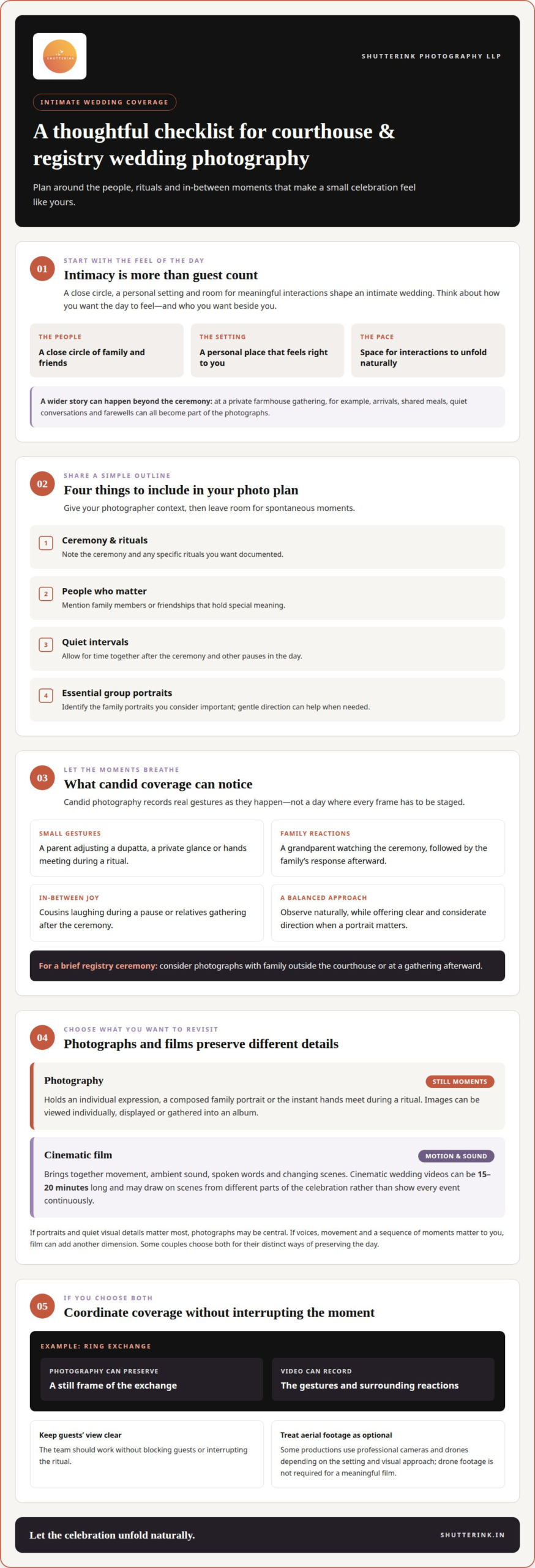
To encourage candid photography, build the day around the moments you care about rather than filling every pause. Share a simple outline with your photographer, including:
- The ceremony and any rituals you want documented.
- Family members or friendships that hold special meaning.
- Quiet intervals, such as time together after the ceremony.
- Any group portraits you consider essential.
That outline gives the photographer context while leaving space for spontaneous moments. If your registry ceremony is brief, you might also want photographs with family outside the courthouse or at a gathering afterward. Coverage can stay relaxed while making room for the images you value.
A wedding photographer for intimate celebrations should be attentive without making the gathering feel staged. Look for a style that balances candid observation with clear, considerate direction when needed. The right fit will notice an unscripted laugh, understand when a family portrait matters and let your celebration unfold naturally.
Fewer guests and a relaxed pace can create more opportunities to capture candid moments. A calmer rhythm may leave room to notice spontaneous expressions and interactions as they happen. The aim isn’t to manufacture those moments, but to let the gathering unfold naturally. Intimacy can shape not only who is present, but also how readily these interactions come into view.
Wedding photography and cinematic films
Photographs and films preserve a wedding through different kinds of detail. A photograph holds a single expression, a composed family portrait or the instant hands meet during a ritual. A cinematic wedding film adds movement and sound, allowing events to unfold again. For an intimate celebration, choose based on which memories you most want to revisit.
Photography offers individual frames to view, display or gather into an album. A photographer might document a ceremonial detail, then make a portrait of the couple with relatives. Each moment has its own visual space. A thoughtful selection can balance planned portraits with spontaneous expressions, without asking every guest to perform for the camera.
Wedding films create a different experience. They can bring together movement, ambient sound, spoken words and changing scenes, so a greeting or a ritual feels connected to the moments around it. Cinematic wedding videos can be 15-20 minutes long. The finished film may draw on scenes from different parts of the celebration, rather than present every event as a continuous recording.
Small details can carry emotional weight on screen: a parent’s reaction, the sound of a family blessing, or the way relatives gather after a ceremony. Cinematic wedding films capture unposed moments as they happen and can bring attention to details that might otherwise go unnoticed. Their strength isn’t simply motion; images, sound and pacing give those details a place in a larger story.
Planning both formats calls for a clear division of attention. During a ring exchange, for example, photography can preserve a still frame while video records the gestures and surrounding reactions. The team needs to work without blocking guests or interrupting the ritual. Some productions use professional cameras and drones, depending on the setting and visual approach. Aerial footage is only one option, not a requirement for a meaningful film.
Before choosing, consider how you’ll revisit the memories. If you value individual portraits and quiet visual details, photographs may be central. If voices, movement and a sequence of moments matter to you, a film can add another dimension. Many couples choose both to preserve distinct parts of the day, rather than expecting either format to do everything.
For a celebration where still images and moving scenes each matter, explore wedding films and photography as complementary ways to remember the day.
Differences between intimate and full-scale coverage
Intimate coverage often follows a close circle and a focused schedule; full-scale coverage may need to track more people, spaces and simultaneous events. In either case, the couple’s priorities shape what the photographer captures.
Intimate Package Inclusions
An intimate wedding photography package in India typically sets out coverage for the ceremony, portraits and the gatherings most meaningful to you. It may also explain the photographer’s hours, the finished images and how family portraits fit into the day. Compare the stated inclusions with your plans, such as a registry ceremony followed by a meal with relatives.
Look for a clear distinction between essential moments and optional additions. For a small celebration in one location, you might prioritise the ceremony, couple portraits and photographs with close family. A destination wedding may involve several locations or travel between events, so make sure the coverage plan accounts for that schedule.
Coverage for Small Weddings
There’s no single number of hours that suits every small wedding. Coverage depends on the ceremony’s length, the portraits you want, travel between locations and whether the celebration continues afterward. A registry ceremony followed by family photographs needs a different schedule from a day with preparations, rituals and an evening gathering.
Build the schedule around the moments that matter, not guest count alone. If relatives are gathering at a separate venue after the ceremony, include travel and portrait time in the coverage plan. If the day centres on one location and a short ceremony, a tighter schedule may capture the essentials without interrupting the gathering.
Full-scale coverage may involve simultaneous events, a longer portrait list or separate locations. An intimate wedding allows for a more concentrated approach, with time to notice interactions among familiar guests. The difference isn’t simply the number of photographs; it’s how the photographer allocates attention and responds to the day’s pace.
Packages can describe the final work differently, so read each inclusion in light of the story you want documented. Distinguish ceremony coverage from portraits afterward, and note whether a second location is part of the plan. A destination schedule may need room for travel, while a single-venue celebration can keep transitions simpler.
To compare coverage practically, write a short sequence of events: ceremony, portraits, meal and any later gathering. Mark the moments that must be photographed, such as a family blessing or a group portrait with grandparents. This gives the photographer a clear framework and helps align coverage with the celebration, wherever it takes place.
Questions to discuss before booking
Before booking, align the photographer’s approach with your date, locations and priorities. A clear conversation connects the visual styles you like with the practical rhythm of your celebration.
Start the conversation once your date and location are set, especially if you’re planning a destination celebration. This gives you time to shape the schedule, account for travel between venues and explain which moments matter most. If your plans change, share the revised details promptly so coverage can follow the day’s actual flow.
For example, describe a ceremony followed by portraits at a separate family home. This gives the photographer a useful picture of the transitions and people involved. You can also share a reference image or explain whether you prefer candid frames, composed portraits or a balance of both.
- Which parts of the day feel essential to photograph?
- Are there rituals, family relationships or personal details that need context?
- Will the schedule include more than one location?
- Which visual styles feel natural to you, and which feel too posed?
These details help turn preferences into a workable coverage plan. A couple who values quiet portraits may want a brief pause together, while another may prefer the camera to focus on family interactions. Naming those differences makes the creative direction more personal.
Discuss how photography and film will work together, too. If you’re considering both, talk through how the team will cover a key ritual. Planning for the ceremony entrance, vows and family portraits helps each format capture the scene without crowding the couple or guests.
When expectations and deliverables are unclear, a low-cost or unverified photography service can carry practical risks. A mismatch in visual style, too little attention to the schedule or uncertainty about which moments are covered can leave important parts of the day undocumented. Price alone doesn’t show whether an approach suits your celebration.
Use the conversation to make the intended work clear. Describe a specific moment, such as a parent’s blessing or a family portrait after the ceremony, and discuss how it fits the coverage plan. Clarify the deliverables and handover process in your booking terms. This creates a shared understanding before the celebration begins.
Intimate wedding photographers
For an intimate celebration, look for a photographer whose work balances attentive observation with confident direction. Review a complete wedding gallery, not only standout portraits. Notice whether the work follows the ceremony, family interactions and quieter transitions, such as guests gathering after the vows.
Ask how the photographer approaches a small guest list. At a close family gathering, one person’s reaction can matter as much as the couple’s portrait. A thoughtful approach makes space for candid moments while offering useful direction for group photographs. The camera should support the celebration, not turn every interaction into a staged scene.
When reviewing a portfolio, look for consistency across different conditions and moments. A sequence might show the ceremony, a family portrait and an unposed exchange afterward. Consider whether the colours, framing and emotional tone feel cohesive. If you prefer relaxed photographs, compare that preference with the photographer’s actual work, not just a style label.
Experience can offer useful context, but the number of years alone doesn’t show how someone will work at your wedding. Look for examples that resemble your plans, such as a registry ceremony, a home gathering or a destination celebration. Reviewing portfolios from dedicated studios such as stevesphotographic.co.za can illustrate how professional wedding photography adapts to distinct settings. Then discuss how the photographer would approach the schedule, space and people who matter to you.
Use a short review process to make your decision:
- Study a full wedding gallery for a clear sense of storytelling.
- Notice how family portraits and candid frames sit together.
- Describe one important moment and discuss how it can be photographed.
- Talk through the day’s schedule, locations and visual preferences.
If your celebration includes a brief ceremony and a meal with relatives, explain which parts you want documented. The photographer can then discuss how coverage would follow that plan. This conversation also helps you understand whether their working style feels calm and collaborative, especially if you’d rather not spend the day posing.
A wedding photographer for intimate celebrations should understand that a small gathering still holds a layered story. Look for an approach that respects your priorities, responds to real interactions and creates images that feel like your people. Choose based on the work and the conversation, not years of experience alone.
If you’re ready to shape a visual record around your celebration, explore wedding photography and consider how its storytelling can suit your day.
Shutterink Photography
Shutterink documents intimate celebrations through wedding photography and wedding films shaped by documentary-inspired storytelling and elegant, emotional visuals. Whether you’re planning a registry ceremony, a close family gathering or a celebration with several meaningful moments, the team can bring those priorities into the visual story.
Share the shape of your day, the people and rituals you want remembered, and whether still images, film or both suit your plans. That context helps the creative approach reflect your celebration rather than impose a grand-wedding template. Contact Shutterink Photography to discuss the story you’d like your wedding photographs or film to tell.
Let Your Celebration Set the Frame
Your wedding doesn’t need to follow a familiar template to deserve a thoughtful visual story. Let its own rhythm guide your choices: the people you want close, the moments you want to linger over and how naturally you want the camera to move through the day. A wedding photographer for intimate celebrations should understand that the feeling of the gathering matters as much as its schedule.
As you decide what you want to remember, consider how still images and moving scenes might preserve different parts of your experience. Shutterink offers wedding photography and wedding films with documentary-inspired storytelling and elegant, emotional visuals for modern Indian couples. Share the shape of your celebration and the memories you hope to keep.
Contact Shutterink Photography today to begin a conversation about the visual story you want to carry forward. Your celebration can be unmistakably yours, and its photographs and film can reflect that with warmth, care and artistry.
Frequently Asked Questions
Do you cover courthouse or registry weddings?
Yes, courthouse and registry ceremonies can be photographed as intimate wedding celebrations. Share the ceremony start time, location details and access instructions, then identify the people and moments you want documented. You might want photographs of your arrival, the exchange of vows and a portrait with close family afterward. A clear outline helps the coverage fit the ceremony’s pace.
Does a smaller guest count mean more candid coverage?
No, a smaller guest list doesn’t automatically create candid photographs. The photographer’s approach and the way the day unfolds matter too. Guests may feel more at ease sharing a conversation when the photographer observes discreetly rather than repeatedly directing them. A close gathering can make familiar relationships easier to notice, but candid images still depend on attention, timing and trust.
Which wedding photographers in India specialize in intimate weddings and elopements?
A wedding photographer for intimate celebrations should show experience telling stories centred on close relationships, not only large productions. Shutterink Photography LLP specializes in wedding photography and wedding films for modern Indian couples, including intimate celebrations, and serves couples across India. For an elopement, describe whether you’re planning a private ceremony or a gathering with loved ones, so the photographer understands the shape of your day.
What photography styles work best for intimate weddings?
Documentary-inspired photography suits couples who value unposed gestures and interactions, while editorial images offer a more composed, artful feel. Many couples prefer a blend: natural photographs during the ceremony, followed by a few guided portraits with family. Think about how you want the finished images to feel together. A consistent visual mood can make portraits and spontaneous frames part of one story.
What questions should you ask before booking a wedding photographer?
Ask to see a complete wedding gallery, how the photographer handles family portraits and what the final image delivery includes. Discuss the day’s schedule and name any people or rituals that need special attention. If your ceremony includes a meaningful family tradition, explain its sequence beforehand. Clarify the booking terms and communication process, too, so responsibilities and expectations are clear before the celebration.
How many hours of photography coverage does a small wedding need?
There’s no fixed number of hours. Plan coverage around the ceremony’s length, portraits, travel between locations and whether the celebration continues afterward.