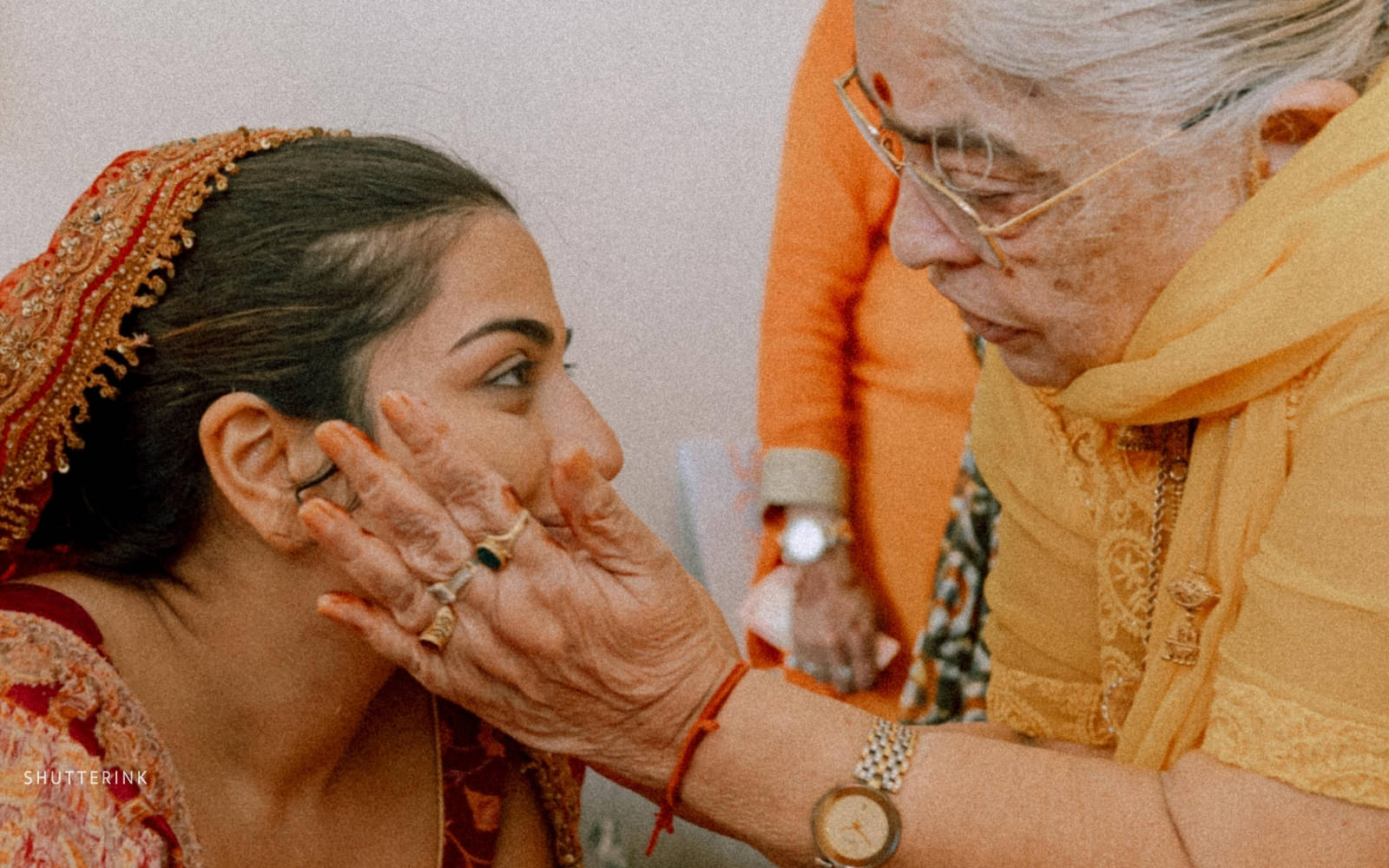
What if the most cinematic moment in your wedding film isn’t a sweeping shot, but a parent’s quiet smile just before the celebrations begin? A cinematic Indian wedding film can hold both: the scale and colour of the festivities, and the unplanned gestures that make them yours.
It’s natural to wonder whether an elegant, carefully edited film will feel staged, or whether the rituals and reactions that matter most might disappear in the rush of events. The artistry works best when it doesn’t replace real life. It gives genuine emotion room to breathe, while cultural details, lively celebrations, and quieter moments find their place in one story.
Shutterink creates wedding films shaped by documentary-inspired storytelling and refined, emotional visuals. This article explains how pacing, framing, sound, and attention to cultural detail can bring a wedding day together onscreen without asking you to perform for the camera. From energetic celebrations to intimate exchanges, thoughtful filmmaking can make your film feel beautiful, personal, and unmistakably like your day.
Key Takeaways
- Look beyond dramatic effects: thoughtful storytelling is what makes a cinematic Indian wedding film feel personal and true to you.
- Notice how framing, movement, light, and sound shape a film’s mood while keeping people and relationships at its heart.
- Consider how public rituals and celebrations can sit alongside quieter interactions to reveal the connections behind the day.
- Understand the difference between directed portraits and candid coverage, and how each can serve a purpose without making the whole film feel staged.
- Use your priorities, relationships, and celebration as the creative compass for a film that feels polished yet unmistakably yours.
What Makes a Cinematic Indian Wedding Film Feel Personal?
A cinematic Indian wedding film isn’t made personal by slow motion, dramatic music, or a succession of sweeping shots. It’s shaped by choices: which glances matter, how one moment leads into another, when the sound of the celebration should take the lead, and when the film should become quiet enough to notice a small exchange. The craft is deliberate, but the feelings it holds are real.
A cinematic wedding film uses considered images, sound, and pacing to give genuine moments a meaningful shape without asking the couple to become characters. That distinction matters. Fictional wedding scenes, including those gathered under Films about Indian weddings, are created to serve a script. A commissioned wedding film finds its story in the people, relationships, and events that actually unfold.
Polish and authenticity can belong in the same frame. A considered composition or carefully shaped soundtrack can draw attention to a real interaction instead of covering it with spectacle. Documentary-inspired observation leaves room for unscripted responses: a relative’s expression during a ceremony, a couple sharing a quick laugh, or friends swept up in the music. No one needs to repeat a reaction for the camera. The visual style supports what happened; it doesn’t replace it.
That’s also what separates a personal film from a highlights-only montage. A montage can gather beautiful images, but if each clip arrives without a relationship to the next, the result may feel more like a showcase than a memory. A wedding film can include a lively sequence of celebrations and still give those images an emotional thread. A reunion, a ritual, and a dance-floor moment might connect through the people they bring together, not just through colour or movement.
How cinematic style differs from a montage of highlights
Purposeful pacing lets a moment land before moving on. A film might hold on a family member’s reaction after a meaningful exchange, then gather pace as the celebration fills the room. Attractive shots still matter, but their placement gives them context. When reviewing a film, notice whether one scene seems to lead naturally into the next, or whether the images feel interchangeable. That rhythm helps visual polish serve personal meaning, so the film feels cohesive rather than like a string of unrelated clips.
Why Indian wedding celebrations need room for many moods
Indian weddings aren’t culturally uniform, and no single set of rituals or images can stand in for every couple. Ceremonies, family interactions, and lively celebrations each carry their own energy, shaped by the people and traditions at the heart of that wedding. A thoughtful film follows those cues instead of imposing a preset idea of what an Indian celebration should look like.
There’s room for exuberance and stillness in the same story: a crowded dance floor beside a quieter exchange between relatives, or a ceremonial moment followed by spontaneous laughter. These contrasts don’t compete. They give the film dimension, preserving not only how the celebration looked, but how its different moments felt to the people living them.
How Cinematic Wedding Filmmaking Shapes Images, Sound, and Rhythm
A film’s mood comes from more than what appears in the frame. The distance between the camera and a conversation, the quality of light across a ceremonial space, the sound beneath a spoken blessing, and the pause before the next scene all shape how a memory feels. These choices work best when they draw attention to the people and atmosphere already present, rather than making the wedding perform for the camera.
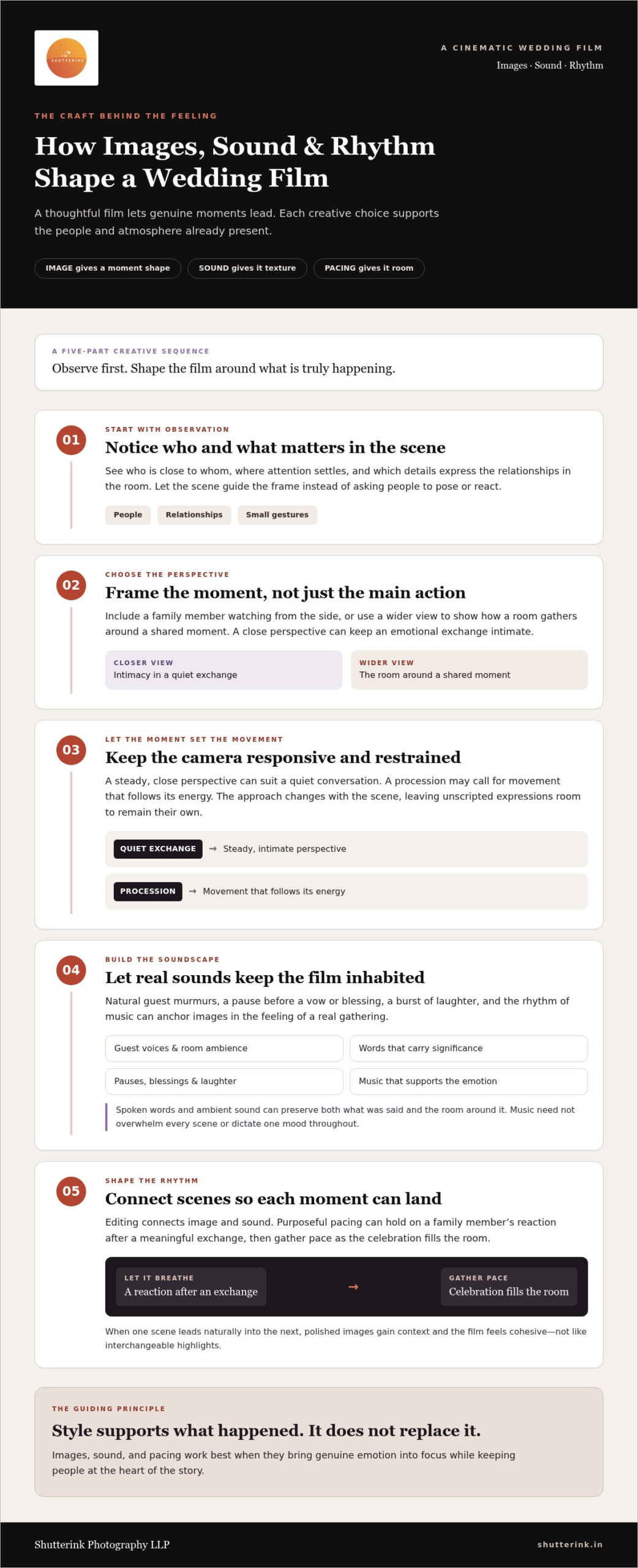
Image gives a moment its shape, sound gives it texture, and pacing gives it room to be felt. Together, these elements can make a cinematic Indian wedding film elegant without making it feel distant or overproduced.
Framing and movement that let moments unfold
Rather than deciding in advance how everyone should stand or react, a filmmaker can first observe a scene: who is close to whom, where attention is settling, and what details express the relationships in that space. The frame might include a family member watching from the side, not only the central action. Restrained camera movement can preserve intimacy during an emotional exchange, while a wider view can show how a room gathers around a shared moment.
The approach should respond to the moment, not interrupt it. A quiet exchange may call for a steady, close perspective; a procession may invite movement that follows its energy. This leaves unscripted expressions and small gestures room to remain their own, instead of making people conscious of the camera.
Sound and editing that carry the feeling forward
Light and setting contribute their own visual language. Soft window light might lend a preparation scene a gentle, intimate quality, while the shapes, textures, and changing light of a celebration space can give a larger gathering a sense of scale. These details don’t need to become a decorative showcase. Thoughtful framing lets the setting enrich the story while keeping people at its centre.
Sound makes the film feel inhabited. The natural murmur of guests, a pause before a vow or blessing, a burst of laughter, or the rhythm of music can anchor an image in the feeling of a real gathering. Spoken words may carry significance; ambient sound can preserve the room around them. Music can support the emotion without overwhelming every scene or dictating the same mood throughout.
Editing connects these layers. A transition from a lively celebration into a quieter exchange can give the change in energy meaning, while a longer pause may let an important moment settle. There’s no single rhythm every wedding needs. The choices should follow the couple, the events, and the feeling of each scene.
For couples drawn to this balance of observation and considered craft, Shutterink’s wedding films bring documentary-inspired storytelling together with elegant, emotional visuals, shaped around each celebration rather than a fixed formula.
From Ritual to Reunion: Moments a Cinematic Indian Wedding Film Can Hold
A wedding day is made of more than its most visible events. Ceremonies and group celebrations carry shared energy, while a held glance, a nervous laugh, or the first exhale after a meaningful moment can reveal what the day means to the people in it. A cinematic Indian wedding film can bring these different scales together, letting small reactions connect the larger scenes without suggesting every family celebrates in the same way.
The scenarios below are illustrative, not accounts of specific couples or Shutterink films. They show how a filmmaker might notice emotion and context alongside the beauty of a gathering.
Ceremonies and traditions, seen with context
A ceremonial moment can be filmed as more than a striking image. The people taking part, the attention of relatives nearby, and a meaningful gesture can reveal its place in a couple’s celebration. The filmmaker’s role is to observe with care and represent the customs the couple actually follows, not to assume that any one ritual belongs in every Indian wedding.
Context may come from a family member’s expression or a detail that shows how people are gathered. These are possibilities, not a prescribed shot list. Accuracy begins with the couple’s own traditions and priorities. Sharing which customs and people matter most can help the film give those moments appropriate attention.
The in-between moments that make a film feel lived-in
Before a ceremony, anticipation might show in a shared look or a relative smoothing a sleeve. Afterwards, relief can surface in a laugh or an affectionate exchange. These small responses add a human passage between formal events. They help a viewer feel how one moment gave way to the next, rather than seeing the wedding day as a set of disconnected highlights.
Quieter scenes needn’t take energy away from the celebration. The movement of a group dance, friends cheering, or relatives joining the festivities can sit beside pauses and private smiles. Together, they reflect a day with more than one mood.
Illustrative moments and what they may bring to the film:
| Moment type | Possible film detail | Emotional effect |
|---|---|---|
| Ceremony | A meaningful gesture alongside a family member’s response | Shows significance through both action and connection |
| Before an event | A shared glance or a relative offering reassurance | Builds anticipation and closeness |
| After a ceremony | Laughter or a visible release of tension | Lets relief and joy emerge naturally |
| Group celebration | Friends and family moving together, with individual reactions in view | Balances collective energy with personal expression |
These details can give the film emotional continuity. A reaction from the edge of a gathering may make a ceremony feel intimate; a brief reunion can carry the warmth of a much larger celebration. The aim isn’t to collect every possible image, but to notice which moments help tell this couple’s story with care.
Does a Cinematic Wedding Film Have to Be Staged?
No. A cinematic wedding film can be carefully crafted without turning the celebration into a set. Cinematic describes the way images and moments are shaped into a story; it doesn’t mean asking people to repeat reactions or manufacture emotion. For a couple concerned that the camera might take over, that distinction matters: the film can have visual intention while the day remains theirs.
Artistic choices can frame real emotion with care, but they don’t need to create emotion for the camera. In documentary-inspired filmmaking, observation leads. The camera responds to what’s unfolding, while editing brings meaningful moments together later. This approach can help a cinematic Indian wedding film feel polished and personal without asking you, your family, or your guests to act out the day.
Guided portraits and documentary moments can coexist
A portrait may involve a little direction: finding a comfortable place, turning slightly toward the light, or taking a quiet moment together. That’s different from staging an emotional exchange, such as asking relatives to repeat a conversation or pretend to react. Portraits offer a considered pause; candid coverage observes the connections and responses that happen on their own.
Both can have a place in the finished film. A composed portrait can offer a calm visual breath between events, while unscripted family interactions and celebration footage bring spontaneity and movement. The balance depends on the couple and the day. Some moments happen beyond the camera’s view, and they shouldn’t need to be recreated to make the story feel complete.
Keeping the celebration at the centre
An unobtrusive approach means watching how people interact instead of repeatedly arranging them. During a conversation, that might mean allowing the exchange to continue naturally rather than asking everyone to start again. At a ceremony, it means responding with care to what is happening, not drawing attention away from it. The camera becomes an observer, not another voice directing the room.
Flexibility matters because real celebrations don’t follow a perfect script. A ceremony may run differently than expected; a heartfelt greeting or burst of laughter may happen in a fleeting moment. Staying attentive allows the filmmaker to adapt without asking the couple to pause the day for a shot. Not every detail can be captured, but the focus can stay on genuine events rather than staged substitutes.
Your film should reflect the people and meaning at the heart of the celebration, not make you feel as though you’re performing for an audience. Shutterink’s documentary-inspired wedding films pair observation with elegant, emotional storytelling, giving real interactions room within a crafted film. Explore Shutterink wedding films to see how your celebration can be told with feeling and care.
A Cinematic Indian Wedding Film, Shaped Around Your Story
Your film’s creative direction can begin with what you want to remember, not a checklist of expected shots. Perhaps the heart of the celebration is time with close family, a particular ceremony, the friends who bring the dance floor to life, or the quieter moments between events. Sharing these priorities helps shape what the film gives space to and how its emotional rhythm reflects you.
Begin with the feeling you want to remember
As you think about your celebration, consider who matters most to you, which interactions feel meaningful, and what you hope to feel when you watch the film again. You might want an intimate mood, lively energy, or a balance that moves naturally between the two. These reflections offer a creative compass, not a rigid shot list. Real moments can still unfold in their own way.
- Share the context: Tell the filmmakers about the people, relationships, and traditions that are central to your celebration.
- Name the feeling: Describe whether you imagine the film as reflective, exuberant, or somewhere between the two.
- Leave room for discovery: Explain what matters most, while allowing unscripted interactions to add their own texture.
These details help distinguish your story from a generic sequence of attractive scenes. They can guide emphasis without asking you to plan every frame or anticipate every reaction. If you’re comparing film styles, look for how a sample handles transitions, natural sound, and quieter reactions, not just its most dramatic images.
Explore a handcrafted film with Shutterink
Shutterink creates commissioned wedding films for modern Indian couples, blending documentary-inspired storytelling with elegant, emotional visuals. The films are described as personal, immersive, and timeless. Each couple’s priorities and celebration provide context for a considered story that keeps the people at its centre.
Shutterink commissions wedding films for celebrations across India and collaborates with wedding planners as part of the wider celebration team. That collaboration supports the filmmaking process; the focus remains on telling your story through film. Shutterink’s work has received national and international accolades, but your celebration doesn’t need to fit a formula to be told with care.
A useful first step is to share the context of your celebration and the feeling you hope the finished film will hold. From there, you can explore how a wedding-film commission might express your priorities through a personal, crafted story. You don’t need a perfectly formed brief; a few honest thoughts about your people, traditions, and the moments you value are a meaningful place to begin.
To explore a film shaped around your celebration, discover Shutterink wedding-film commissions.
Choose the Story You’ll Want to Return To
Years from now, you may remember a celebration differently than you expect. A detail that seemed small in the moment could become the part you treasure most: a familiar voice, a shared glance, the feeling of everyone gathered close. As you imagine your cinematic Indian wedding film, think beyond how you want the day to look. Consider what you hope it will feel like to revisit.
You don’t need to arrive with every scene planned. Start with the people and feelings you want the film to hold, then leave space for the day to surprise you. That openness makes room for a story that reflects not only the celebration, but the way you experienced it together.
Shutterink creates handcrafted wedding films with a personal, immersive, and timeless sensibility for couples across India. If you’re ready to explore what a film shaped around your celebration could become, explore a wedding film shaped around your story.
Your memories deserve to feel like yours. Begin with what matters most, and let the story unfold from there.
Frequently Asked Questions
What makes a wedding film cinematic?
A wedding film feels cinematic when its choices create a deliberate viewing experience, not simply because it uses a particular effect. For example, an edit might let a spoken moment continue over images of family listening, then open into the sound of the celebration. That connection gives scenes context. The visual treatment can be refined, but it should reflect the couple’s atmosphere rather than impose a fashionable look.
Can a cinematic Indian wedding film still feel natural?
Yes. A cinematic Indian wedding film can feel natural when the filmmaking responds to what is genuinely happening. If a conversation becomes tender or a group breaks into spontaneous laughter, those moments don’t need to be repeated to work in the finished story. You can also set aside time for portraits if you’d like them. The important distinction is that a portrait is a chosen pause, not a substitute for authentic interactions.
How is a cinematic wedding film different from a wedding video?
The terms aren’t used consistently, so the label alone may not explain what you’ll receive. A useful way to compare them is to consider the viewing experience: does the finished film have a clear emotional progression, and does its editing reflect the character of the celebration? A wedding video can also tell a story. Shutterink’s wedding films use documentary-inspired storytelling and elegant, emotional visuals, so consider whether that approach matches the way you want to remember your celebration.
What moments should an Indian wedding film include?
Choose moments according to what feels meaningful to you and your family, rather than following a universal checklist. You might prioritise a particular ceremony, time with a relative, or a celebration that brings different generations together. If some events overlap or happen in separate spaces, sharing those priorities beforehand helps establish what matters most. The film’s emphasis can then reflect your celebration, not assumptions about what every Indian wedding should contain.
Does a cinematic wedding film have to be dramatic?
No. Cinematic style can be subtle, joyful, or reflective; it doesn’t require grand gestures or constant slow motion. Think about the feeling you want to revisit. If you imagine warmth and closeness, a gentler pace may suit the story; if the day is full of dancing and spirited gatherings, the film can carry that energy too. The mood can respond to the people and events instead of forcing every scene into one tone.
How can we make our wedding film feel personal?
Give the filmmaking team context that wouldn’t be obvious to a guest: who is especially important to you, which family connections you hope the film will honour, and which parts of the celebration feel most meaningful. You can also describe films or scenes whose mood appeals to you, then explain what resonates. That conversation offers creative direction without requiring you to script reactions or plan every image.
When should we book a wedding filmmaker?
Start conversations once your celebration dates are taking shape, especially if you’re bringing together several events or have particular coverage priorities. There’s no universal booking timeline; timing depends on your plans. Reaching out early creates room to explain the celebration, talk through the film’s intended feeling, and explore a commission before the day gets close. You can begin with your dates and the moments you most hope to remember.